
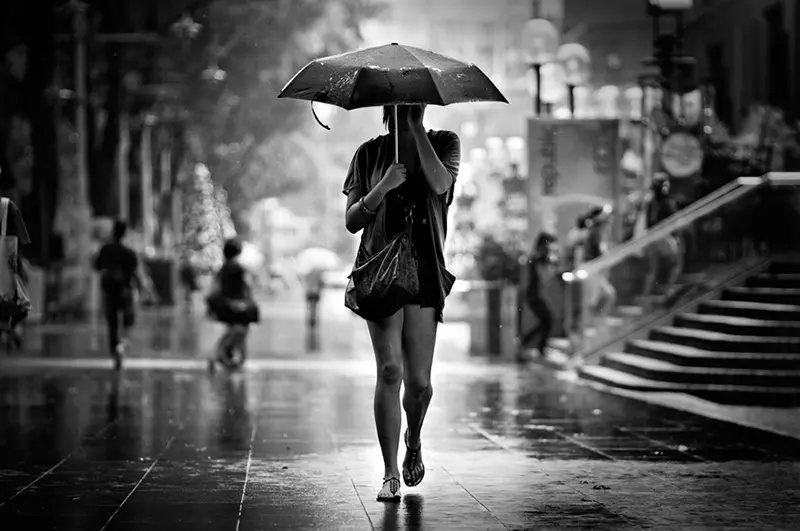
 The secret, though on second thought not so secret, of photography is that everything is a matter of light.
Photography is like painting: from a blank canvas that must be filled with colors to a blank frame (film or digital) that must be filled with light.
Although we tend, especially when starting out, to consider only a sunny day with a blue sky as suitable for photography, in reality, even on a day of bad weather we can achieve very interesting results: the strong contraststhat we can find, the “blades” of lightthat hit our subject from above (a bit like in a Caravaggio painting), can transform banal subjects into topics worth photographing.
Let's see then which challenges we need to overcome to get fantastic photos on bad weather days!
Challenge #1. Going beyond our comfort zone, that is, going outdoors even when the weather looks threatening.
If the weather is adverse (snow, rain, or too hot), why leave the comfort of our homes or cars to go take photographs? The first hurdle to overcome is therefore our laziness! It's like a photojournalist avoiding conflict or dangerous areas because they can be risky.
Obviously, you should not take unnecessary risks and always stay safe.
For example, if you want to go out to photograph a lightning storm, first read our article!
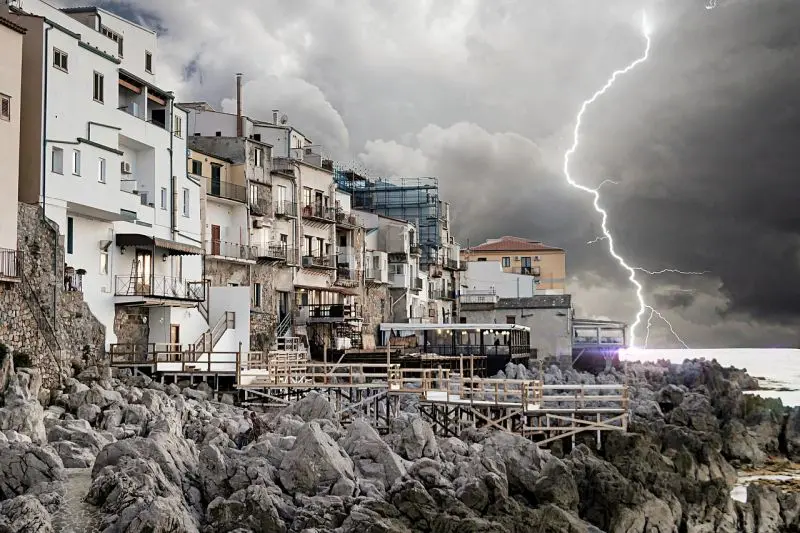
Challenge #2. Check the best weather conditions for photographic opportunities
If you belong to the category of lucky photographers, it's enough to go out and events will happen in front of you: you just have to capture them. For most others, getting a good photo requires careful planning.
If you want to use weather conditions to add impact to your photographs, a little internet research can help a lot. Even while you're out, you should monitor the weather conditions to improve your chances of getting the shot you want and also to ensure your safety.
Challenge #3: recognizing how the weather can create atmosphere in a scene
This can be complicated because You need to train your eye to see what effect the weather conditions will have on your subject.
The only way is to critically look at the available images (in books, Instagram, etc.), preferably both in ideal and bad weather conditions, to see the differences. Then think about how to apply your observations when you are the one shooting.
Challenge No. 4: being in the right place at the right time
Being in the right place at the right time rarely has to do with luck. To do this, you will need to look at past photo shoots as exploration missions.
A particular location photographed in good weather conditions will appear completely different when the weather is bad.
Familiarity with an area before photographing in bad weather will allow you to get into position faster and, with a bit of luck, will help you minimize exposure to the elements.
Challenge No. 5: always be prepared
The art of being prepared is fundamental and goes beyond monitoring the weather or being familiar with a particular location.
Being prepared means having the right gear, having your equipment ready to go, having non-photographic gear like GPS, umbrella, or a mobile phone, and taking precautionary measures to contact a friend or tell people where you are going (this is essential if you are in the mountains or by the sea).
Being prepared is important both to get the shot you want and to get home safely.
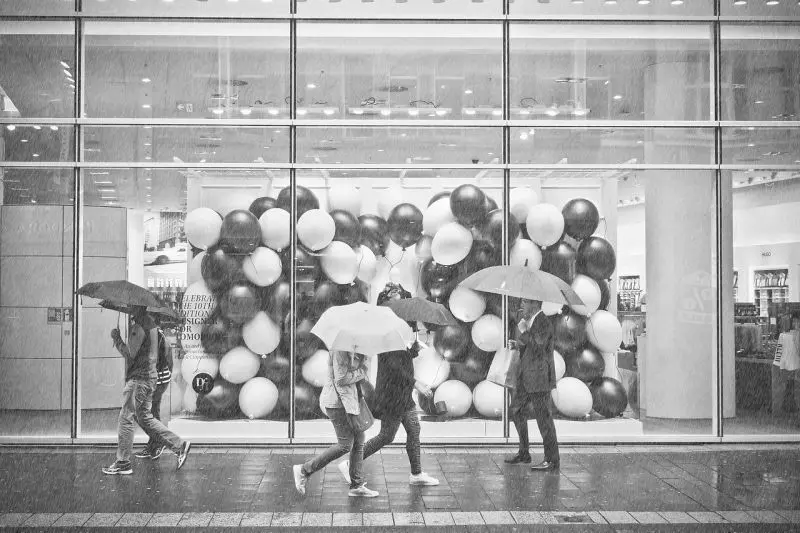
Why does bad weather allow you to alter images?
Lights and shadows
Different weather conditions can quickly change the way a scene is lit.
Clouds can diffuse the sun for even lighting, the sun can pierce through clouds like spotlights, rain can create reflections, etc.
Shadows, on the other hand, can allow isolation of a subject, create visually interesting layers in a scene, form leading lines and frames, etc.
Contrast
Contrast can add another level of complexity to a scene. Scenes that contain a good level of contrast can be used to highlight or isolate the subject.
Conversely, foggy conditions can reduce contrast, creating an atmosphere completely different from the previous image.
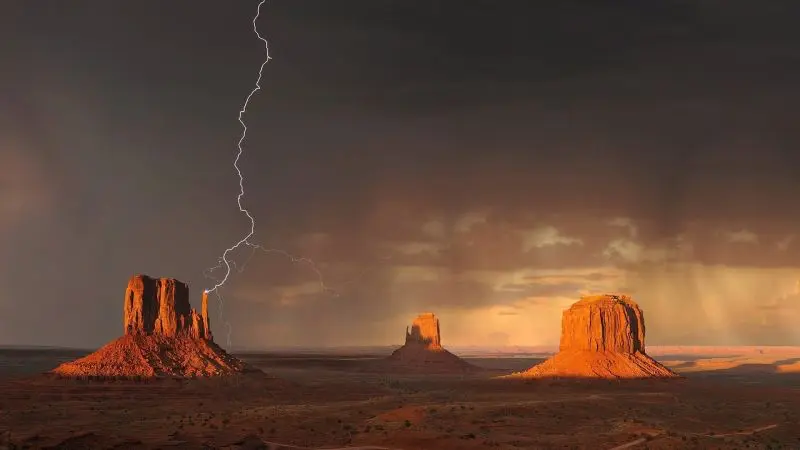
Brightness
The brightness of a scene will affect the length of time needed to expose the subject. Brightness will also influence your choice of whether or not to use artificial light to illuminate your subject.
For longer exposures, bad weather also offers the opportunity to highlight movement, while the use of artificial lighting will allow you to create dramatic highlights to accentuate the subject.
Composition
The third dimension is part of our daily visual experience. Photography, being a two-dimensional medium, requires a creative approach to composition to trick the brain of our viewer.
To do this, it is necessary to include compositional elements that are familiar and provide both perspective and scale. Clouds, fog banks, sun rays, etc., combined with the subjects of the image, can easily create the fundamental components to build the third dimension in your photographs.
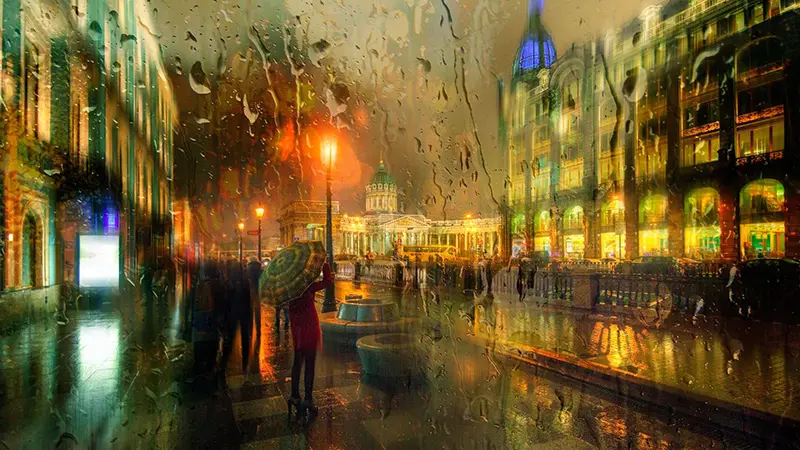
If you can properly manage these challenges, trying to take advantage of the transformative qualities of bad weather in your work, scenes you would otherwise have ignored will become great photographic opportunities and your images will have a high impact to amaze your audience.



