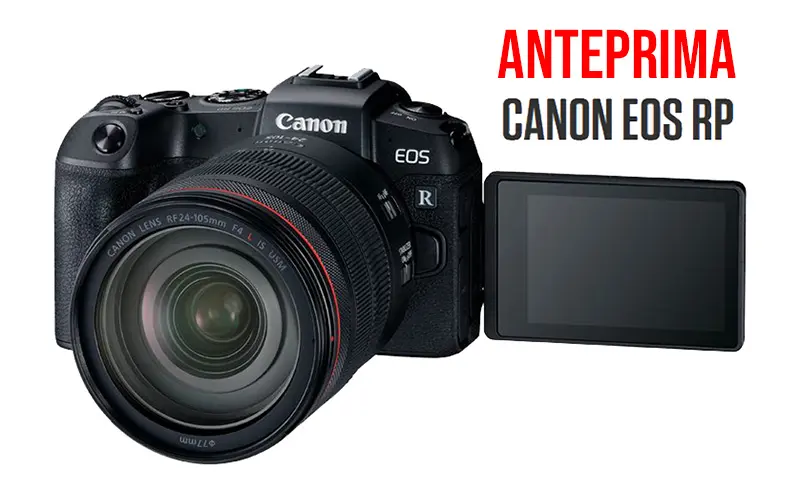
The Photoblog today was present in Milan at the press conference for the launch of the new Canon EOS RP, a new "mini" full-frame mirrorless aimed at advanced amateurs who don’t want to give up the full-frame sensor while spending relatively little.
After the conference I was able to get hands-on with the new EOS RP and in this article you will find my first impressions, while waiting to test it more thoroughly in the coming months.
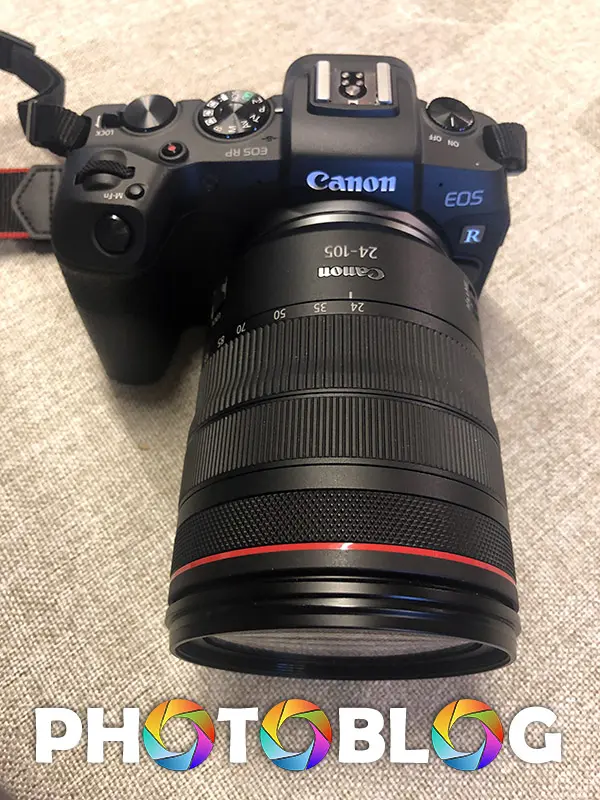
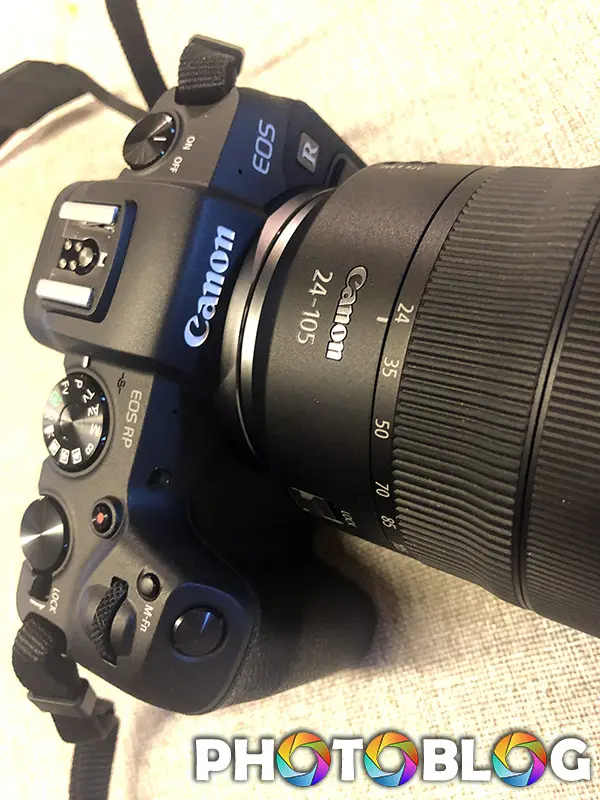
The first thing that impressed me is obviously the size and weight. The EOS RP is really small, I could almost hide the camera body with one hand! Having been used to an EOS 5D Mark III for years, you can imagine the difference, an abyss!
And the weight is another story, Canon managed to design a camera weighing only 485 grams (battery included), the lightest full-frame ever built by Canon. The chassis is made of magnesium alloy and it also feels nice to the touch.
Despite the extremely small size, the Canon EOS RP has a comfortable grip with a firm hold. All joints are well sealed with sealing materials and gaskets that prevent dust and moisture from entering the camera body.
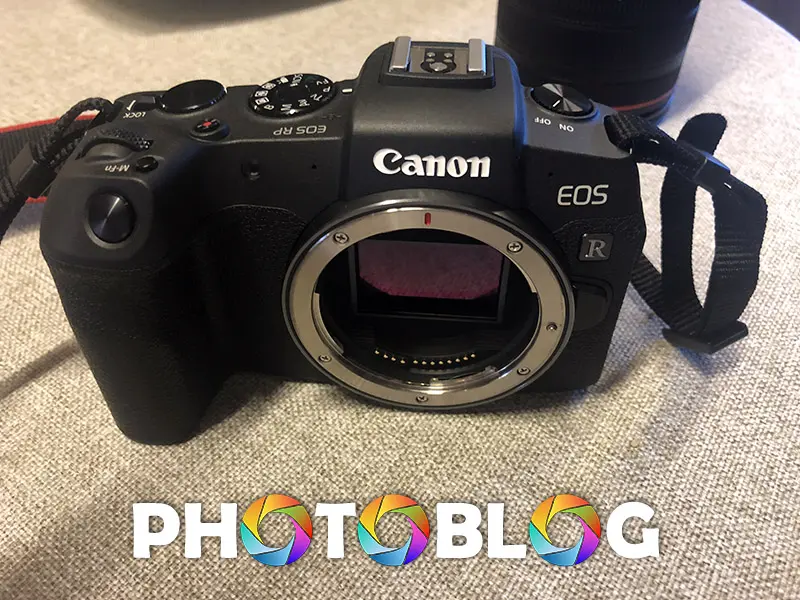
After turning it on, the first instinct I had was to put my eye to the viewfinder and here, being used to the optical viewfinder of a normal DSLR, I still find it hard to get used to. The electronic viewfinder of the EOS RP seems to have a slight lag in movement but it is known that this is one of the current limitations of all mirrorless cameras.
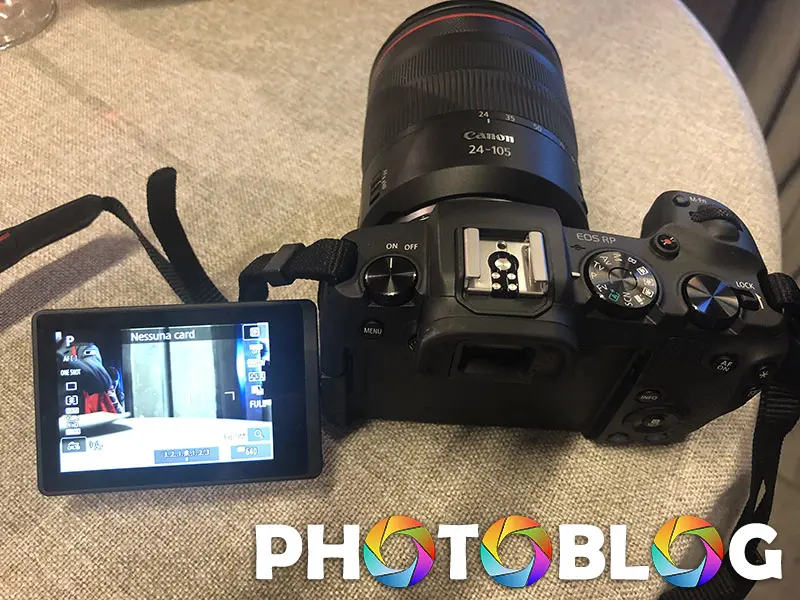
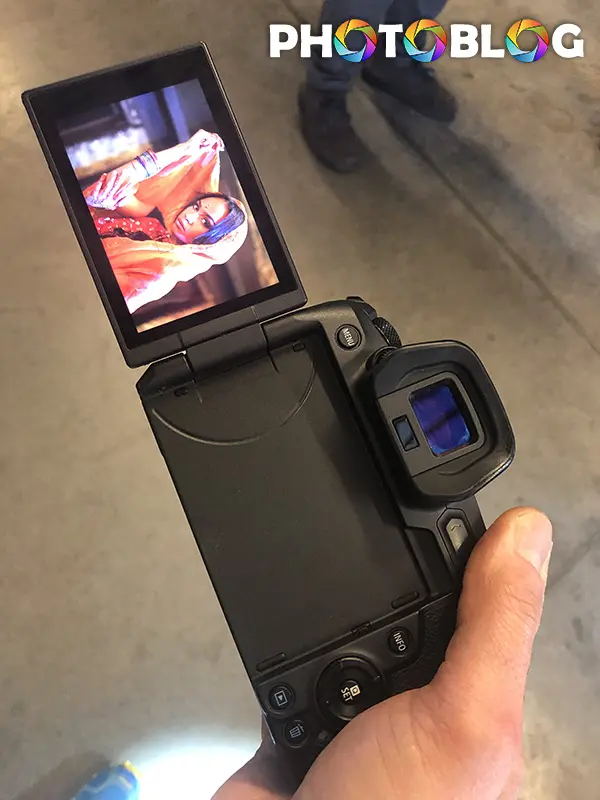
On the back there is a 7.5 cm diameter tilting LCD display with touchscreen. I found it excellent, very versatile especially for particular framing. The touchscreen allows not only to focus on the chosen area with a single click but also to quickly change the basic settings.
Inside the new Canon EOS RP we find a 26.2 megapixel full-frame CMOS sensor paired with the DIGIC 8 processor of the latest generation. Unlike its bigger sister EOS R, the RP lacks the shutter curtain that closes when changing lenses. This exposes the sensor to dust quite easily.
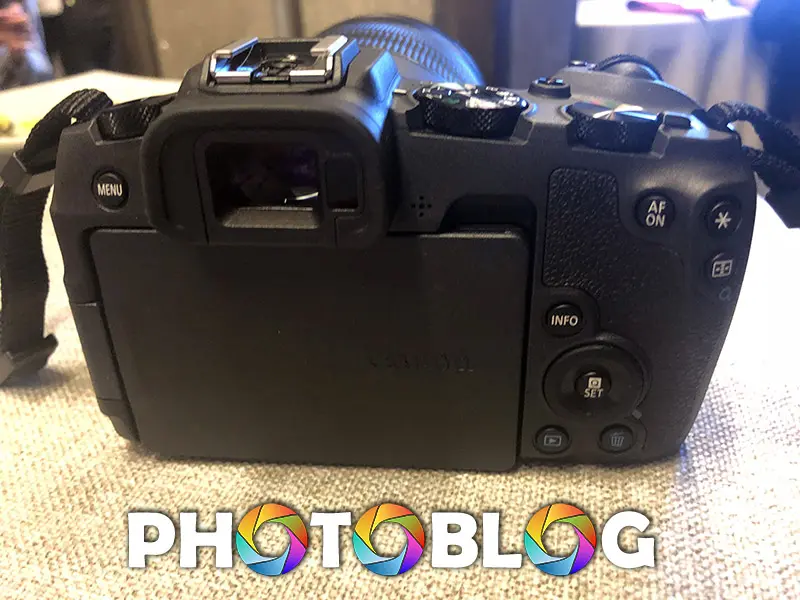
Other differences between the new and affordable EOS RP and the bigger sister EOS R are found in the autofocus. On the EOS RP we find 4779 autofocus points compared to the 5655 on the EOS R. Still, this is excellent autofocus that activates in just 0.05 seconds.
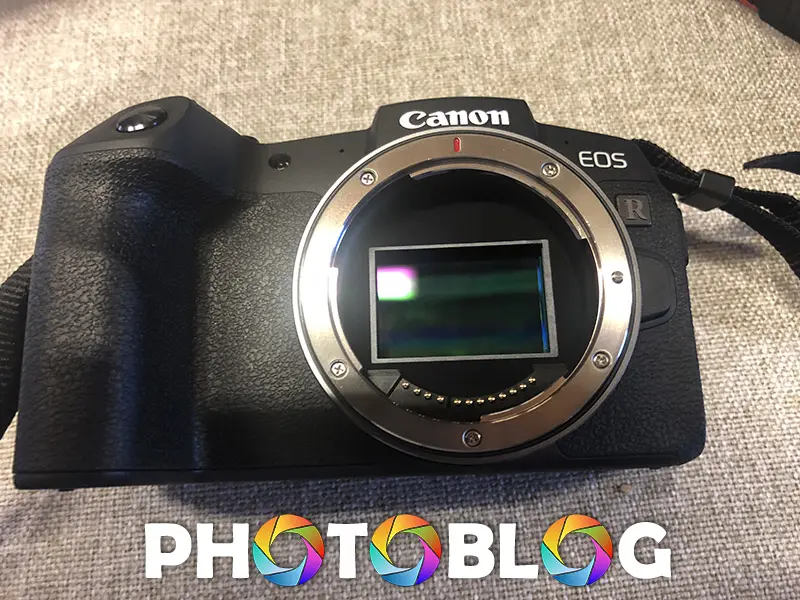
The ISO sensitivity of the EOS RP ranges from 100 to 40,000 (expandable up to 102,400) and I must say that, after some tests today, it performs very well at high ISO with excellent noise management.
I also tried burst shooting which, compared to the EOS R, loses 3 frames per second, dropping from 8 (EOS R) to 5 (EOS RP).
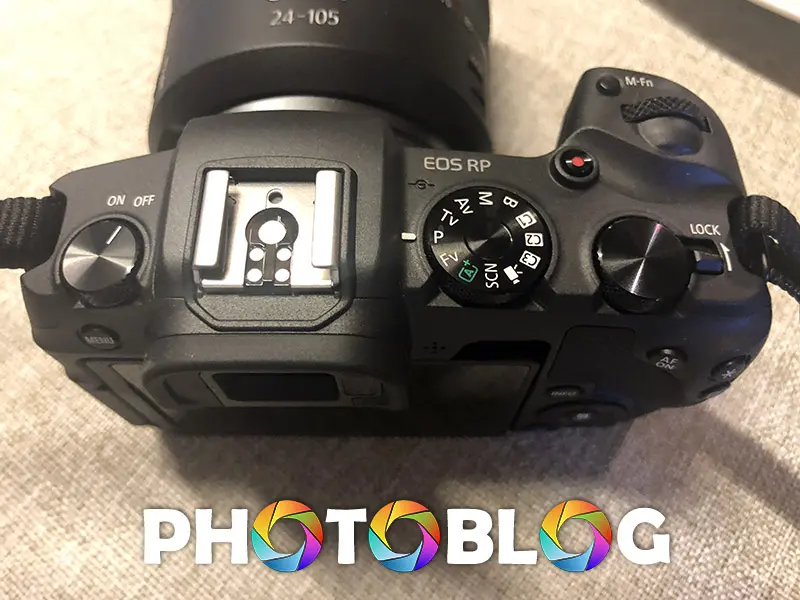
To minimize size, a LP-E17 battery, the same used on the EOS M, which reduces battery life to about 250 shots. Another small drawback is that there is only 1 slot for SD cards and it is placed next to the battery, which means that if we use the EOS RP on a tripod (or on a gimbal) it will be difficult to quickly replace the memory card; you have to remove it from the tripod every time.
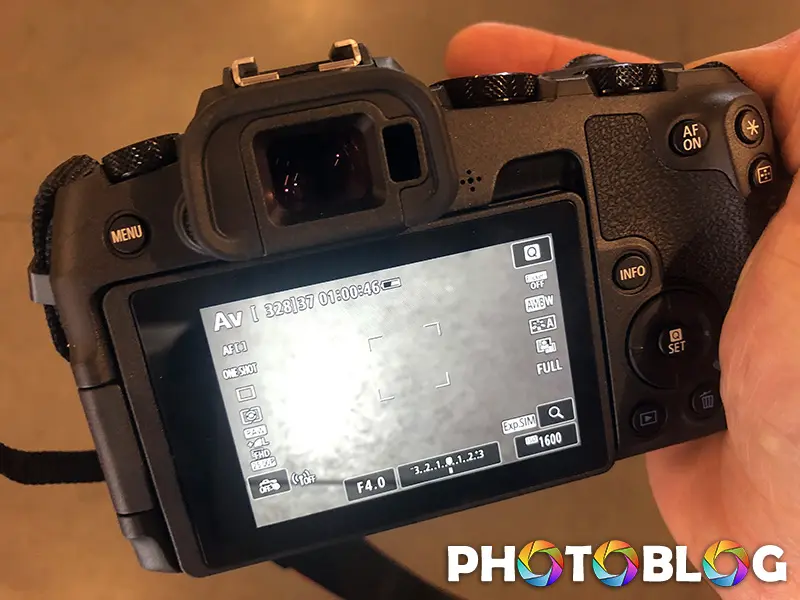
An interesting feature of the EOS RP concerns the software. There is an AF mode that automatically recognizes and focuses on the eyes of our subject. Also software-based is a mode that helps with shots in motion by continuously tracking our subject without losing tracking. Last but not least, a software function is the "focus bracketing" which can shoot up to 999 shots to then create final images with infinite depth of field. (all in-camera)
From the video recording point of view, the EOS RP performs very well and is capable of capturing 4K footage at 25 fps or FULL HD at 60 fps. In 4K not the entire sensor is used, so the footage is slightly cropped inward, but on the other hand, the same "flaw" is also found on the bigger sister EOS R, so I did not expect an improvement on the RP!
The internal software includes features such as: 4K timelapse, movie servo AF, and HDR video. The built-in 5-axis stabilization helps minimize camera shake during handheld shooting.
The addition of a headphone jack and a microphone input allows capturing excellent real-time audio. The vari-angle display is also useful for video shooting.
On the EOS RP we find wireless connectivity and also Bluetooth. These connectivity options allow us to quickly download our shots to smartphones or tablets and also to shoot remotely via Canon's Camera Connect app. When connected to our smartphone, the EOS RP can embed in the EXIF data of our images the GPS coordinates, allowing us to keep track of the stops on our travels!
Let's get to the most interesting point: the price. Canon wanted to attack the market by offering a full-frame mirrorless camera accessible to everyone. The release in Italy is scheduled for February 27th and the price will be 1569 euros for the body only, the most affordable full-frame mirrorless ever!
For me it was a pleasant surprise and in the coming months I will try to thoroughly test it from the image quality perspective. Today in Milan I had little time and couldn't take many shots. Below I leave you a couple taken with the Canon EOS RP paired with a Canon RF 24-105mm f/4L IS USM