
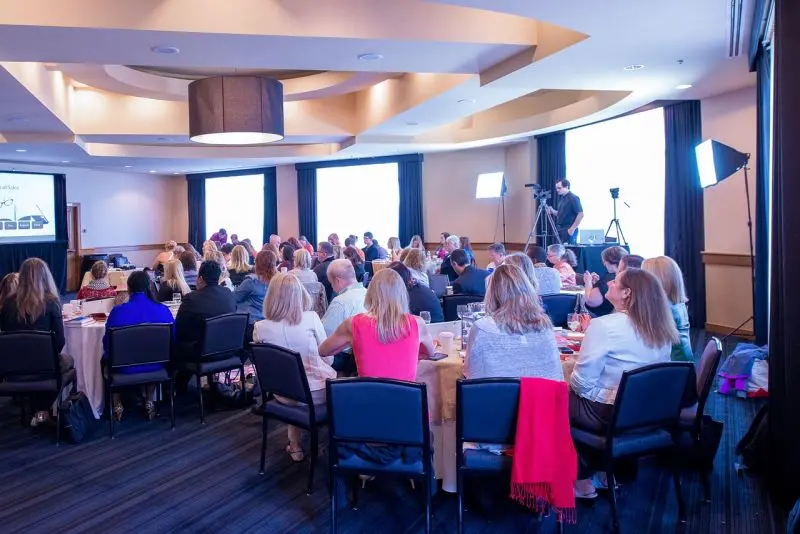
 At work, you are known as skilled photographers and you have to shoot all the conferences, meetings, and corporate parties?
Or, if you are part of some sports club or similar, you are tasked with being the official photographer of dinners, events, and social outings?
Then these tips on how to shoot conferences and events can help you and help you make a good impression with colleagues and friends.
Bring extra batteries, memory cards, cables, and chargers
As incredible as it may seem, the risk of reaching halfway through the day and having run out of camera battery and memory card space is not so remote! Just having to use a few more flash shots than expected or setting the camera to continuous focus, and you will quickly find the battery dead.
While batteries drain much faster than expected, in the same way, memory cards tend to fill up just as unexpectedly.
For this reason, spare batteries, chargers, and backup memory cards should always be present in your equipment bag. Of course, don't forget the connection cables!
Abandon automatic mode
Leaving fully automatic mode allows you to have greater control over what you are doing. If your camera allows it, select one of the aperture priority, to shutter priority or fully manual: this way you can adjust the flash (on, off, sometimes even the intensity), white balance, ISO, and sometimes even the aperture and shutter speed.
In automatic mode, your images will almost always look like a vacation snapshot: bright flash, wide focus, grainy appearance.
Be discreet. Candid images are the best.
The photographer must be present, but must not be the protagonist! You don't take the risks of Kim Jong-Un's photographer in North Korea, but at conferences, seeing someone hopping around everywhere, disturbing and getting between people to take photos, is not a pleasant sight.
So, be discreet. Being “invisible” also allows you to capture people unposed, while they behave naturally, relaxed and natural. The images thus tell a story.
Pay attention to the background
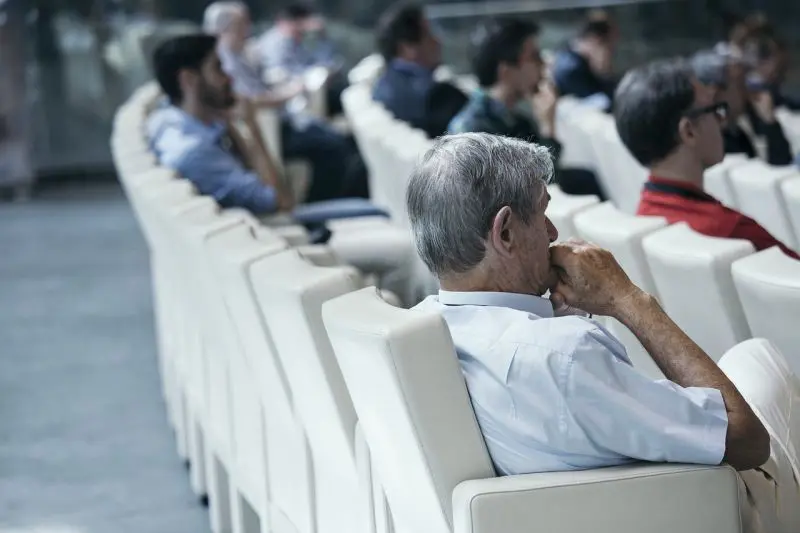
As always, it is necessary pay attention to the background: light trees and poles sticking out from people's heads are mistakes you must avoid. Before shooting, just take a quick look at the background.
Is there something strange coming out of the person? Something that could be embarrassing or distracting? If yes, wait to shoot and recompose the image.
Try not to use the flash
Taking photos at a conference is not easy. Most of the time the lighting is poor, but using the flash is not always the best idea. A flash can remove the texture and depth of your photo, but not using it won’t necessarily make the photos blurry and dark. It might.
Increase the ISO sensitivity so you have a shutter speed fast enough to eliminate motion blur: better to have a slightly grainy image than a blurry one.
Pay attention to the lighting
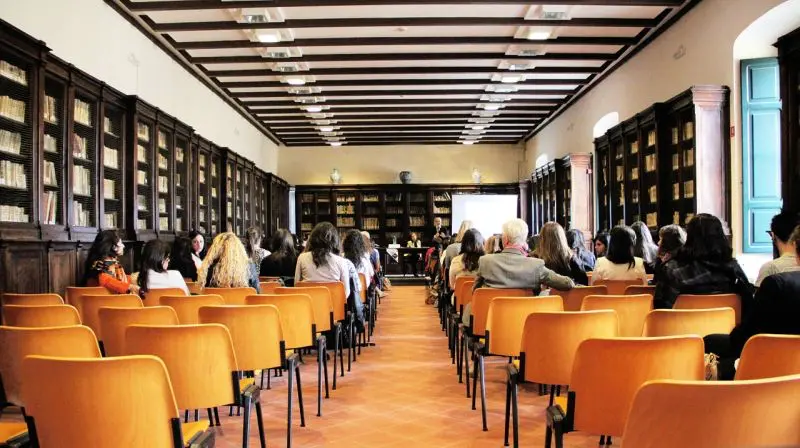
This is connected to the previous point: while you take care not to use the flash pay attention to the ambient lighting. Is there light coming through the windows, are there shadowed areas and others brightly lit? All these things make shooting difficult, but try to make the best of what you have.
Sometimes, however, the use of flash is indispensable, but avoid direct light and diffuse it through the ceiling or a diffuser.
Set the white balance
Another advantage of not using automatic mode is the ability to set the white balance on the images. Using RAW mode you can always correct it later, but if you set the correct white balance the images will be “right” from the start.
More is better
Take more shots for every image you want to capture. Why? Because people blink, look away, etc. By shooting multiple images quickly, you significantly increase the chances of getting the right shot.
It's not the camera or the lens, it's the photographer that counts.
Cameras and lenses are important; in some conditions, you can only get beautiful images if your photographic equipment allows it. On the other hand, you might have top-performing gear without your images standing out. You can also use a cheap plastic toy camera and do incredible things.
Cameras are tools. Just tools. What makes the difference is the photographer and how they manage to interpret light and shadows.
Shoot, have fun, and always keep experimenting.



