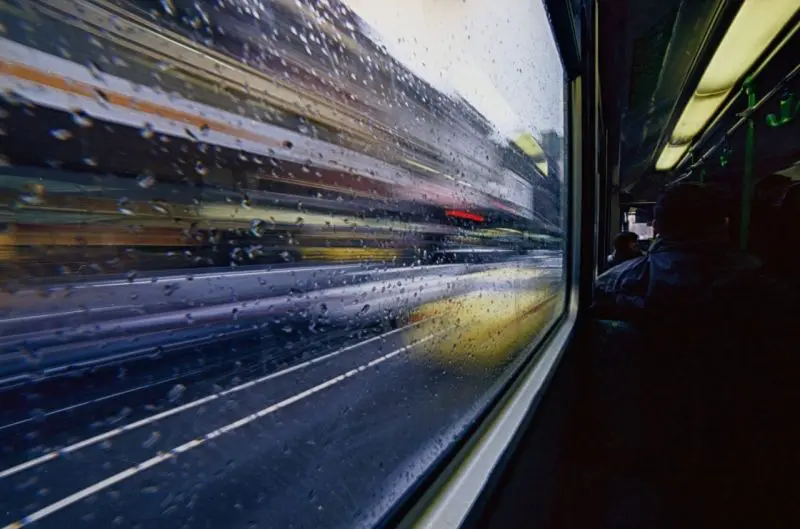
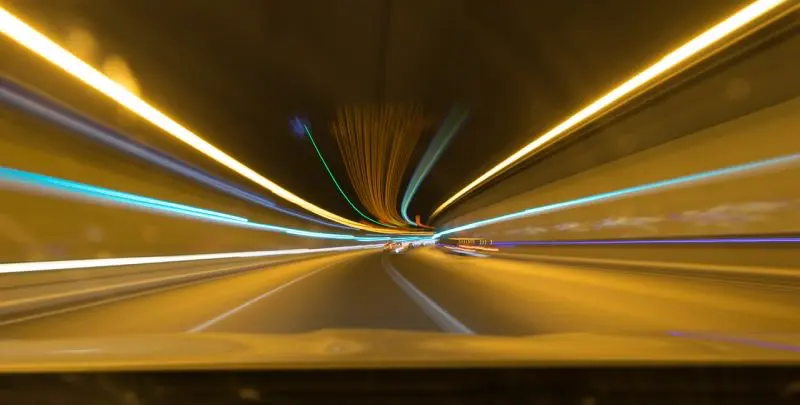
 During our daily travel by vehicle (whether it’s a car, train, or bus) there can be endless opportunities to take unique photographs: landscapes, funny signs, unusual animals, modern or ancient buildings, unusual compositions.
These missed opportunities can be frustrating for a photographer, especially if you can’t stop to capture them.
Often these missed opportunities are unique: you might never pass that place again, and the time and weather conditions can be hard to replicate. It’s a shame to lose these chances, but perhaps with some knowledge and planning, something can be done to remedy it. Certainly, it’s not an ideal situation, but it’s much worse not to try or do nothing.
Let’s look at some tips on how to do it.
When to try and when not to: safety is paramount!
It goes without saying that if you are driving a vehicle, your only concern must be paying attention to the road, certainly not taking photographs: in the time it takes to aim the camera, focus, and shoot, you cover several meters and an obstacle could be impossible to avoid.
Even if you are a passenger, you must act in a way that does not obstruct the driver: safety is paramount. If you are on public transport (bus or train), do not hinder other passengers: it’s not worth arguing over a photo.
In any case, do not lean out of the vehicle, and if you slow down or stop, make sure you do not obstruct traffic flow and only stop in a safe place (and the emergency lane on the highway is not a safe place!).
If you use an action camera mounted on the vehicle (whether inside or outside), make sure everything is securely fastened: the equipment could be damaged, you could lose it, or it could become a danger to you and others.
Is it worth it?
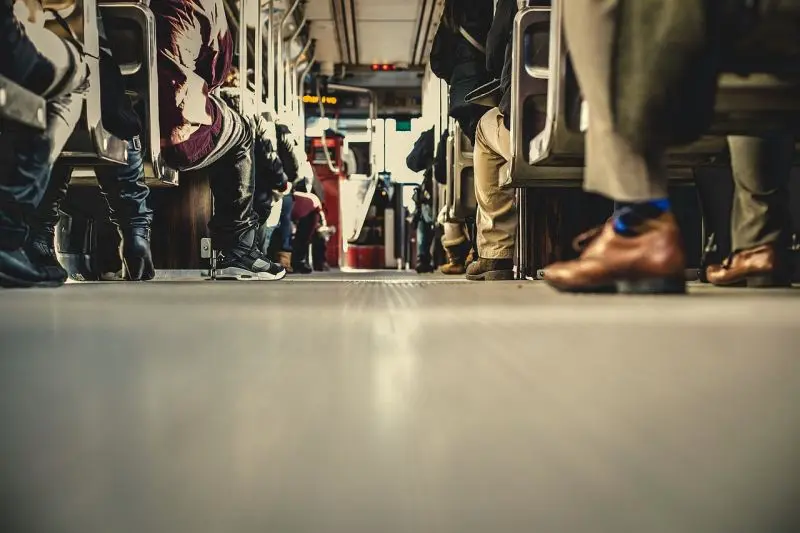
Even if everything is fine in terms of safety, there are some other things to consider before you start photographing. Nowadays, driving through a town taking photos here and there might be considered quite suspicious and attract the attention of law enforcement. Also, being too focused on photos might make you lose the enjoyment of the journey and the rest of the scenery. Photographing inside a vehicle (bus or train) might also not be ideal if your travel companions do not want to be photographed. One solution to still get a different image is to avoid capturing any faces, as in the image below.
How to photograph
Since you are moving, your subjects might approach at very high speeds. Practically speaking, to get a sharp image, this means choosing a very high shutter speed, sufficient depth of field, and an ISO value high enough to make it all possible.
The shutter speed depends on the speed at which you are moving, but generally the faster the better. 1/400 can be a good starting point. Also keep in mind that the closer the subject, the more the speed factor is emphasized. For a distant subject, motion-related issues are reduced.
Regarding depth of field, this depends on the subject you are photographing. In case you want to capture a landscape, everything should be in focus, so you will need to use an aperture of at least f/8, in order to have a sharp capture of the entire view.
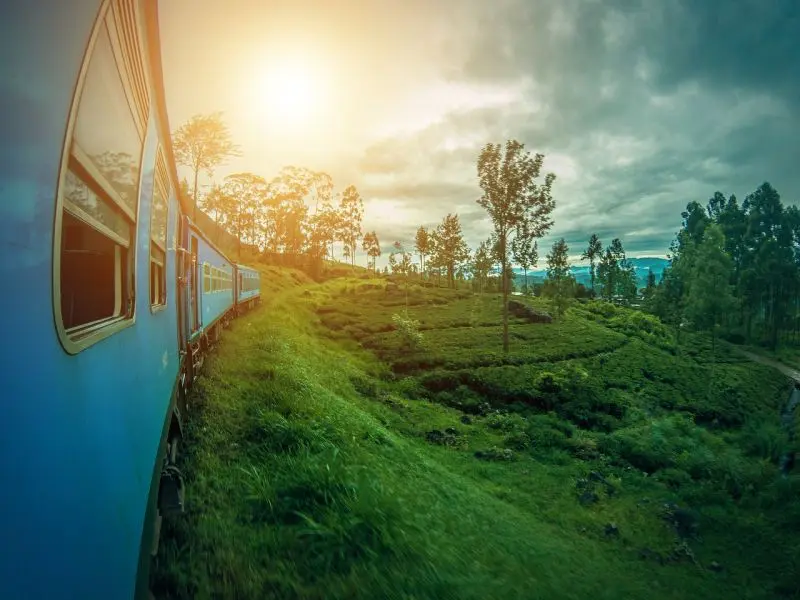
If you have the chance, try different settings, but if you can only take one or two photos, try using a small aperture. As mentioned, this depends a lot on the type of photography you are doing and the light levels.
As for ISO level, the lower you select it, the better. Remember, however, that raising the ISO level a bit, even at the cost of introducing some noise, could help you select the shutter speed and aperture needed to get your photo.
Plan well
It might seem difficult to plan in these situations, but usually there are some things that can help you create the best possible photograph.
Even before taking the photo, you can observe the light levels outside, which can help you with exposure.
You might also be able to get a good composition by observing the landscape outside and imagining how it might look behind that curve or beyond the next one. You can also see when there will be power lines in your photo: if they don't serve your photo, they are quite a distraction!
Furthermore, take advantage of one of the great benefits of digital photography: you can take many photos practically without any cost, at least one might be the right one.
Optimize
To get the best possible photo, you need to open the window to avoid unpleasant reflections or dirt in the photo. A closed window will also limit your movements and options when it comes to getting the best composition.
This is obviously unless the window, for example wet, becomes a functional part of your image.
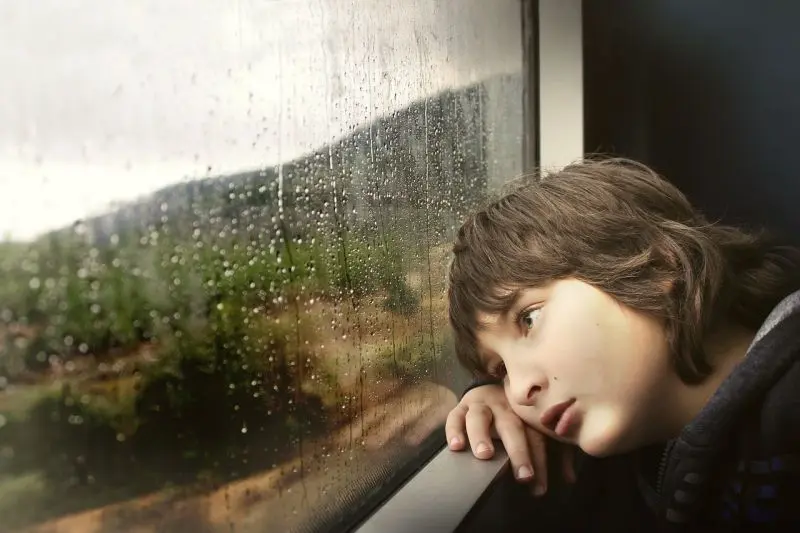
There are many situations where opening the window is not really a great idea, though. Remember that the most important thing is safety.
If it is not possible to open the window, compose through the viewfinder and possibly use a polarizing filter to avoid getting reflections and dirt in the photo.