
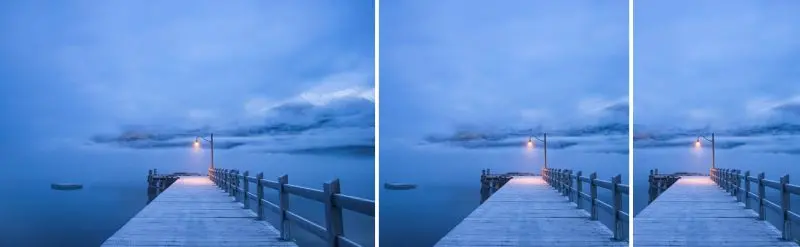
Learning to crop a photo can allow us to turn a good photograph into a “large” photograph, full of emphasis and great impact.
Framing errors
Sometimes we can lleaving too little space for the subject and so we position it too close to one of the edges of the frame.
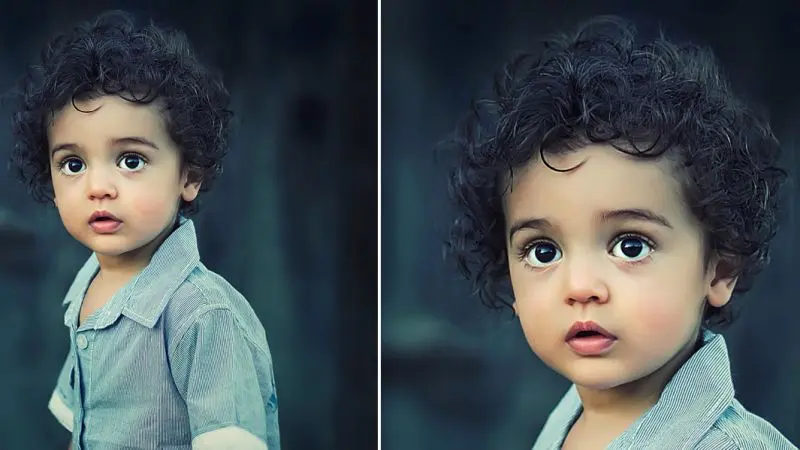
This mistake can create a feeling of constraint, especially if, for example, the subject is a person looking out of the frame: if they don't have enough space in front of them, their gaze appears cut off.
In the image on the left we have left too little space for the child, their gaze feels blocked. With a different crop we can achieve a different and more harmonious result.
Another framing mistake is cutting off part of the subject, at the moment of shooting.
While cropping images cannot fix framing errors (you can't recreate a missing part!), it can help hide and fix a mistake!
Finding a new balance
Another mistake that can be fixed with cropping is finding a new balance for the image.

If our subject ended up in the wrong place, the image is not properly balanced. With cropping, it is possible to reposition the subject, respecting for example the rule of thirds, making the image more balanced and dynamic.
The dog, positioned along the guidelines of the rule of thirds, provides a different reading key.
Eliminating distractions
There is nothing worse than thinking you have taken the image you have been searching for your whole life, only to discover that somewhere in the background there is a distracting element you didn't see when framing your shot.
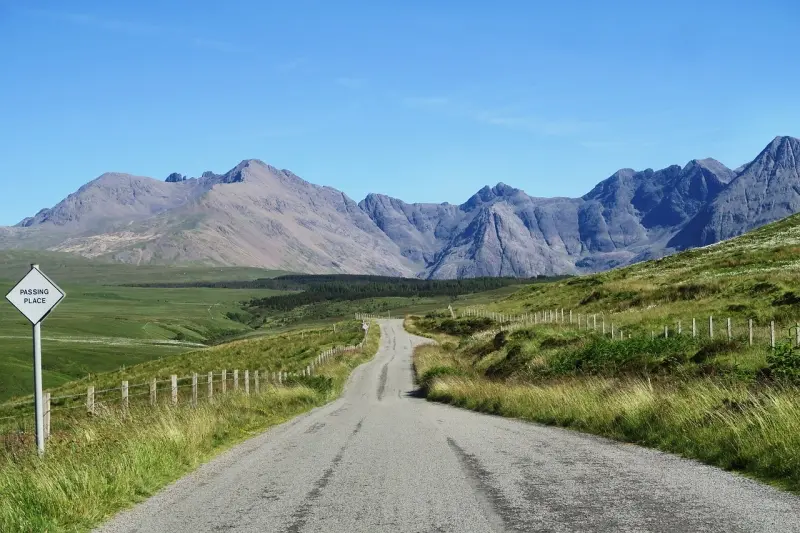
If the presence of the sign on the left is intentional, to define the place and time of the shot, then it is fine to keep it. If instead it ended up "by chance" in our image, then let's remove it.
Cropping can solve this problem, especially when the distraction is located at the edges of the image. If it is more central, it might be necessary to explore some other post-editing technique.
Finding new formats
Sometimes the problem with an image is that the format you chose to shoot in (that is, how you held the camera, vertically or horizontally) is simply wrong for the image.
While you can maintain the shape of your image with cropping, you can also change it considerably by shifting it from a horizontal frame to a vertical one or vice versa.
In this way, you can also move to some non-standard image sizes if it enhances your shot.
For example, sometimes cropping an image into a square can add impact, or cropping the top and bottom of a horizontal shot into a panorama can also have a dramatic effect. Experiment with different image shapes to see what works best.
In the image above, the subject is always the same; the different cropping allows for various interpretations.
Things to consider before cropping a photo
- Duplicate your images firstIt is always good to keep an original so you can go back and find a different way to crop.
- Use photo editing software, not the software available on your camera. Viewing the image on a computer allows you to better see details to remove that are not always clearly visible on the camera's monitor. Additionally, it is easy to try different cropping angles.
- Take your time with cropping. There are almost unlimited ways to crop a photo, and it’s worth trying some before settling on one.
- Be careful with printinging. If you change the shape of the image, this could make printing more difficult, especially if you send the images to a photo lab that generally only prints in standard shapes and sizes.
- Consider the original dimensions of the image. Cropping works best when you start with a sufficiently large image. When you crop a photo and then try to view it at the same size it had before cropping, you will notice that the pixels appear large. If you are using small images, keep this in mind or you will notice that the quality of your images can degrade to an unusable level.
- Try to shoot correctly. Ideally, use cropping as a fine adjustment of a well-composed image. With experience, you will find that your image framing improves and you will probably crop drastically less in post-production. The foundation is therefore to have a good theoretical foundation related to image composition.



