
How to choose ISO?
Just look at camera specifications: year after year, the ISO performance of cameras is continuously increasing.
While a few years ago shooting above 800 ISO meant introducing an unacceptable noise in the image, now, new cameras allow shooting at significantly higher values without introducing visible background noise.
What are the PROs and CONs of increasing ISO?
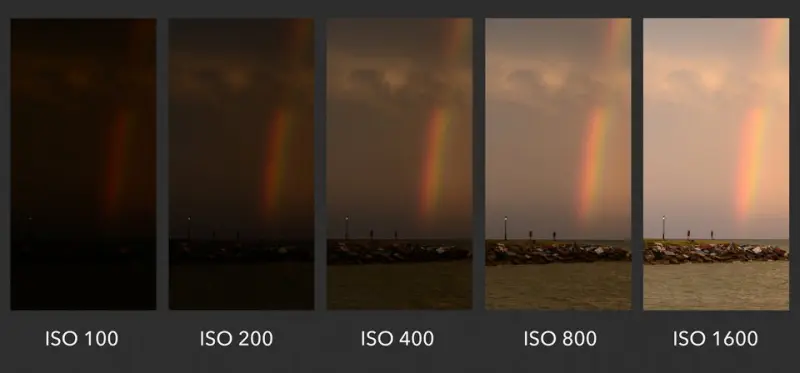
Raising the ISO makes the sensor more sensitive to the light entering through the lens. So asetting with high ISO will record a scene more brightly compared to one with low ISO.
The shutter speed increases and it is possible to achieve a greater depth of field because it is possible to stop down the aperture more.
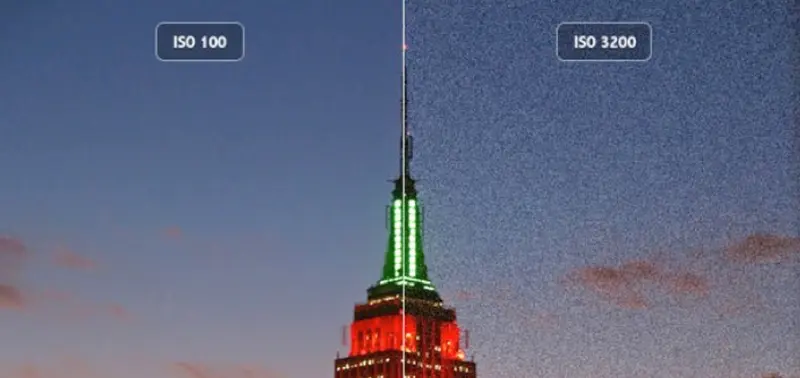
Increasing the ISO, however, results in an increase of noise (unsightly and detail-reducing), a reduced dynamic range and a reduced color fidelity compared to the original.
How far can you push the ISO increase?
The answer is very simple: as much as necessary for the photo you want to take.
In reality, the answer is more complex and depends on what you need to achieve from the final image, remembering that increasing the ISO will affect the final output.
If the purpose is a “memory,” then even a noisy image can be worthwhile. Conversely, if the final output is to be published or sold, the “cleanliness” of the image is important, as well as the color accuracy to the subject.
Consider the scene
If you are shooting a landscape, it is important to preserve a high dynamic range to obtain details both in shadowed areas and in the brighter ones. In this case, it is better to work with the lowest possible ISO values.
If, on the other hand, you want to freeze an action while maintaining an acceptable depth of field, a higher ISO value will allow a fairly narrow aperture and at the same time a high shutter speed. This is especially true if you are shooting indoors. Remember that, however, an image with a bit of noise is always preferable to a blurry one.
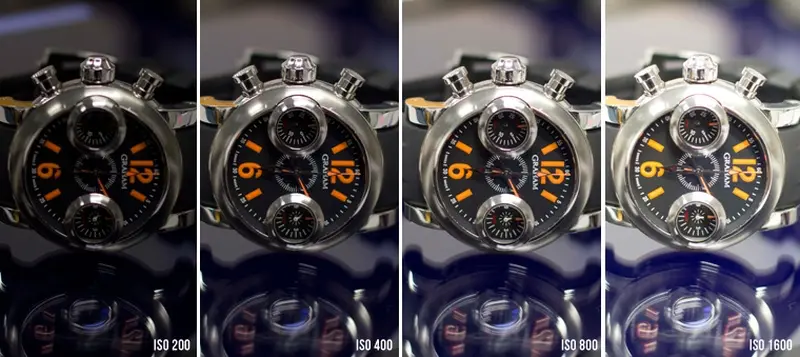
If you need to shoot a person, high ISO can affect the natural skin tone or lead to a loss of details (for example, eyelashes).
To choose which ISO to use, you must always consider your subject and how important details and color fidelity are.
Now that we have seen what changing ISO values entails, we are better prepared to decide which ISO value to use.
So:
- What amount of noise or loss of detail are you willing to accept?
- Do you really need all the dynamic range that your camera can offer?
If the general rule is to keep the ISO value as low as possible, don’t let a bit of noise or reduced dynamic range stop your projects!



