
Free Online Photography Course – Lesson 3 – The Lens
How it works:
Lens is a generic term that refers to an optical device capable of capturing and reproducing an image.
Digital camera lenses consist of a series of lenses that focus light onto the focal plane and sensor. These lenses are made of high refractive index glass and undergo special coatings to minimize reflections and chromatic aberrations.
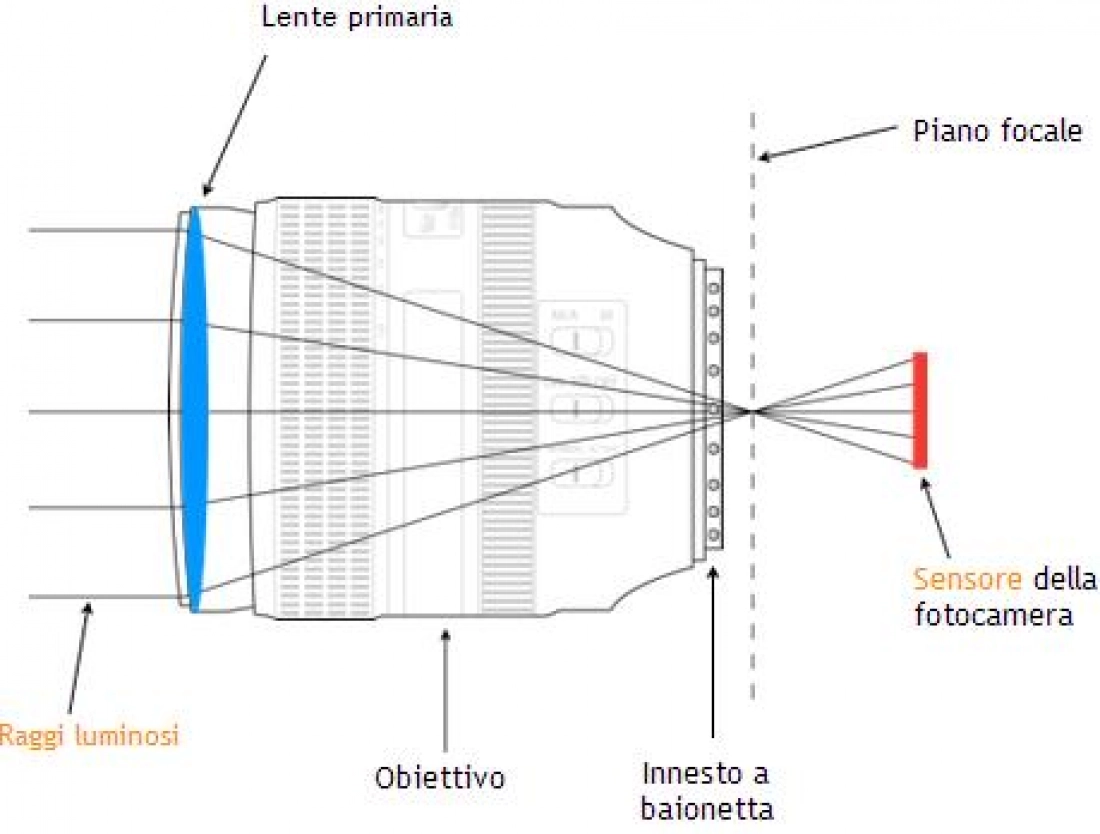
The lenses move along the optical axis of the lens both during focusing and when we change the focal length, that is, when we “zoom in” or “zoom out” on the subject to be photographed (zoom lenses).
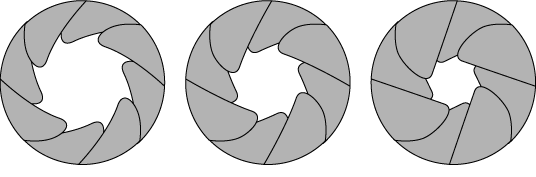
Inside the lenses, between the lenses and the sensor, is the diaphragm, a fundamental part of a lens. This device, made up of multiple metal blades, can open or close variably to regulate the amount of light entering our camera. (We will explore this more in upcoming lessons).
All modern lenses also feature an autofocus system that allows automatic focusing thanks to an electric motor capable of moving the lenses with extreme precision.
In more expensive lenses, you can also find image stabilization. This system allows capturing images without the shake caused by our hands or breathing. It works through a mechanical system with a gyroscope that moves the lenses to compensate for involuntary hand movements, counterbalancing the shift. As a result, the image will be sharper and less blurred compared to one taken without stabilization. The downside is that, being extremely complex, it usually increases the cost of the lens.
Main features:
It is often difficult when faced with an advertisement for a lens because, besides the brand, there are abbreviations that are not always clear. (Example: Canon 70-300mm F4-5.6 IS USM)
No problem, these abbreviations summarize the main features of the lens; let's look at them together:
Focal length
One of the main features to consider when buying a lens is the focal length. This length, expressed in millimeters, is the distance between the optical center of the lens (usually near the diaphragm) and the focal plane.
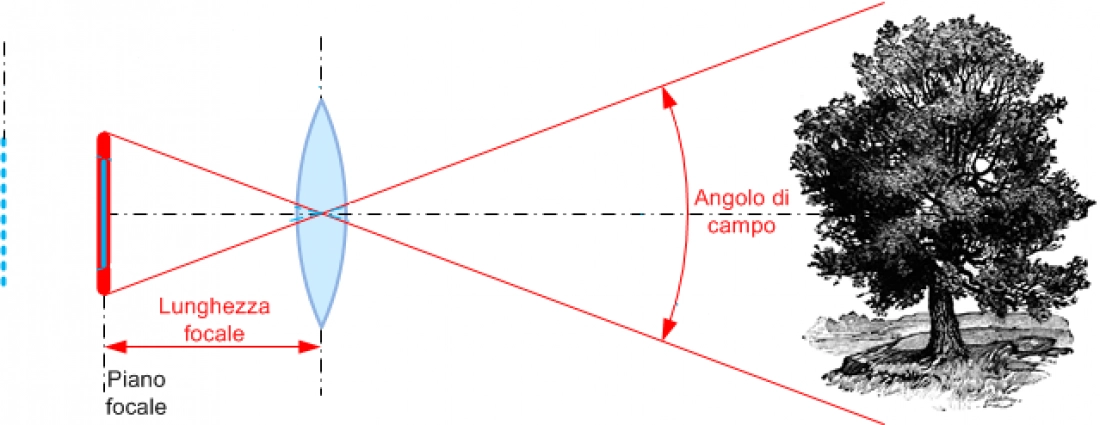
The focal length directly affects the angle of view (measured in degrees), which is our viewing angle when looking through the viewfinder. The focal length is inversely proportional to the angle of view.
With a short focal length, we talk about a wide-angle lens with a large angle of view; conversely, with a long focal length, we have a narrow angle of view (telephoto lenses).
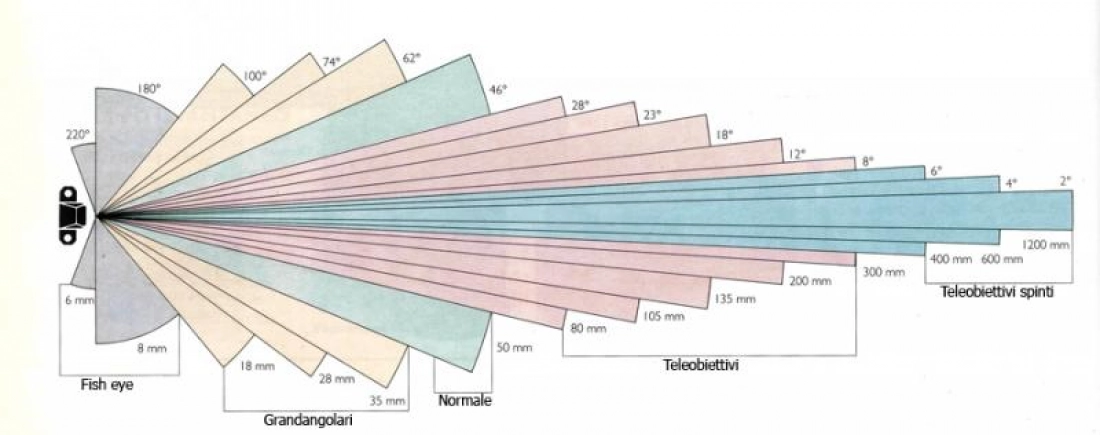
On the market, we can find zoom lenses and prime lenses. Zooms differ from primes because they allow you to “zoom in” or “zoom out” on the subject by changing the focal length.
Using the previous example with the Canon 70-300mm F4-5.6 IS USM lens means I can vary the focal length from a minimum of 70mm to a maximum of 300mm.
Maximum Aperture
The aperture, which we will discuss in more detail in upcoming lessons, indicates the size of the diaphragm opening inside the lens during the shot. This aperture is measured by a specific unit and indicated by the letter “F” followed by a number. The lower this number, the brighter the lens.
A very wide aperture (thus a low “F” number) allows for a pleasant blurred effect and, by letting in more light, enables shorter shutter speeds with a reduced chance of motion blur.
The maximum aperture of a lens is therefore a fundamental parameter to consider.
Most zoom lenses have 2 maximum aperture values. These values indicate the maximum aperture at each end of the focal length range. For example, a Canon 70-300mm F4-5.6 lens means that at 70mm the maximum aperture is F4, while at 300mm the maximum aperture is F5.6.
Note that these lenses become less bright as we “zoom in” on our subject. Therefore, lenses with a maximum aperture FIXED both at the minimum and maximum focal lengths are preferable. Obviously, needless to say, these lenses are much more expensive!
Types of lenses:
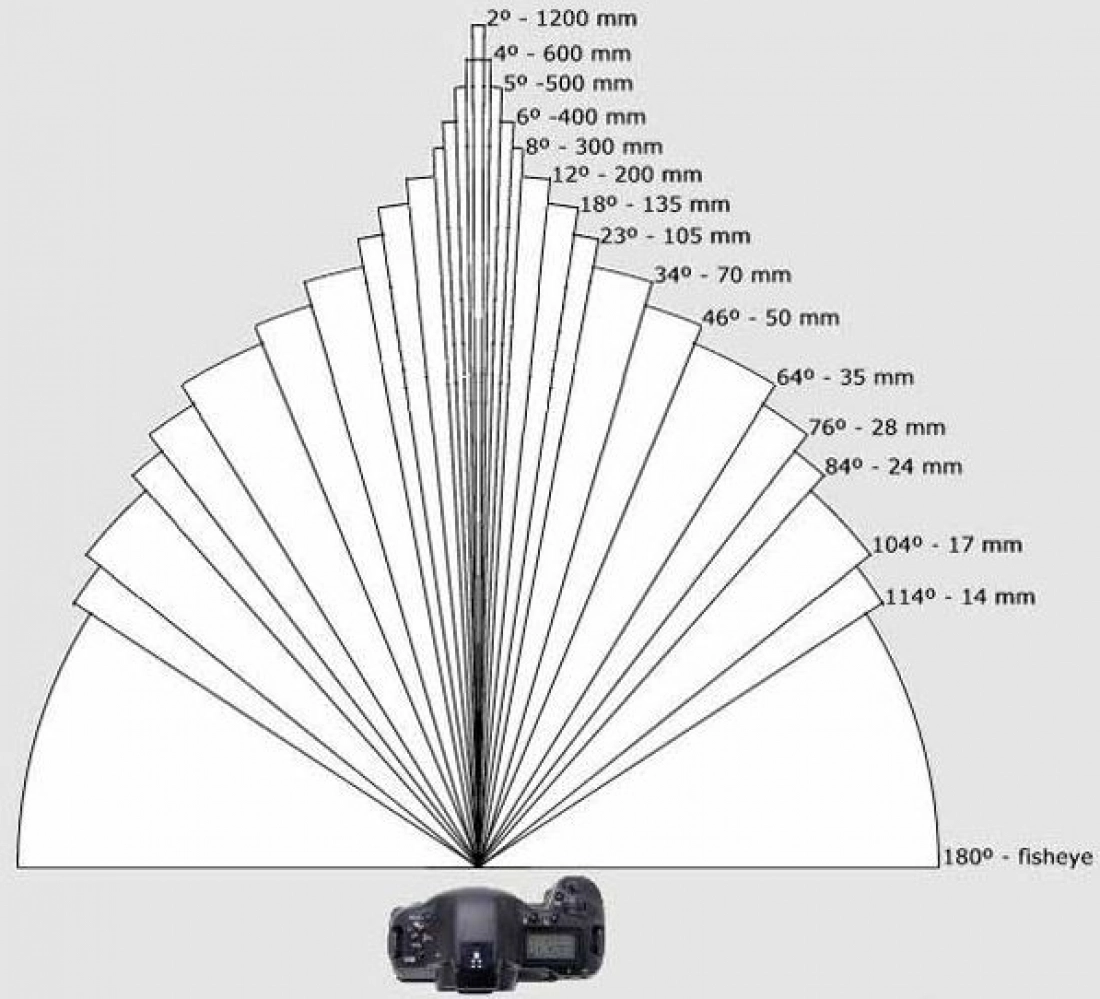
Wide Angle
The wide-angle lens is suitable for landscape and architectural photography, has a short focal length (less than 35mm) and consequently a very wide angle of view.
This allows us to take images even from very close to our subject. Besides landscape photos where we can include a large part of the scenery in front of us, it is particularly recommended in historic city centers where shooting space is always very limited.
Standard zoom
A standard lens (also called “normal”) is a lens with a focal length around 50mm. It is called this because it closely approximates the visual field of our eyes. Generally, however, a lens with a focal length from 35mm up to 70mm can also be considered “normal.”
It is the first lens a beginner should buy, used for everyday photos and often used for portrait photography.
Telephoto lens
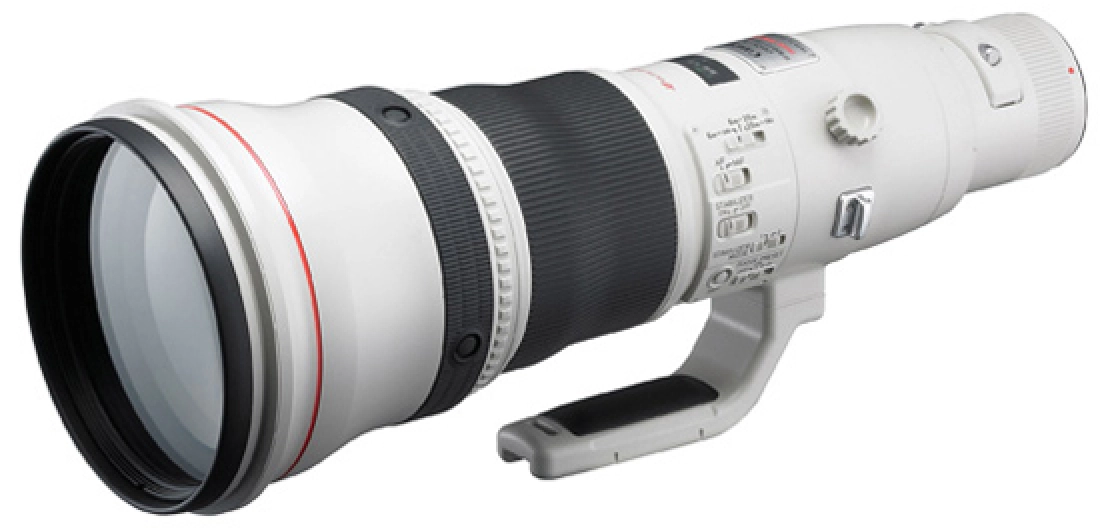
A telephoto lens has a focal length starting from 70mm and up. It has a very narrow angle of view and therefore allows you to “bring closer” the subject you are photographing.
It is often used for portrait photography or wildlife photos (distant and unapproachable animals). It is also recommended for capturing sports events.
Macro
A macro lens allows a very close framing of the subject with a 1:1 (or greater) reproduction ratio. It is very useful for photographing dew drops, flowers, and insects in general. It enables the creation of highly impactful images by making details clearly visible that would normally be difficult to see with the naked eye.


Tilt-shift
The tilt-shift lens is a very special and little-known lens. It allows perspective corrections by controlling converging verticals. It is particularly used for architectural photography.
Fisheye
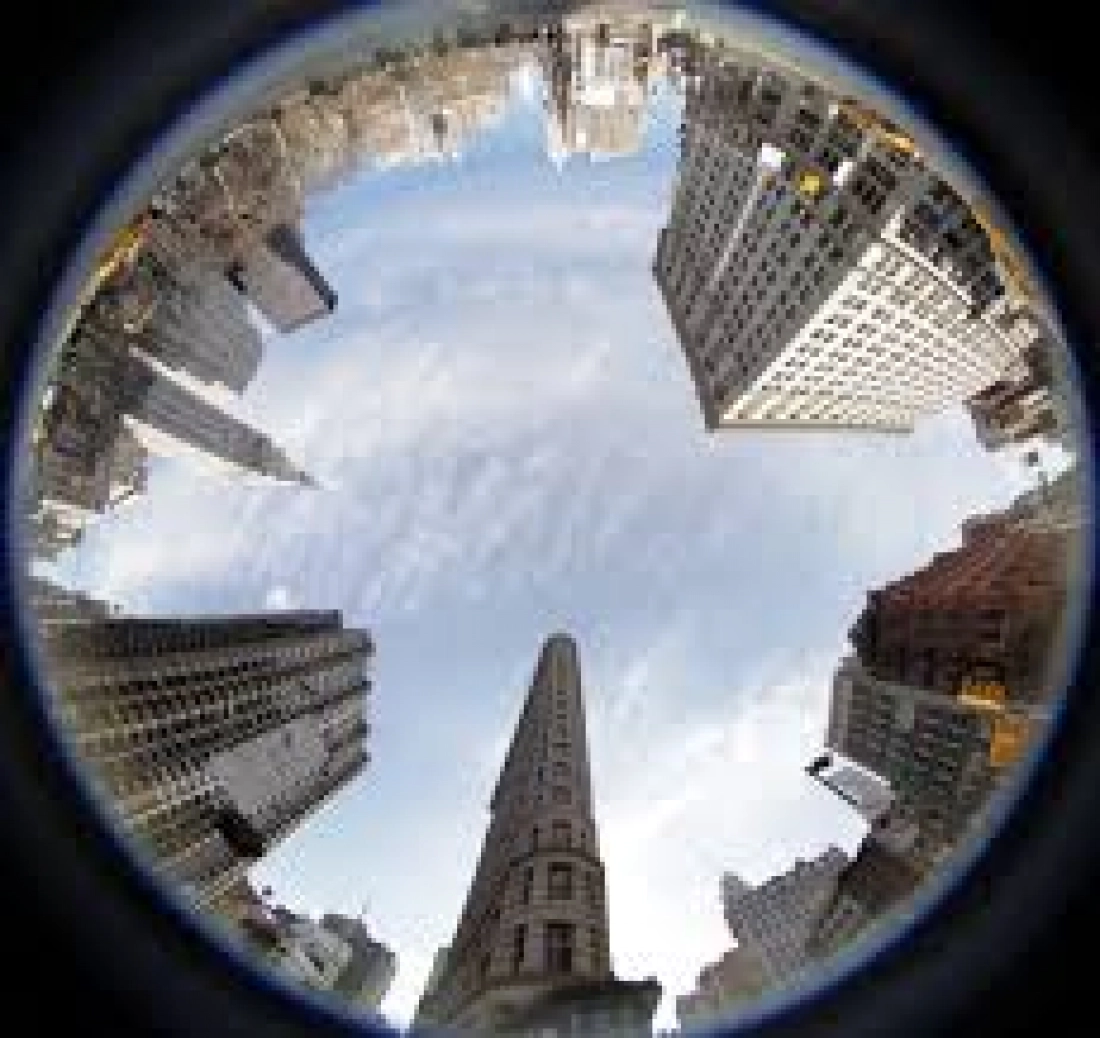
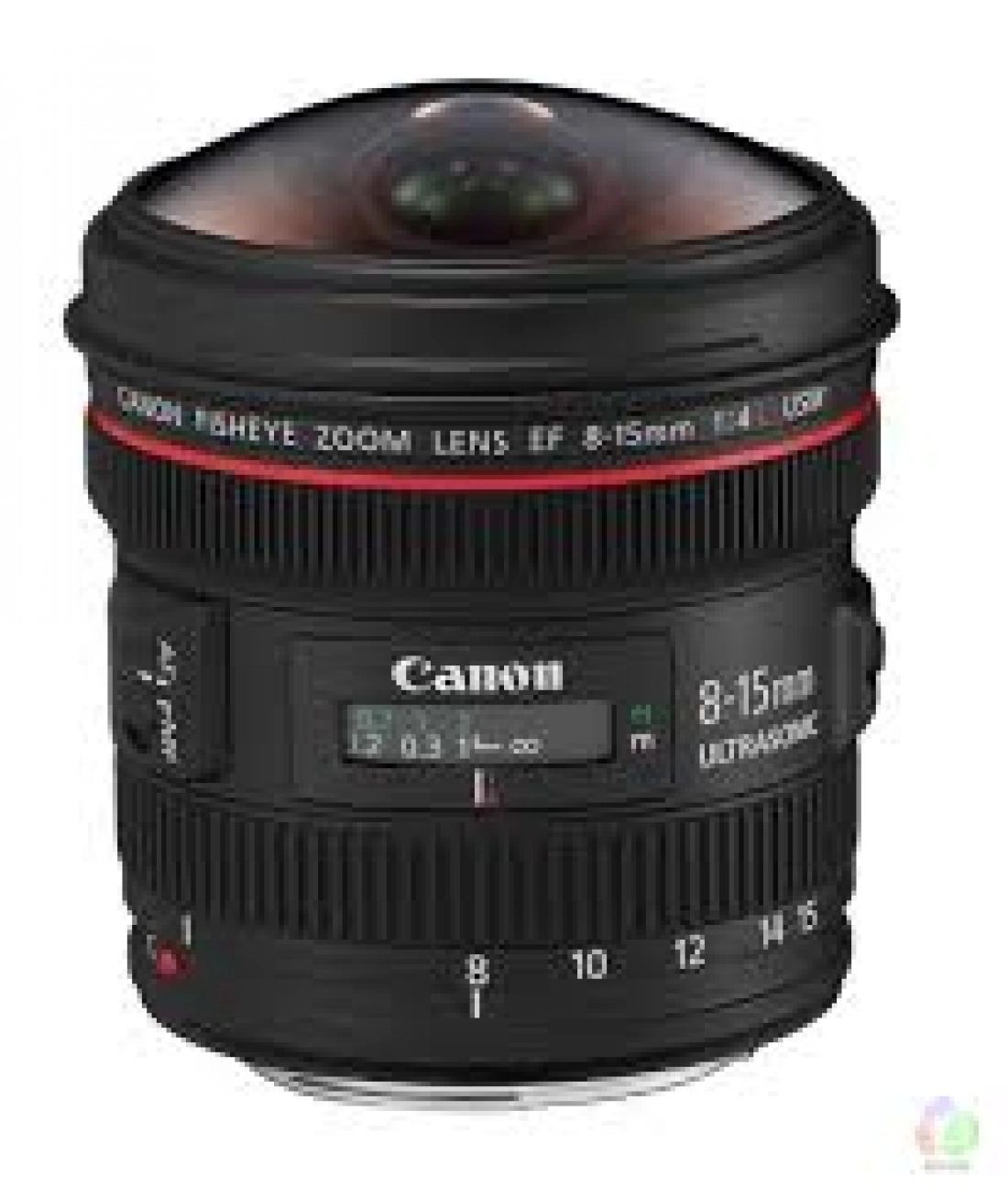
The fisheye lens is an extreme wide-angle lens with a field of view rarely less than 180°. Unlike wide-angle lenses, this type of lens always produces a distorted image by projecting a circular image onto the sensor.
It is recommended for those who want to achieve creative and extremely distinctive photos.
If you missed the previous lessons you can consult this page where there is a summary of all the lessons of the course.



