
Here we are! Nikon, which slowly, slyly and seemingly on the sidelines of the market, is forcefully returning to stores, has presented the new mirrorless.
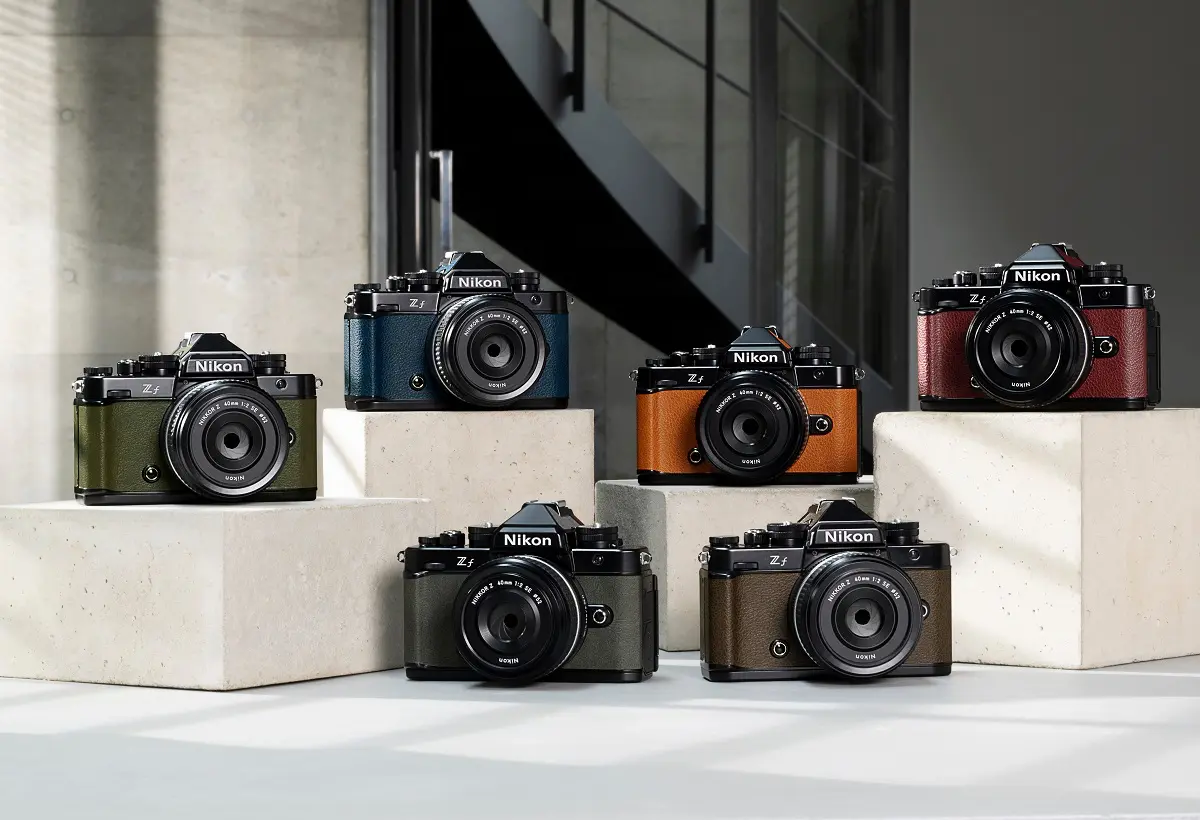
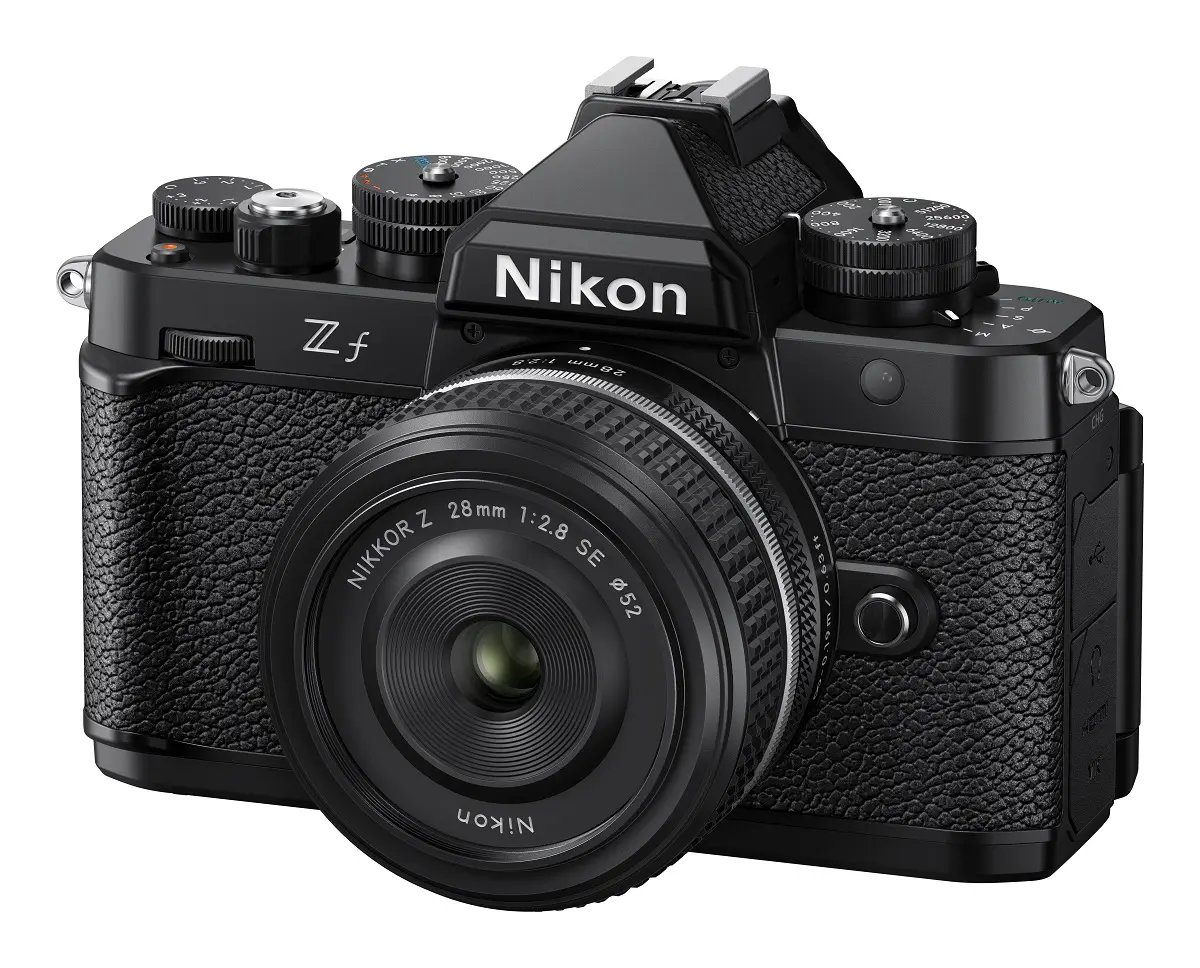
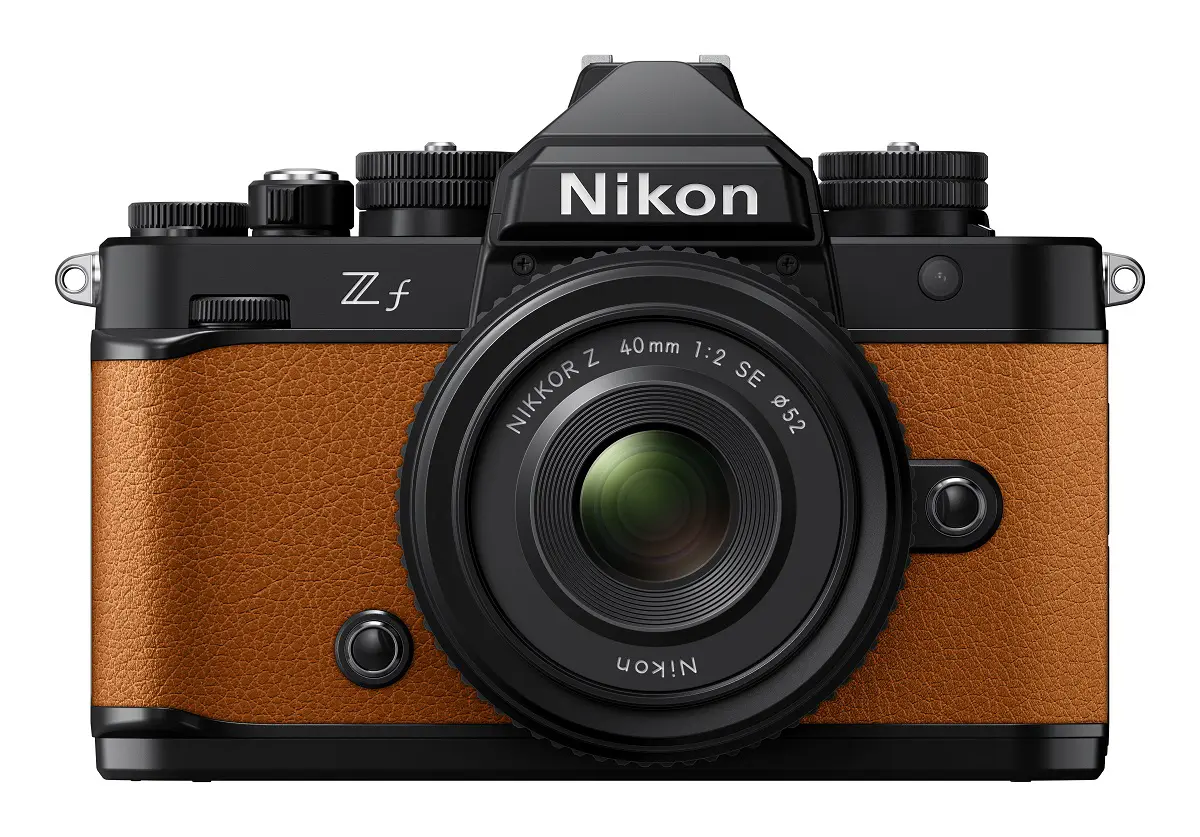
Capable of combining a “classic” style with advanced technology and superior performance. The elegant, stylish and sophisticated design of the new Nikon Z f brings to mind the iconic Nikon FM2 from 1982, one of the most famous film cameras from the well-known Japanese brand.
Nikon's Zf is a full-frame mirrorless camera with a classic style, built around a 24MP BSI CMOS sensor. It is designed to mimic the look of the company's FM2 SLR from the early 1980s, which means it effectively becomes the full-frame counterpart to the company's APS-C Z fc camera.
Main specifications:
- 24MP full-frame BSI CMOS sensor
- In-body image stabilization rated up to 8EV
- Dedicated Monochrome mode
- Up to 14fps continuous shooting (JPEG), 11fps in Raw
- 'C30' JPEG-only mode at 30fps with pre-burst function
- AF system with tracking and recognition of 9 subject types
- 4K/60 video from 6K capture with 10-bit N-Log recording
- 32-shot high-resolution mode to produce 96MP images
- SD and MicroSD card slots The Zf
Sensor/Processor:
Nikon does not claim that the Zf's 24MP BSI CMOS sensor is new and, aside from a wider AF coverage, much of its performance appears to match the older but highly regarded sensor of the Z6 II.
However, the adoption of the latest "Expeed 7" processor brings significant changes. To start, it introduces subject recognition in the camera's AF system and a Z9-like implementation of the company's '3D Tracking', along with the recognition system for 9 subject types. Additionally, there is context-sensitive noise reduction that more aggressively 'smooths' areas that appear to lack detail.
It is this noise reduction in JPEG and HEIF files that has convinced Nikon to allow the camera's ISO to expand up to 204,800 (the non-expanded limit also increases to 64,000).
The switch to the newer processor also enables the Zf to capture compressed Raw files using the high-efficiency compression system first seen on the Z9.
Various numbers have been given for the camera's continuous shooting speed, with 11fps apparently the maximum in Raw (in Continuous High Extended mode, which we suspect does not include live view updates between shots) and up to 15 or 14fps depending on the use of electronic or mechanical shutter for JPEG mode. There is also a 'C30' JPEG-only mode that uses a video stream to shoot images at 30fps, with a pre-shoot option similar to that of the Z8 and Z9.
Discover the range of professional Nikon mirrorless lenses
B&W Mode:
Occupying its own position on the control that selects between stills and video recording, the camera's black and white mode offers a choice of mono profiles, including a low-contrast 'Flat mono' and a 'Deep tone mono' that accentuates red details in the scene. These profiles can be applied to both still images and videos, highlighting Nikon's focus on the creative process.
Video capabilities:
Unlike the Df, which promised photographic purity by omitting any video features, the Zf is a fairly capable video machine. It can shoot up to 4K/60 from an APS-C crop (DX in Nikon terms) of the sensor or capture 4K up to 30p from the full 6K pixel width of its sensor.
The camera we used was a pre-production model, but the 22ms rolling shutter we measured for 30p capture is consistent with the sensor found in Z6 models. We doubt it's a coincidence that Panasonic S5 II models also have to crop to an APS-C region to offer 60p capture, showing similar readout speeds.
It also adds waveforms, which help when trying to assess exposure for video, especially now that we have internal 10-bit capture allowing Log recording.
Buy a large and professional SD card
Multi-shot pixel shift:
Nikon joins the ranks of camera manufacturers using its image stabilization system to offer a mode multi-shot pixel shift, shifting the sensor by precise degrees to ensure capturing every color at every pixel position or fractions of a pixel to increase the output image resolution. Nikon's system offers four modes, all of which unfortunately require Raw files to be combined in desktop software: a 4-shot mode that captures full color at every pixel, an 8-shot mode that does the same twice to further improve tonal quality and noise, a 16-shot mode that also increases image resolution to 96MP, and then a 32-image version that doubles that again.
A professional tripod is needed to get the best from this photographic technique,
click here to discover the best tripods currently available
Image stabilization linked to the AF point:
As companies strive to maximize the performance of their IS systems, it is becoming increasingly difficult to offer further improvements. Nikon states that the Zf's performance has been enhanced by linking the IS system to the selected focus point.
The logic is that pitch and yaw movements (tilting up/down and rotating left/right) cause greater image shifts away from the center, especially when using wide-angle lenses. The Zf's IBIS system can use the selected AF point as the center of its corrections, rather than the image center, helping to provide more effective stabilization when using off-center AF points with wide-angle lenses. This approach should help maintain sharpness at the focus point, helping the camera achieve its 8EV stabilization rating when tested according to the CIPA standard.
Competitors:
From today the Nikon Z f is available starting at €2,499, for pre-order, a range in which many truly interesting full-frame options are available. What is interesting to note is that, while its style brings something not found in its immediate competitors, Nikon has not used this as an excuse to offer inferior features.
The comparison that immediately comes to mind is with the Fujifilm range... we'll see how they respond!



