
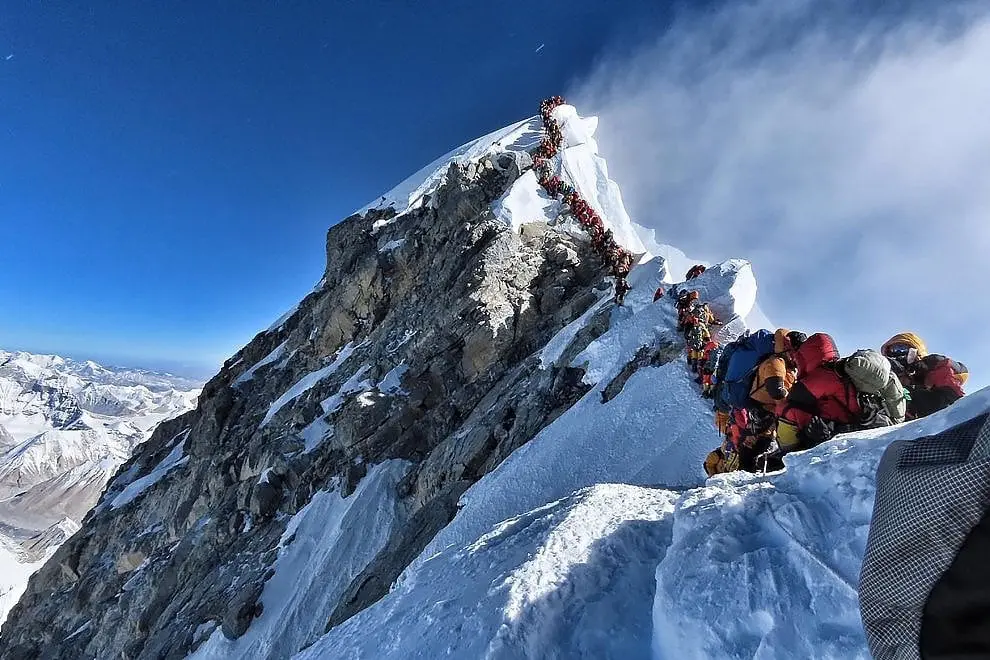
 Die from too much waiting in line? We are not talking about dying while waiting in line at a public service counter, but to reach the roof of the world: the summit of the Everest a 8,848 meters.
What you see above is a photo taken a few days ago on the highest summit in the world. Taking advantage of the perfect weather, over 300 climbers and sherpas they lined up to reach the summit of the Everest risking their own lives and those of others just to reach the top... after hours and hours of waiting in line!
Although the place seems out of reach for any human being who is not a highly skilled climber, in reality thousands of people have reached its summit since the distant May 29, 1953, following the feat accomplished by New Zealander Edmund Hillary and Sherpa Tenzing Norgay.
Every year, in fact, hundreds of people join commercial expeditions to climb the highest summit in the world. In this case, the only discriminant is not the climber's skill and experience, but simply the ability to pay thousands of dollars to join these expeditions.
Since the useful periods for the ascent are quite limited, generally the months of April and May are considered those with the most stable and good weather, people concentrate in just a few weeks each year.
The crowding at the summit and in the most critical passages causes real queues (as you can see in the image above), so the entire line must move at the speed of the slowest and least experienced climber.
This implies that the duration of the ascent and the stay in the “death zone” is often longer than expected and therefore the risk of dying increases proportionally.
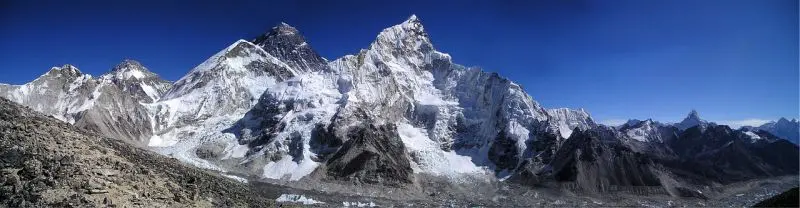
The death zone is the zone above 6,500/7,000m where the oxygen concentration is very low, so even just breathing is an effort.
In this area the human body loses its functions more or less quickly (especially if untrained), starting with the brain functions. A prolonged stay at such altitudes therefore causes dangerous edemas (in the lungs and brain) and thus a rapid death.
Furthermore, prolonging the time spent at altitude exposes one to rapid weather changes so common at such heights, so a climb in good weather could turn into a descent amid a storm, thus increasing the risk of falls and avalanches.
Staying at altitude longer due to queues encountered during the ascent can therefore lead to death and there were already over 10 victims in 2019 alone!
Besides the deadly effects of overcrowding, let us not forget that for each climber dozens of kilos of waste which are not always brought back to base camp for disposal, but remain abandoned along the route. Pollution has therefore become a problem even in such remote places.
On the other hand, government fees for climbing permits and sherpa wages, multiplied by the hundreds of people who climb Everest each year, generate a million-dollar business, which the Nepalese government would very unlikely give up by severely limiting climbing permits.
Images: Lydia Bradey/Pixabay



