
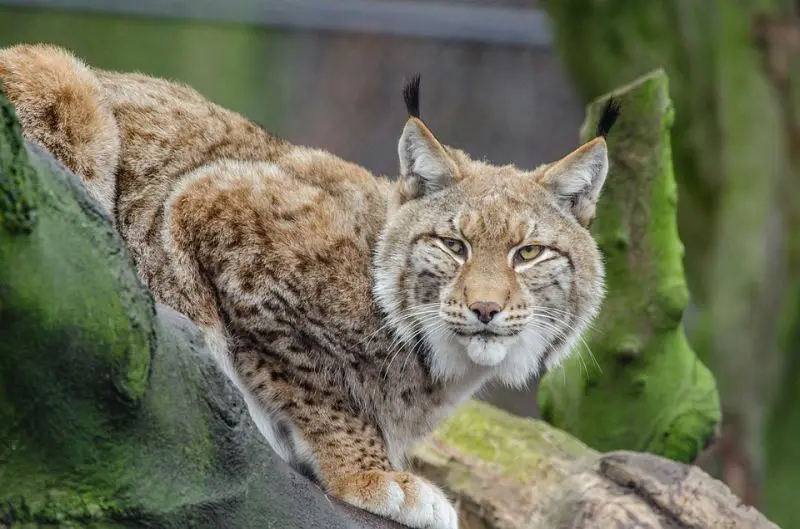
 The wildlife photos are incredible: wolves, lynxes, mountain lions, bears, …, immersed in their daily activities of hunting, playing, and raising their young. Who knows how much time the brave photographers took to capture them!?
Days spent alone in the mountains, exposed to the cold, trying to make as little noise as possible to avoid scaring the animals, after long extreme treks, loaded with all the photographic equipment and what is necessary to survive in complete isolation.
What if all this were not true?
What if the time and effort required could be condensed into about an hour and a cost of a couple of hundred dollars?
Sounds incredible? But that's what happens at the Minnesota Wildlife Connection Inc. farm, where wolves, foxes, bears, cougars, and other animals are actors ready to pose for wealthy photographers. Watch the video below to see for yourself.
[embed]https://www.youtube.com/watch?time_continue=7&v=UHZo6SQ_GcE"title="YouTube video player" frameborder="0" allow="accelerometer; autoplay; clipboard-write; encrypted-media; gyroscope; picture-in-picture" allowfullscreen>\n
It is indeed an example of a breeding facility intended for “photographic games” where animals live in captivity and are trained to entertain photographers.
Although here, fortunately, the animals are not raised to be killed in a hunt, and not wanting to start a discussion on how moral it is to raise wild animals to entertain humans, it is still legitimate to ask how “photographically” the matter is corrected, since these images can (and in some cases have been) passed off as genuinely wild in documentaries and photography contests.
A photograph taken on the farm, if well executed, is almost indistinguishable from an authentic one, and while true wildlife photographers may spend days, months, or even years to get THE the photograph of a lifetime (which does not always come), these farms allow simple hobbyists to obtain equally valid (or almost) photos in an afternoon without any effort. Once the photo is published online, who can say if it is real or staged?
The most prestigious photography awards, such as British Wildlife Photographer of the Year, World Press Photo, and GDT European Nature Wildlife Photographer of the Year, prohibit the use of captive animal models or artificial setups and do not hesitate to exclude those who try to cheat (if, of course, they are caught).
But the same cannot be said for TV or cinema which, to contain costs and time, do not hesitate to rent the “actors” from animal farms.
So, at least regarding wildlife photos, “It is necessary, at least once in a lifetime, to doubt everything!" (Descartes).



