
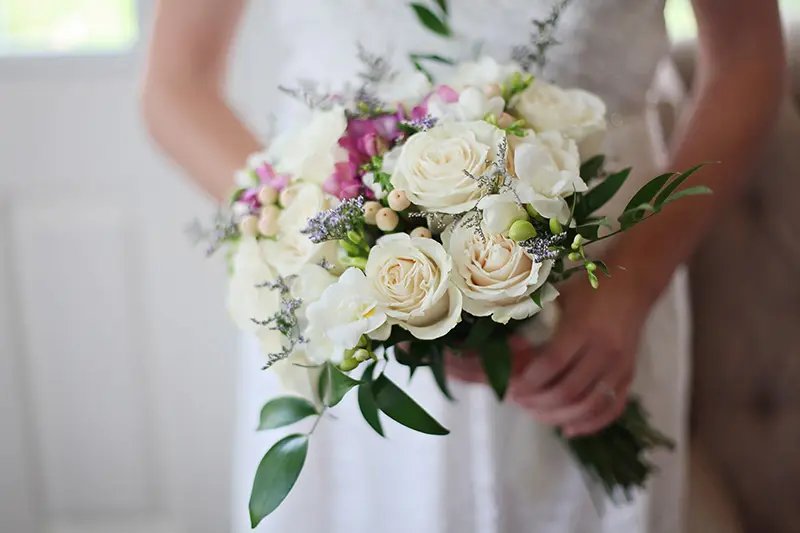
 Spring is approaching and so is the season of weddings. In the coming months we will have the opportunity to attend the wedding of some friend, so we need to be ready to capture that unforgettable day in the best possible way.
If our reputation as photographers precedes us, it might also happen that a friend entrusts us with the task of official photographer.
Let's not forget that our photos could still be used as a special gift to our friends, without the formality of images taken by the professional photographer. So let's see some advice on how to best prepare for the wedding photography.
1. Create an "Image List"
If you are formally involved in the photographic preparation of the wedding, the main advice is to try to plan the shots: together with the future spouses, think about the shots you need to take, especially if family is involved.
In the chaos of the wedding, one might forget about grandma or the distant relative who is rarely seen: there is nothing worse than realizing the next day that there is no photo of the couple with the great-grandmother!
2. Family Photography Coordinator for Wedding Photography
If the wedding involves many people, ask the couple to appoint one or more people to help you coordinate the shots: gather the groom's and bride's friends, relatives, parents, witnesses, …
Keep in mind that the wedding day can be very stressful: people are everywhere, they don't know each other, the family dynamics at play are different, and people are in a "festive mood" (and sometimes they've had a bit too much of the “spirit”!) to the point where it can be quite chaotic. Someone to help you might be indispensable.
3. Explore the “locations”
Visit the locations of the different places where the big day will take place, if they are new to you. It’s very useful to know where we’re going, have an idea of the best spots for shots, and understand how the light might come into play.
4. In wedding photography, preparation is key
Many things can go wrong, so you need to be well prepared. Having a backup plan (in case of bad weather), having charged batteries, empty memory cards, planning routes and time to reach locations, and getting an itinerary for the entire day so you know what’s happening next.
5. Set expectations with the couple
Show them your work/style. Find out what they want to achieve, how many images they want, which key things they want photographed, how the shots will be used (print, etc.). Obviously, if you will be paid for your service, make sure you have an agreement on the price and the agreed activities.
6. Turn off the audio on the video camera
Except for rare exceptions, the environment will be noisy: people talking or singing, music, … Unless you use an external microphone, the camera’s microphone will capture poor quality audio. So turn off the camera’s audio if you’re shooting video. You’ll add a soundtrack in post-production.
7. Photograph the small details
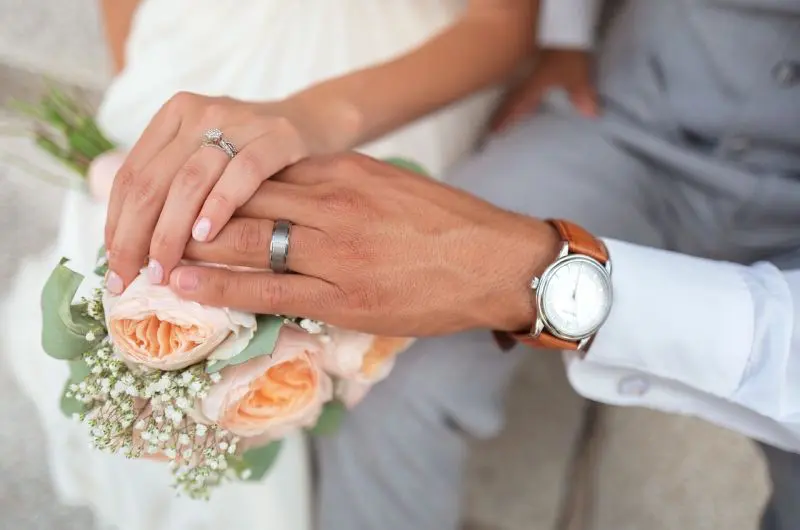
The rings, the newlyweds holding hands, details of the clothes, the place cards and menus, …, are all details that will help to have something extra to include in the album.
Often itis the small details that create something different from the usual collection of wedding photographs. Browse a wedding magazine at a newsstand for some inspiration.
8. Use two cameras
Having two cameras, set up with different lenses, can be important. A wide-angle lens on one, a longer lens (for example a 70…200mm) on the other.
This way you can easily and quickly capture all the moments: both the group ones involving many people, and the smallest details.
9. Consider a second wedding photographer
Having a second support photographer can be a great strategy. It means less moving around during ceremonies and speeches, allowing one to capture formal moments and the other to get more spontaneous shots.
If possible, ask a friend you trust (and whom the couple also trusts) to support you.
10. Be bold, but not intrusive
Shyness won’t make you 'shoot', sometimes boldness is necessary to capture a moment. However, timing is everything and thinking ahead to get the right position for key moments is important to avoid interrupting the event.
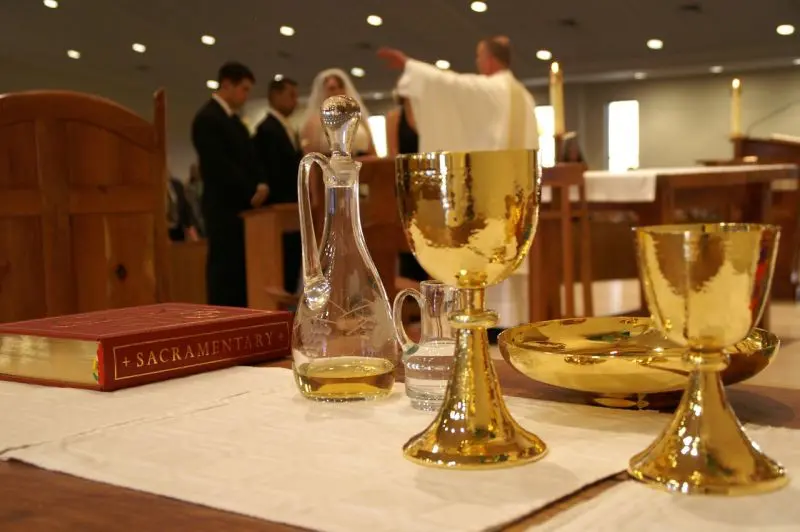
At a ceremony you will need to move but try to do so in a way that does not disturb the moment. If the ceremony is in a church, talk to the officiant beforehand to know where and when you can move.
During formal shots you need to know what you want and ask the couple and their guests for it.
11. Learn how to use diffused light
The ability to bounce or diffuse flash light is key. In many churches the light is still very low. If you are allowed to use a flash (and in some churches it is not allowed) consider whether the flash bounce will work (remember that if it reflects off a colored surface it will add a color cast to the photo) or if you might need to buy a flash diffuser to soften the light.
If using a flash is not possible, you need to use a fast lens with wide apertures and/or increase the ISO sensitivity. A lens with image stabilization might also be helpful.
12. Shoot in RAW
Although the RAW requires some post-processing work (and you can't immediately share images on social networks), it can be especially useful at a wedding as it offers much more flexibility to manipulate images.
Weddings can present photographers with tricky lighting that requires adjusting exposure and white balance afterwards, and RAW will greatly help with that.
13. Display your shots at the party
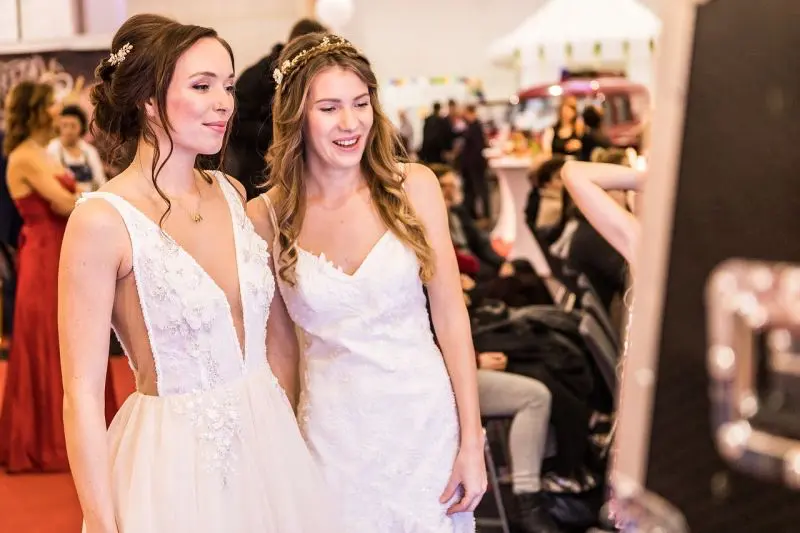
One of the great things about digital photography is the immediacy of it as a medium. It can be a lot of fun to bring a computer to the party, upload the shots taken earlier, and let them run as a slideshow during the evening.
This adds a fun element and you can always capture the bride and groom and guests watching it!
14. Consider your backgrounds
One of the challenges of weddings is that people go everywhere. With formal shots, plan ahead the area where they will be taken looking for suitable backgrounds.
Ideally you want clear areas and spots shaded from direct sunlight, where it’s unlikely a wandering great-aunt will roam in the background of the shot.
15. Don't discard your "mistakes"
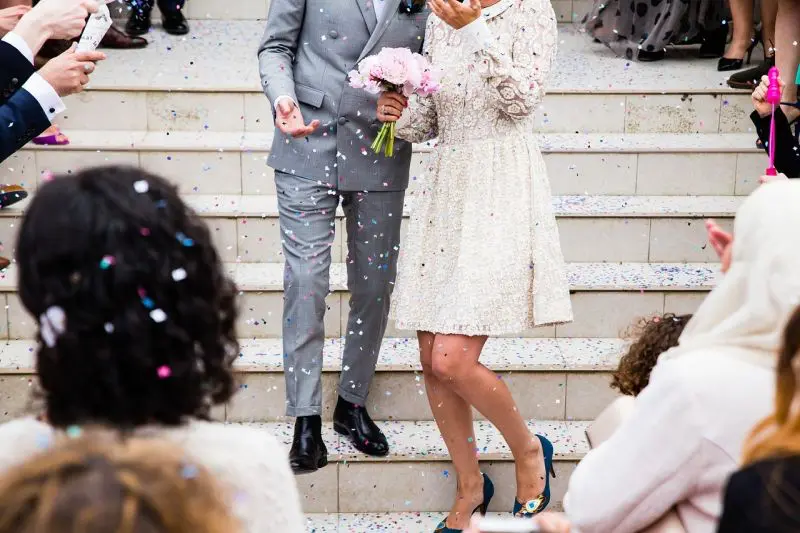
The temptation of digital is to check images immediately and delete those that don't work right away. The problem with this is that you might simply get rid of some of the most interesting and usable images.
Keep in mind that images can be cropped or edited later to give you some more artistic/abstract shots that can add real interest to the final album.
16. Change your perspective
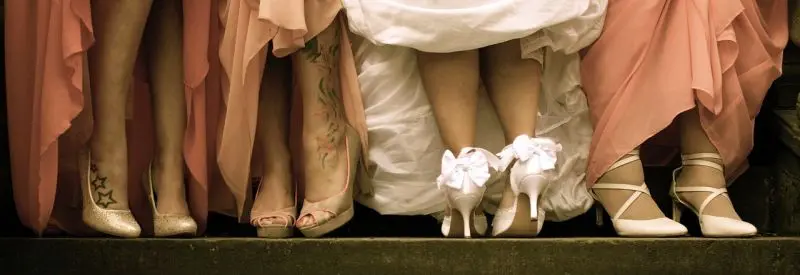
Get a bit creative with your shots. Even though most of the images in the final album will probably be "normal" or formal poses, make sure to mix things up a bit by taking shots from top to bottom, from above, wide-angle, etc.
17. Wedding group shots
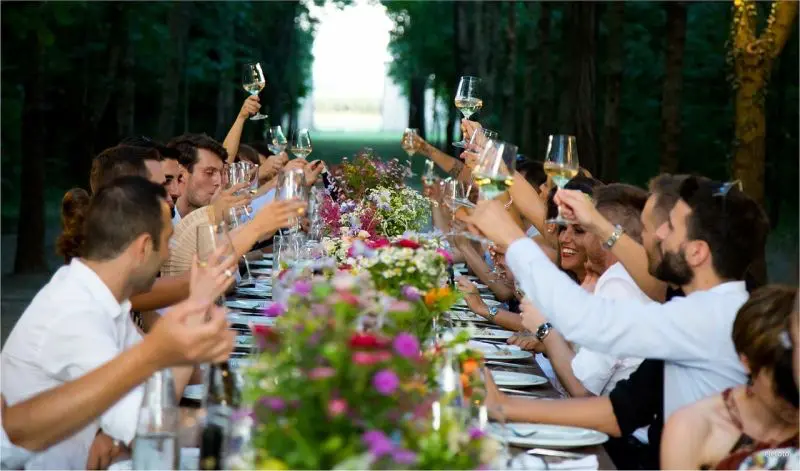
Try to make the attempt to photograph everyone present at the same time, right after the ceremony. This might mean climbing a ladder, using a balcony, or even climbing to a high point (always safely, though).
The purpose of elevating the shooting point is to get everyone's face and capture all the people in one shot. The key is to be able to get everyone into the desired spot, have them quickly raise their faces, and be ready to take the photo without everyone standing still for too long.
The bride and groom can be very helpful in convincing guests to gather in the right place.
18. Fill with flash
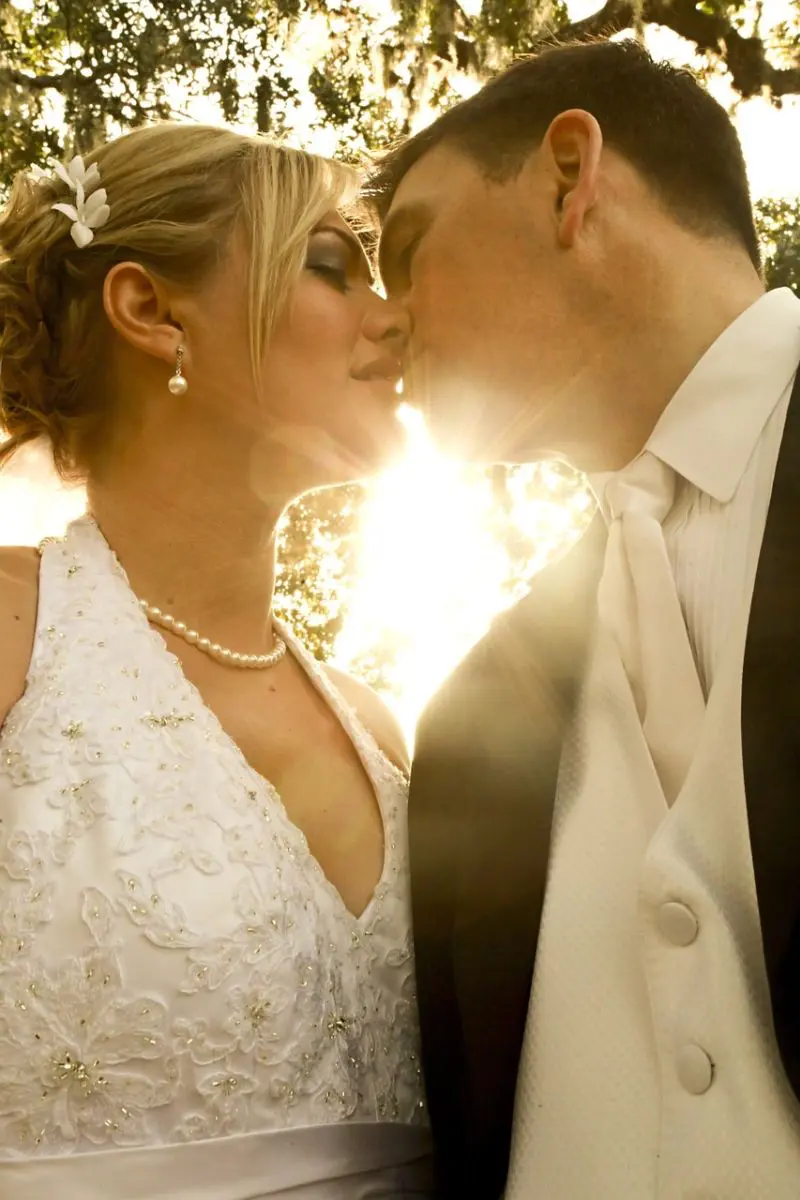
When shooting outdoors after a ceremony or during posed shots, you can keep the flash connected to add some light. Especially in backlit conditions or at noon when there can be a lot of shadow, the fill flash is essential.
19. Continuous shooting mode
Being able to shoot many images quickly is very useful on a wedding day, so switch the camera to continuous shooting mode and use it. Sometimes it's the shot you take a second after the formal or posed shot when everyone relaxes that truly captures the moment!
20. Expect the unexpected
"Planned things can go wrong, but this can be the best part of the day." In every wedding, something tends to go wrong.
The rings are missing, rain starts falling as the ceremony ends, the groom or bride can’t remember the vows... These moments can cause a bit of panic, but it’s precisely these moments that can truly distinguish the day and give the couple special memories.
Try to capture them and you might end up with some fun images that sum up the day well.
21. Have fun
Weddings celebrate the party and should be fun. The more fun you have as a photographer, the more relaxed those you are photographing will be. Perhaps the best way to loosen people up is to smile.



