
 Have you ever thought about being able to earn with stock photography?
For those who don’t know, the stock photography agencies They are immense photographic archives through which you can sell your own photographs. Who are the buyers? Bloggers, companies, news agencies—in short, anyone who needs to legally use images for their blogs, publications, and so on. For example, if I am a travel agency and need to advertise a trip to Tokyo, it is definitely easier and less expensive to purchase the images I need from these agencies rather than sending a photographer directly on site.
The market is global and consequently huge. So, is it all easy? Just upload my images, whatever they are, to these agencies to start making loads of money? Unfortunately, things don’t work that way. Once upon a time (maybe) it was like that: at the beginning of the digital era, even photos or videos of clouds and kittens had great chances of selling.
Now, with agency archives overflowing with tens or hundreds of millions of photos, standing out and getting noticed is definitely much harder. Moreover, not only is there an exponential growth in photographers and photographs, but the amount paid for individual photos is also decreasing.
Quitting everything and dedicating yourself solely to producing stock images is therefore a choice very risky move. The approach to stock photography with the aim of becoming a millionaire is definitely wrong, an approach with the purpose of being motivated to keep photographing anyway, to commit oneself to better understand one’s own camera and explore new things, and therefore to improve as a photographer, is instead correct.
If in the end we make a few euros that allow us to upgrade our equipment or pay for a trip, even better. So let’s look at some advice in case we want to dedicate ourselves to stock photography.
Treat it like a business
If you are serious about making money with stock photography, make a plan and follow it. Keep track of your expenses and earnings. Regularly dedicate time to focus on the mechanisms that will make it work.
Not having a plan and a relaxed attitude towards stock photo production won’t get you very far. Maybe you don’t have the time or inclination to make it a full-time occupation.
Choose your niche
One of the biggest challenges you will face is getting your images noticed. The stock photography market is so saturated that it can be difficult to get your photos in front of buyers.
Choosing your niche, some subjects and concepts to focus on, can help with this.
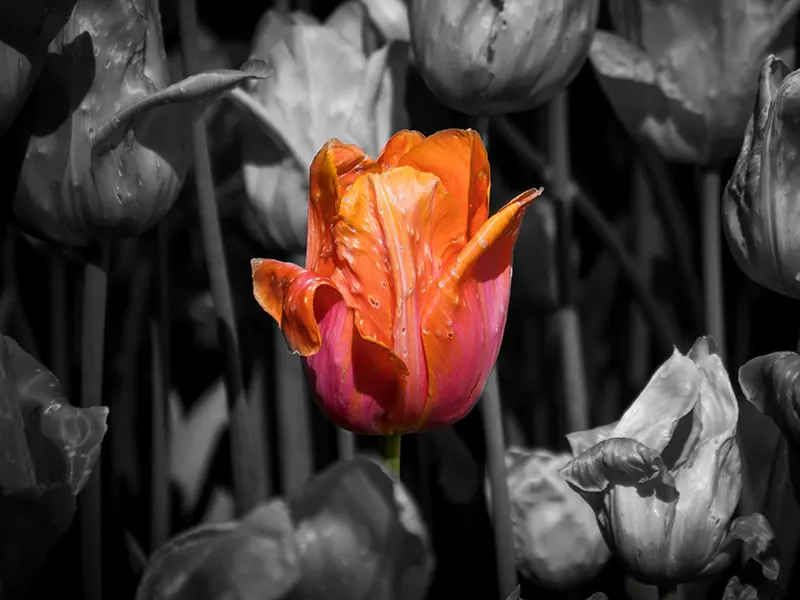
[caption id="attachment_488" align="alignnone" width="450"] stock photo example[/caption]
Choose some subjects you are passionate about. Intentionally become an expert at photographing them. Build a portfolio of photographs that will attract attention.
Know your market
Designers buy stock photos. Study current trends and stay updated as they change. Look at styles, colors, and image usage to see what buyers need. Browse magazines. Browse websites. Watch TV. You'll start to see stock photos everywhere. Take note of the ones you like best and imitate them.
Spend time on stock photography websites. Look at the images best sellers and think about why they are so popular. What makes them work? Why have so many people bought them? How can you improve by taking them as examples? Trends and fashions change. Think about how to rework older photos that were very popular to make them more current.
Know your market. Find out what people are buying. Fill the gap with what’s missing. Discover the potential market for your niche. Study it and provide the kind of images that will be popular. You may need to try different styles and ideas for a while before finding some that work. Experiment until you have a breakthrough.
Take a look at the masters
Look for the top sellers. Look at their portfolios. How did they make it a successful business? If you can find successful photographers working in your same niche, that’s great. Look for trends and patterns in their work.

Refine your technique
Having technically flawless photographs means that many of them will be accepted by agencies. Quality standards seem to have slipped down in recent years. This, however, is still no excuse not to submit technically correct photos.
Modern cameras, even on phones, and new software make it very easy to create high-quality photographs. The higher your standard, the higher your sales will be.
Use plenty of light
A trend that has never gone out of style in stock photography is photos with abundant light. The well-lit images often convey positive emotions. Advertisers like this and will buy wellness photos.
Make sure to produce some photos from each session that have more light than you would normally use. Generally, bright photos often sell better.
Make sure everything is sharp

Good sharp images will always sell. Clarity in your photographs is important to buyers. Too many images in your portfolio with shallow depth of field will limit its appeal.
Be precise even with your autofocus, especially when you use depth of field.
Your photos must be sharp in the right place or they are likely to fail the inspection process.
Leave space for text
Stock photos are often used in advertising or publications that include text. Leaving one empty space in your compositions can make them much easier for advertisers to use.
Experiment with your compositions. Leaving more space around the subject can mean the photo is more useful for your buyer.
Be practical
Whenever you are creating a new set of stock photos, make sure to shoot a full series. Look at your subject from as many different angles as possible (high, low, right, left).
Vary your compositions and aim to provide variety for the buyer; you never know what might interest a potential purchaser. Consider how the photo might be used and look at it in different ways.
Producing a series of photographs is more practical for buyers as it offers them more choice. The more photos you shoot, the more you can upload and the more you can sell.
Make sure to provide a good variety of images as often as possible of a subject or concept. Building a solid photo portfolio means offering buyers more options.
Don't imagine producing photos set in a hospital or commercial kitchen if you don't have immediate access to such locations. The more you can work smoothly, the more photos you can shoot with fewer expenses. Your profit will increase.
Develop your style
The style takes time to develop. Having a plan and a purpose and a clear idea of the type of photographs you want to produce is necessary.
This will lead to the development of your personal style. When buyers see your style consistently represented in your portfolio, they will look at what you do and buy from you more often.
Post-process consistently
The look of your photos created during post-production has a lot to do with developing your style. The presets can help make it easier.
Using the same set of preset actions to govern how images are made will help tie your portfolio together.
Diversify the agencies you upload to
If you have time, it is a good idea to submit your images to more than one or two stock agencies. When you start, this can take a lot of time. By uploading to various agencies, you will see which ones sell and which ones don’t sell as well.
Look at the statistics, not just for your sales but also for how many views your photos get on each platform.
If your images aren’t being viewed, consider uploading less to that site or not at all.
Exclusivity to one agency to save time
If your time is limited, you might find the best solution is to enter into an exclusive contract with an agency. Some photography agencies offer incentives if you upload exclusively to them. This can mean they pay you a higher percentage of each sale.
Warning however: putting all your eggs in one basket can be detrimental if the agency runs into problems.
For example, agencies that once dominated the market have lost their leadership due to poor pricing policies and have either closed or now sell only a small fraction of what they used to.
Beware of copyrights
Understanding copyright copyright will help you when deciding what to photograph. There are two basic types of licenses for stock photos: commercial and editorial.
Commercial licenses (which allow your images to be used for advertising purposes) restrict photos subject to copyright. Editorial licenses are less restrictive, but the use of the photos is more limited. Keep in mind that if your photo contains:
- a a trademark (for example, if a cityscape includes a readable billboard or car logo),
- a design work (for example, a mural or the image of the Eiffel Tower at night, as the lighting display is protected by copyright),
- recognizable people,
\t
\t
\t
all these elements may require a release (property or model release) in order to sell them with a commercial license due to copyright laws.

Look at your images at 100%, if you find logos or elements that might cause your images to be rejected, try post-processing them to remove the offending elements.
Use model release forms
Ask every person you photograph to sign a form standard release form. This means you can sell these photos with a commercial license.
Publishing these releases makes photos of people more practical for buyers to use. These forms are readily available on stock photography websites. A good generic release form can be used when uploading to multiple agencies.
Keywords
Good research of keywords to accompany your images is essential. It makes no sense to upload photos if you don’t add appropriate keywords. Without them, your photos will never be seen.
Spend some time researching how to add the right words. Don’t upload your photos with too many words, just enough relevant information about them so they appear in search results.
Upload regularly
Uploading some images regularly will help you keep your portfolio up to date. Stock photography agencies reward consistent uploaders by pushing their photos to the top of search results. If you upload only occasionally, you won’t sell as many images.

If you have had a major photo session and produced many images, spread them out over multiple uploads on different days.
This will also allow you to: keep your subject at the top of results for more days, have different reviewers who may not get annoyed seeing 30 similar photos uploaded with only slight variations from one to another.
Conclusion
Experimentation is essential to discover which of your photographs will sell best. Try different approaches using the tips I have outlined here and find what works for you. Again, keep in mind that stock photography is not a get-rich-quick scheme.
It takes time and a lot of hard work to be very successful. The more methodical you are in creating images to sell, post-processing, and keywords, the more you will sell.



