
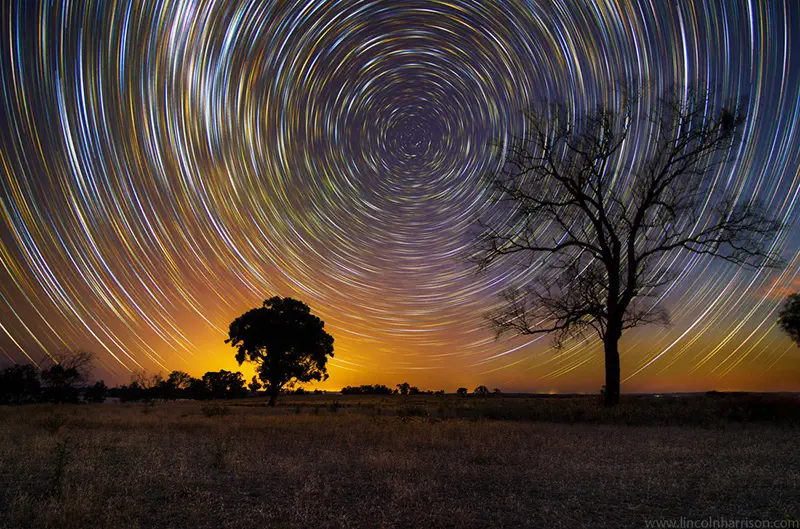
The time lapse photographyIt is a technique that allows you to reproduce an event lasting several minutes or hours in a video of a few seconds.
It is obtained by processing hundreds (often even thousands) of photographs taken so that the shooting frequency is much lower than the playback frequency, properly editing them and then projecting them at speeds usually around 24fps or 30fps.
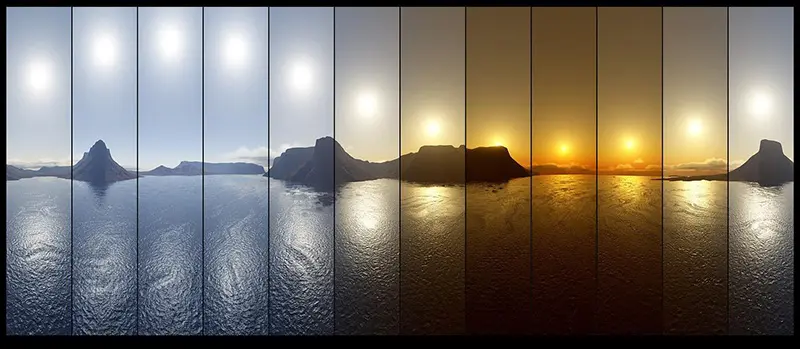
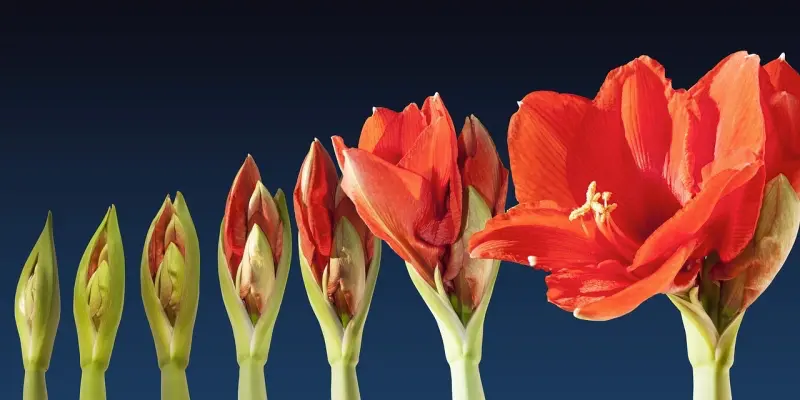
Time lapse photography therefore allows you to document events not appreciable to the naked eye (e.g. the growth of a plant, the blooming of a flower, the evolution of a season, …) or to reduce to a few minutes or seconds longer events (the sunrise or sunset, the evolution of traffic on a street or intersection, …).
To create a time lapse it is necessary to define in advance:
• duration of the video;
• frame rate (fps) of the video you want to play;
• interval between the photographs.
To determine how many images are needed, simply calculate
[video duration] ÷ [frame rate] = [number of images]
For example:
• for a 30s video at 24fps, 720 (that is 24 x 30) photographs are needed
• for a 10s video at 30fps, 300 photographs are needed.
To determine the interval between photographs, we can follow two approaches. One solution is to know how long the event you want to capture will last.
For an event lasting 1 hour (for example a sunrise), that is 3600 seconds, to fit it into a 30-second video at 24fps (720 photographs), the interval must be 5 seconds. This is regardless of how the movement in the frame will actually evolve.
For an event without a well-defined duration, we must instead adjust the shooting frequency based on the speed of the subjects: if for people moving a shooting frequency of a couple of seconds may be appropriate, for vehicles moving on a road the shooting frequency must be faster.
In the case of clouds moving in the sky, we can choose slower frequencies, especially if the clouds are on the horizon.
It is necessary to avoid movements that are too rapid, unnatural, and unpleasant to watch. If unsure about the timing to use, it is always advisable to do a test trial.
[embed]https://vimeo.com/terjes/themountain[/embed]
What equipment is necessary?
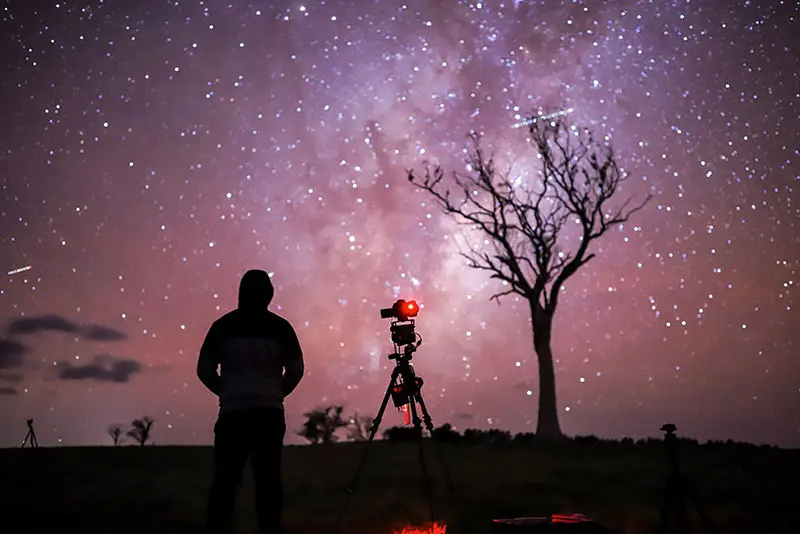
To create a time-lapse, a tripod is recommended. Only the movement of the subjects should be highlighted, not any shifts caused by the camera changing its position due to difficulty in holding it steady for a long time.
Another very useful accessory is an intervalometer with which to set the shooting frequency, exposure times, and number of shots. This will make executing the time lapse much easier.
A program like After Effects will allow you to create the video and make any corrections to the images.
How to set up the camera
The camera must be set to manual mode, both for exposure and focus. During the time lapse, it is necessary to avoid changes in the focal point, unless, of course, this is intentionally desired.
A general rule is that the shutter speed should be at least twice the frame rate of the resulting video. For example, for a 24fps video, we should select a shutter speed of 1/50s; for a 30fps video, the shutter speed should be at least 1/60s.
This will prevent motion blur introduced in each frame.
If you want to see on Amazon:
• a tripod (click here)
• an intervalometer (Nikon – Canon – Sony)



