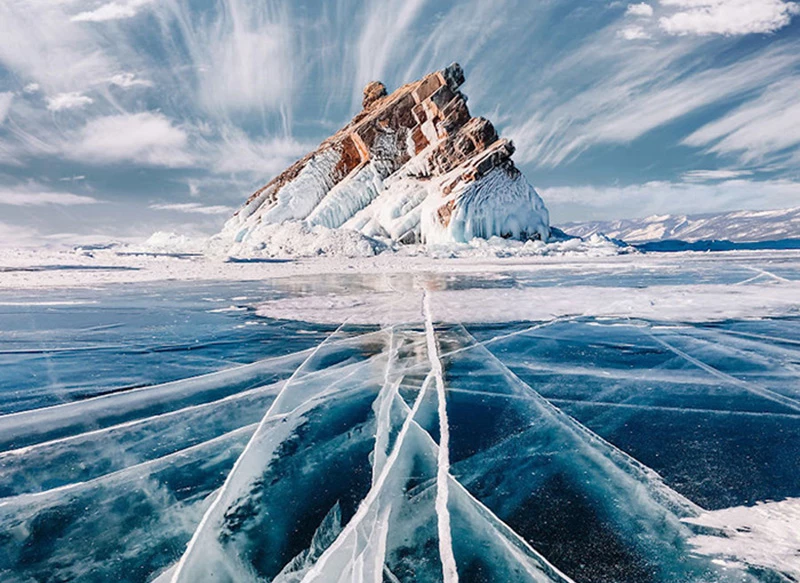
The Lake Baikal is a lake in Siberia southern that became a UNESCO World Heritage Site in 1996 and is part of the list of the 7 wonders of Russia.
Lake Baikal extends over an area of 31,722 km², making it one of the largest lakes in the world by surface area, stretches for about 636 km from north to south and is the second longest lake in the world after Lake Tanganyika.
The average depth of Lake Baikal is 744 meters, with a maximum of 1,642 meters in the central part. These figures make it simultaneously the deepest freshwater lake on Earth. It contains a volume of water roughly equivalent to that of the five Great Lakes of America combined.
One of the main characteristics of Lake Baikal is its atypical environment for a lake. Its waters are very rich in oxygen, so much so that even the deepest point is inhabited by forms of life.
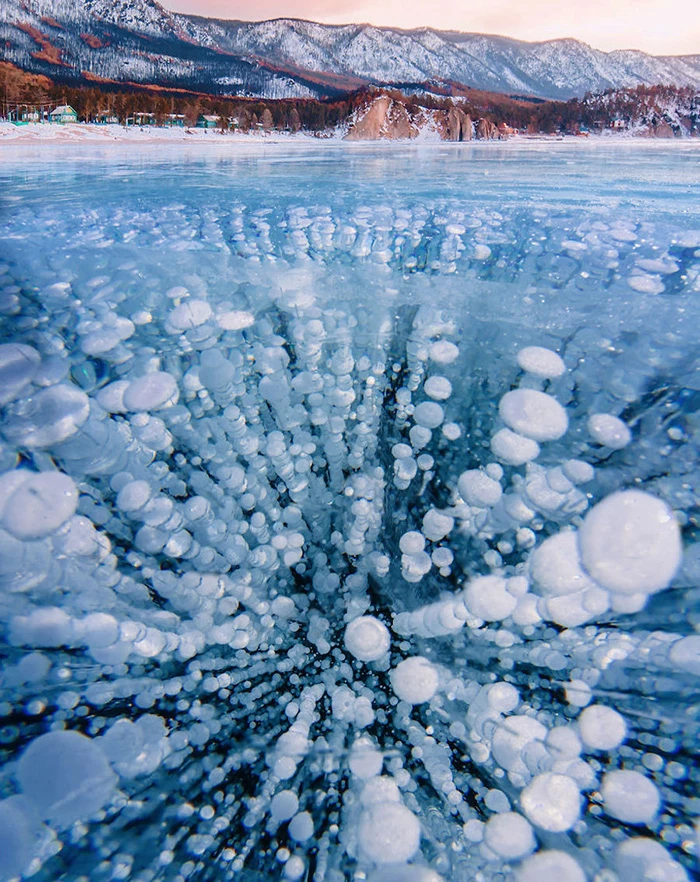
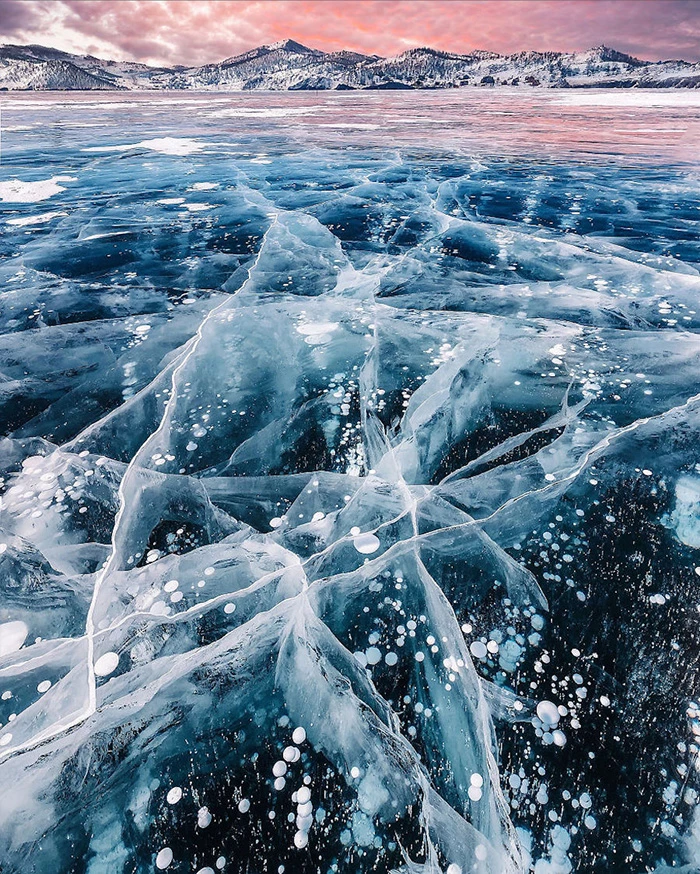
This oxygen, during winter, freezes beneath the ice cover forming huge bubbles that remain trapped.
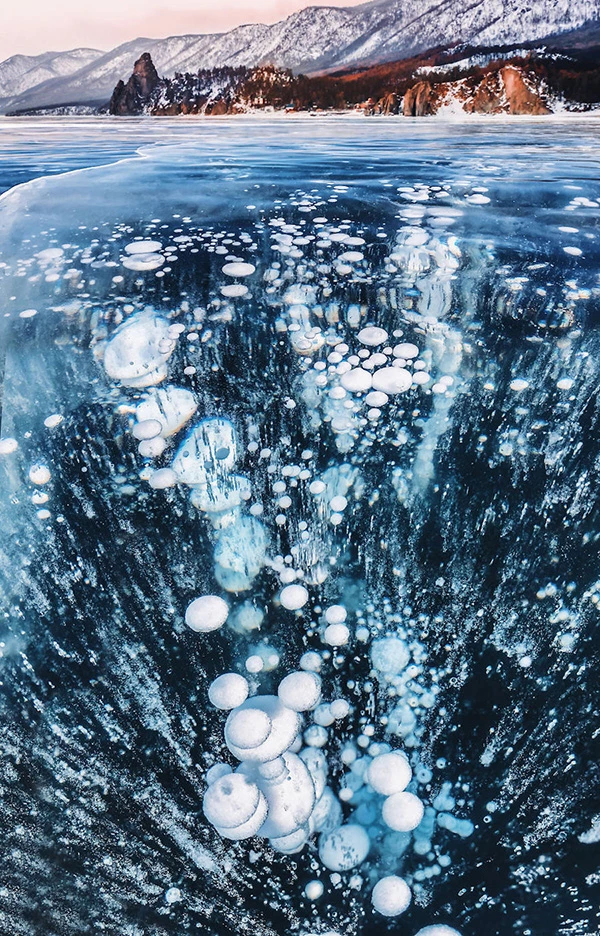
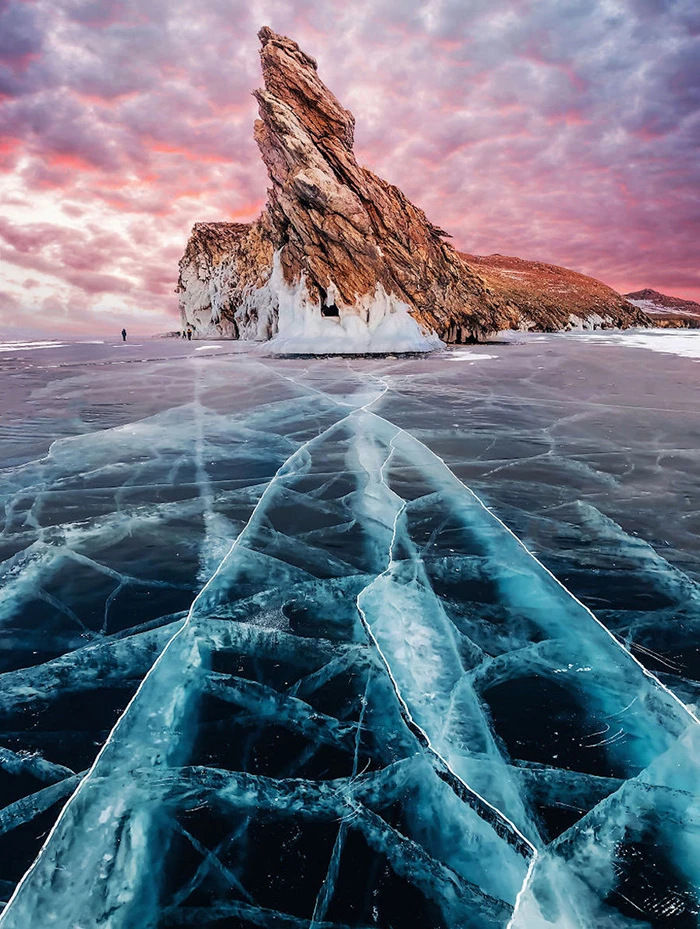
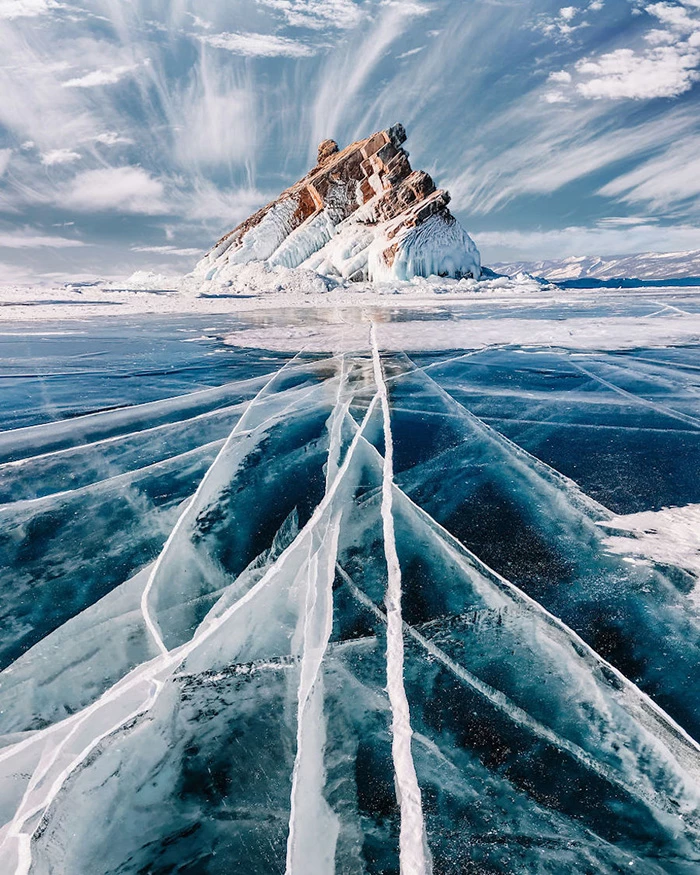
The Russian photographer Kristina Makeeva braved the -35 degrees of Lake Baikal in winter and went on location to take spectacular photographs of this phenomenon.
At these temperatures, the lake forms an ice cover several meters thick, which allowed Kristina to walk on it safely.