
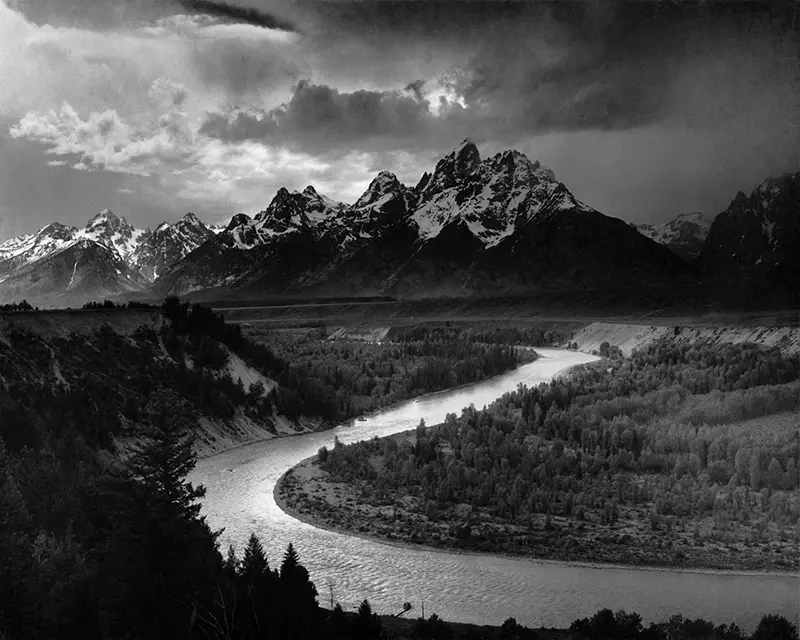
 Ansel Adams he is one of the greatest photographers history has ever known. Since I first became passionate about photography, I have always been drawn to landscape photography and Ansel Adams has been for me (and still is) an example to follow and to study continuously.
What I like and am most attracted to in his images is this ZEN minimalism and this sense of perpetual calm that appears in every shot of his. I therefore wanted to write this article to explain the lessons I learned by studying and observing the images of this great photographer and how I applied his theories to my own way of photographing.
Even if you don’t become landscape photographers, these are lessons and tips that can be applied to any photographic genre.
1 - “Don’t take a photograph, create it!”
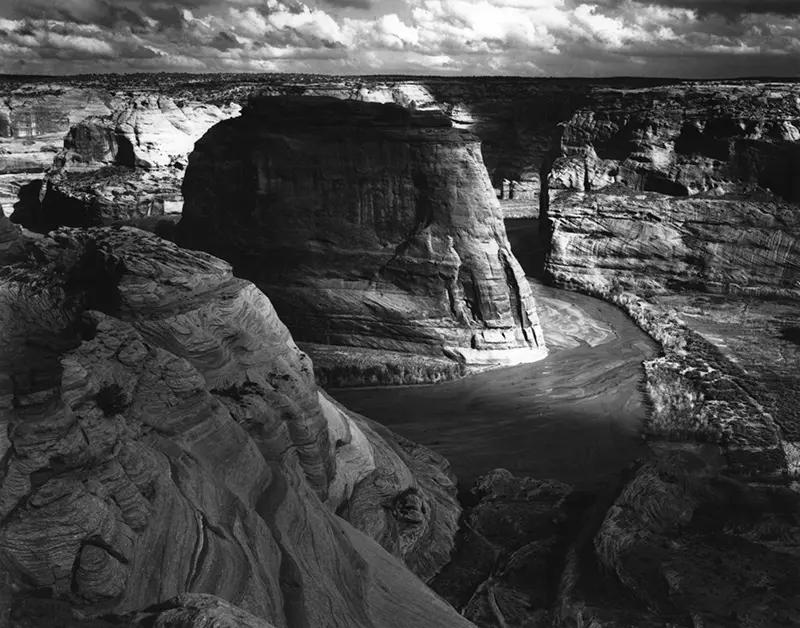
Ansel Adams is also famous for having invented the “zone system”, a technique used in photography to determine the optimal exposure and development process to render the full range of tonal shades of a given scene and achieve the “perfect” monochrome prints.
Adams always said: “Photography must not be taken, it must be created”.
He saw photography as an art form and said that simply clicking the shutter button was not enough to make a good photograph. One had to spend hours and hours in the darkroom to bring to life what we would then see in real life.
My point of view:
I fully share Ansel Adams’ thought; even in modern photography there is a need to care for every shot to achieve something magnificent, starting from the initial planning all the way to the final post-production with Photoshop.
Yes, just as Adams used acids and spent hours and hours in the darkroom, even nowadays you have to take care of the shot in post-production. Although technology has made giant strides, camera manufacturers have not yet managed to produce a camera that sees like our eye… and fortunately!
Post-production in photoshop is meant to give that vision of reality that the photographer saw and perceived at that moment and that the camera certainly did not fully capture. Obviously, the photograph must already be good from the start; you cannot create a masterpiece from a blurred or meaningless image. Photoshop and post-production serve to restore light, colors, and life to a shot that your sensor failed to capture but your eye did. This is where the artist within you must emerge, and this is why Adams speaks of “creation” of an image!
2 - “A good photographer always knows where to stand”
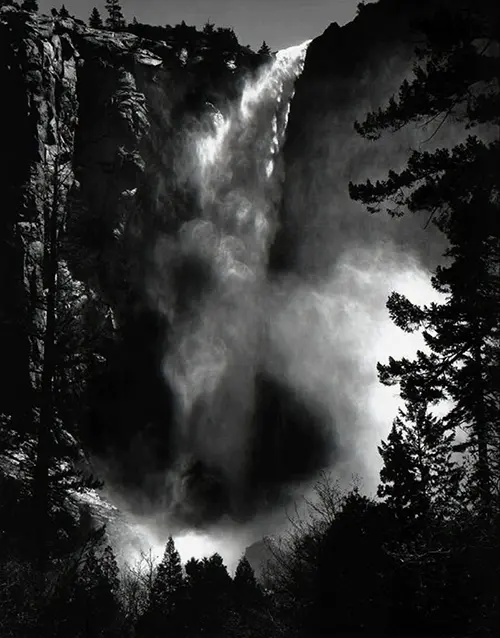
Ansel Adams always said that “a photographer always knows where he must stand”. In landscape photography, the photographer’s position is everything. When you face a landscape, your position will determine the perspective, your point of view, the mood of the photograph as well as the composition.
Don’t be lazy, move around to find the best spot to take the photo, don’t use telephoto lenses to bring your subject closer, get closer with your legs. Go hiking and you will see that sooner or later you will discover new perspectives that will allow you to take wonderful shots.
My point of view:
On this point too, I can only agree! I rarely shoot impulsively; I always look for the best place to capture my subject or the landscape. I circle around it, crouch down or stand up, move closer or farther until I find the perfect position. Move around!!!
3 - Photograph what you feel (not what you see)
The photographer often thinks that an image must only be beautiful and must please the viewer as it is, forgetting however that photography is art and to work it must produce a strong emotion in the viewer.
In photography it is easy to forget this point for the simple reason that the camera is often considered only an object that creates images, not emotions.
Therefore, if we want to create impactful images, we must focus on the emotions that the scene in front of us has to offer and not just on what we see.
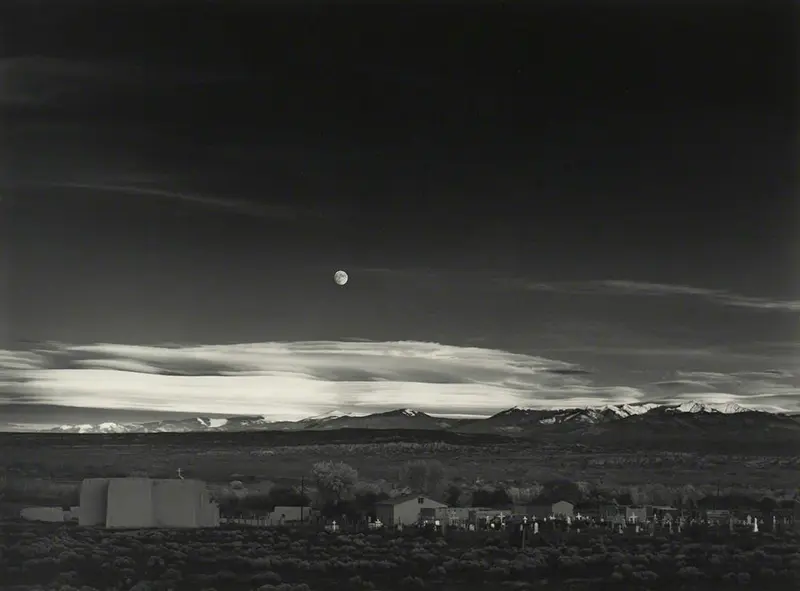
Ansel Adams explains why he decided to make the sky extremely black in his very famous image “Moonrise Hernandez”:
"My image of Moonrise Hernandez contains all the emotion and feeling of the experience I lived that day watching the moon rise... but it is not realistic at all. If I had taken a completely normal photograph, the sky would have been much lighter but it would not have reflected my feeling. Many asked me why I darkened the sky so much in the darkroom and I simply answered that the sky is black like you feel at that moment!" – Ansel Adams
My point of view:
When you started photographing, what kind of feelings did you want to convey to the viewers of your images? Did you try to convey beauty, sadness, melancholy, or excitement in your photos? What emotions do your photos evoke in you when you look at them?
In photography, emotions and feelings can be conveyed through different methods or techniques. If you are landscape photographers, you will probably look for a special, mystical light, smoke, or fog to convey feelings. If you are photographing people or doing street photography, focus on body language, eye contact, and hand movements.
Shoot with your heart, even before your eye. Photograph with your emotion and your soul. This way you will be able to communicate your feelings much better through photography.
4 - Ignore criticism
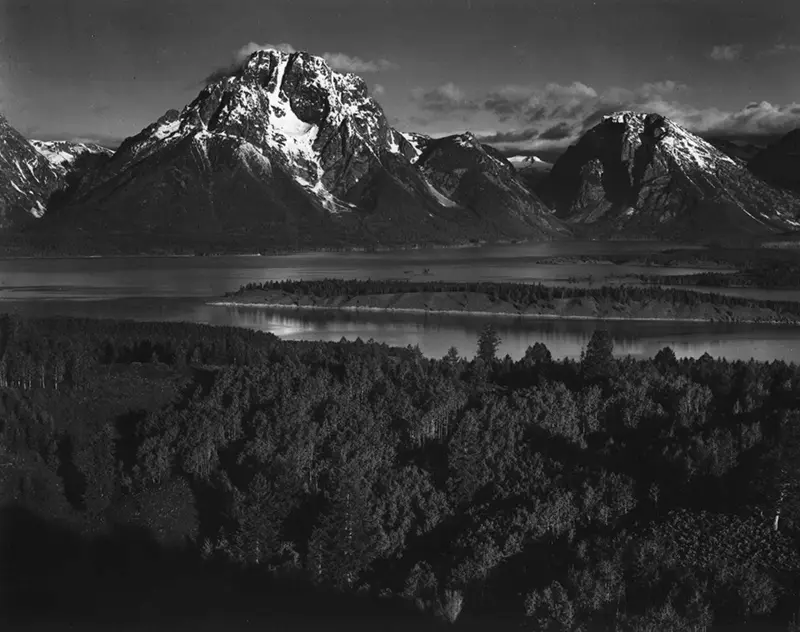
How did Ansel Adams behave with all those who criticized him? Simple, he always ignored them!
"Criticism is rarely constructive; the more success you have, the more envy arises. The more envy, the more criticism appears. Many people have said that I am just a 'postcard photographer,' others have criticized me for anything that came to their mind, only a few have understood my real work. Art critics are a kind of ridiculous group and always try to put you in a bad light. The solution? I respect them all but I ignore them." says Adams.
My point of view:
In art and photography, you will NEVER be able to satisfy 100% of the people who view your photographs, so you will always receive criticism. The important thing is that this criticism is constructive; if it comes from someone better than you, try to learn from it and use it to improve yourself. Ignore all the others, but above all, follow your own path and your photographic 'creed,' do not let anyone influence you.
Conclusions
Ansel Adams taught me a lot, made me understand the importance of pre-visualizing an image and all the study that must be behind it. Now I feel able to create photographs and not just simple snapshots.
Adams also taught me that I must first shoot with the heart to try to capture an emotion and not just a simple visualization of what I have in front of me.
Ansel Adams was one of the greatest photographers in history and will continue to be for a long time. His passion was to capture images that told the beauty of nature and to educate others about the importance of preserving the environment around us.
May his philosophy and images inspire all of us photography lovers, regardless of the genre we prefer.
Thank you so much Ansel for your lessons and for your wonderful images that delight my eyes every day.
If you liked this article, please help me share it. THANK YOU!



