
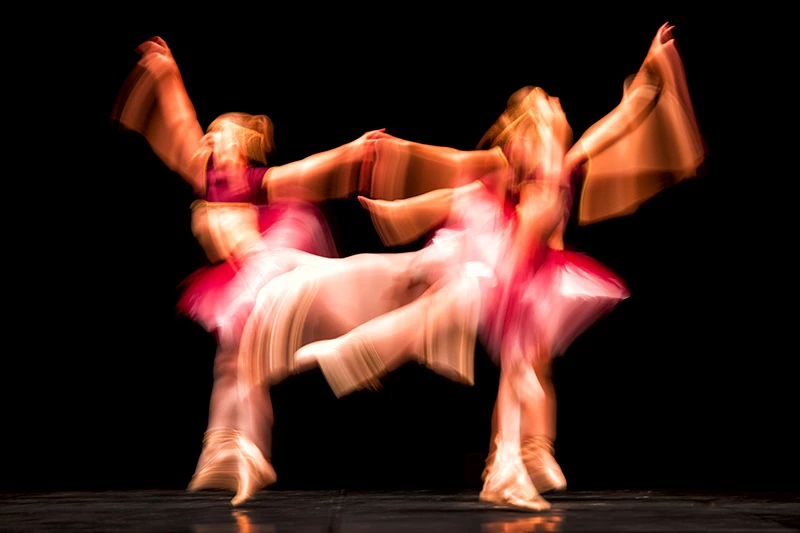
How many times have you been told that an out-of-focus image is a wrong image?Certainly many! One of the basic rules in photography is to have the sharpest possible image, or at least the main subject.
Most of the images we take every day have a fast enough shutter speed to avoid camera shake, but know that there are photos where the creative motion blur will add value to the final shot.
But how, in the photography course Camera Nation and in many other articles you have only talked about perfectly focused photos and you have been very insistent about following this rule, and now you talk about the exact opposite? You might say... well yes, now that you know the rules, it's time to break them and have fun with creative motion blur!!!!
Creative motion blur sparks the observer's curiosity because, if done well, it is not sharp at first glance and creates that see/no-see effect that forces the observer to ask themselves some questions about what they are looking at.
Be careful though... this must not be an excuse for when you completely mess up an image by making it blurry because you used the wrong shooting settings! That doesn't count!
Creative motion blur must be done well and with some judgment, and in this article we will see some useful tips to do it the right way, teasing your creativity.
Basic rules for good creative motion blur
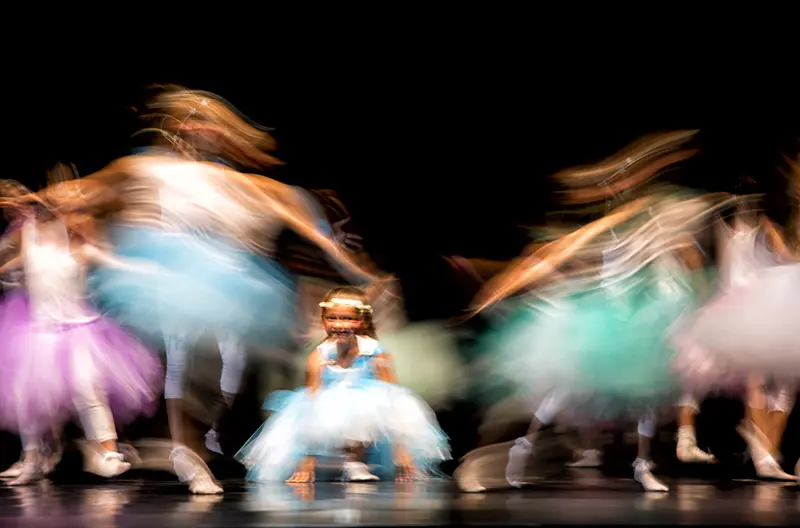
To achieve good creative motion blur the most important thing is the shutter speedwhich must be slow enough to allow you to get the blur in the final image.
You will need to set your camera to manual or shutter priority mode and set a slow enough exposure time depending on the subject you are about to photograph.
There is no exact exposure time; if you are photographing a Formula One car speeding past you, even 1/200 of a second might suffice, but normally a good exposure time to achieve creative motion blur ranges from a minimum of 1/10 sec up to 1/2 sec.
A rule that always works well, even when we talk about sharp photographs, is to have a background as uniform as possible. In creative motion blur this rule is even more important because the photo is already blurred; if you add a confusing background full of colors and objects, your main subject will get lost in the middle of everything and become unrecognizable.
In the photo you saw at the beginning of this article, I used the black background of the theater to highlight the ballerinas who, although blurred, are perfectly recognizable. With a colorful background full of objects, the ballerinas would have lost much importance in the final shot.
How to achieve creative motion blur
Once you have chosen a sufficiently slow exposure time and found a subject with as uniform a background as possible, you are ready to start your tests.
Creative motion blur can mainly be done in 3 ways:
- Place the camera on a tripod and let the subject move
- You move while the subject remains still
- You move while the subject is also moving
Place the camera on a tripod and let the subject move
Of the 3 different techniques we are about to discuss, this is perhaps the simplest. Once you set the camera to manual or shutter priority mode, set a relatively slow shutter speed, say 1/25 sec, and place the camera on a tripod.
To avoid touching it, ideally you should have an infrared remote control to shoot from a distance; alternatively, you can use the self-timer.
In this case, to further emphasize the effect of creative motion blur, I recommend including one or more completely still elements within the composition. The final image will be a mix of calm and speed together... a spectacle for the viewer's eyes.
A classic example is photos taken in subway stations where you see the moving train and the people standing still.
Another classic to photograph with the camera on a tripod and long exposures are the night trails of car headlights. Here too, if you include buildings, bridges, or anything else completely still, the image gains much more impact.
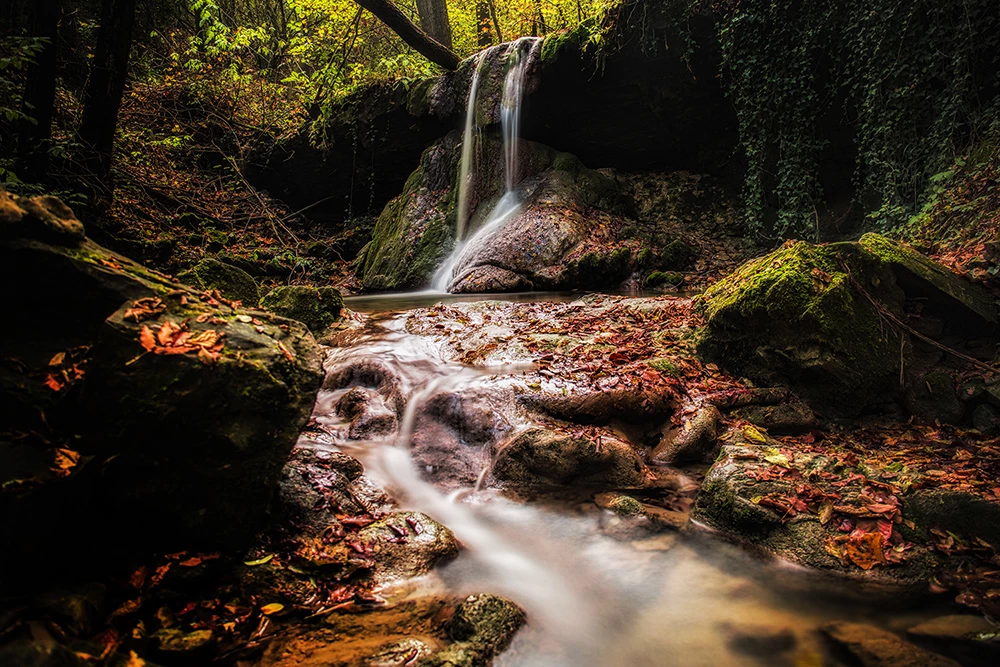
Last but not least, an interesting creative motion blur technique to do with the camera fixed on a tripod is the so-called "silk effect" of water. Fairly long exposure times create a particular effect on the water that looks like a single sheet laid over the stream bed.
Move yourself and keep the subject still
This is a more complex technique compared to the previous one but no less interesting. You will set the camera the same way, in manual or shutter priority mode with a fairly long exposure time but, in this case, you will remove the camera from the tripod to prepare for a handheld shot.
Position yourself in front of your subject, hold your camera firmly with both hands, move it with small shifts and shoot while you are still moving the camera.
So... first of all the movements must be light, you don't have to move the camera half a meter, just a few centimeters will suffice. The other thing you're surely wondering is: in which direction should I move the camera?
Good question. It depends on what you have in front of you! My suggestion is to observe what you are about to photograph and look for guiding lines (there's an entire lesson in the photography course).
If you are facing the sea or a staircase, move the camera from right to left and then shoot. If you are in the woods instead, follow the vertical lines of the trees and move from top to bottom before shooting.
Another beautiful creative motion blur effect is to slightly rotate the camera to achieve a vortex effect.
You move while the subject is also moving
This is definitely the most difficult technique for creative motion blur. You will need a lot of practice to achieve good results but don't despair, only by making mistakes will you improve the technique.
In fact, this particular technique has a very specific name: Panning
Panning consists of being able to photograph your subject SHARPLY while everything around it is blurred. This is only possible if you can follow your subject's movement at the same speed it is moving... it's very difficult, I assure you!
This technique is mainly used in sports, particularly in car or bicycle racing.
Once you have a firm grip on your camera and set it to manual with a relatively short but not too short shutter speed, wait for the subject to pass in front of you and follow it while pressing the shutter button.
After 200,000 attempts the result you will get will be similar to this: your subject sharp (even though moving) and everything around blurred! A marvel...
Conclusions
I hope this article can inspire you to go out in search of creative motion blur.
Photography is art and, despite being full of precise rules, it will give you the chance to break them and achieve amazing results you never had before.
Creativity must be stimulated and there is no doubt that the creative motion blur is one of those photographic techniques that will open your mind in the search for the perfect shot! Good light to everyone...



