
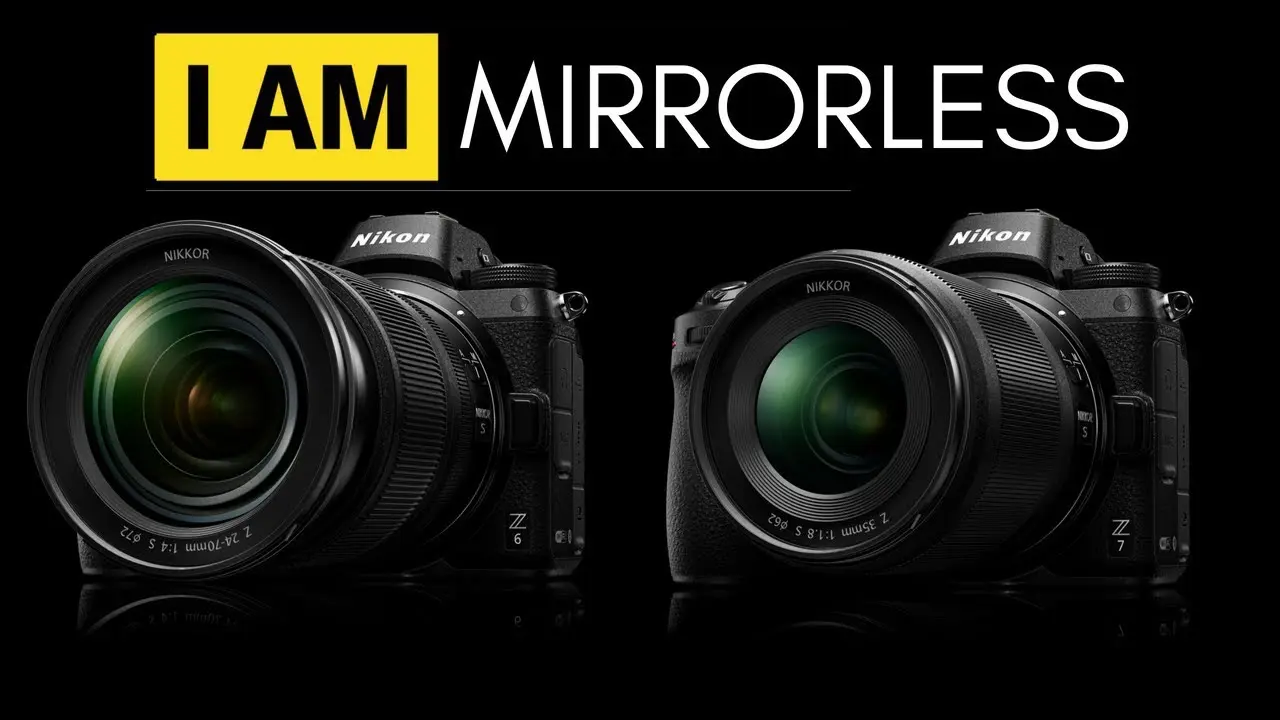
After months of rumors, leaks, rumor and teasers, Nikon has finally unveiled the highly anticipated Z series, the first camera system full-frame mirrorless from the Japanese company.
At today's event, the first two full-frame mirrorless cameras were introduced: the Nikon Z6 and the Nikon Z7, respectively mid-range and high-end cameras, designed for the most demanding professionals.
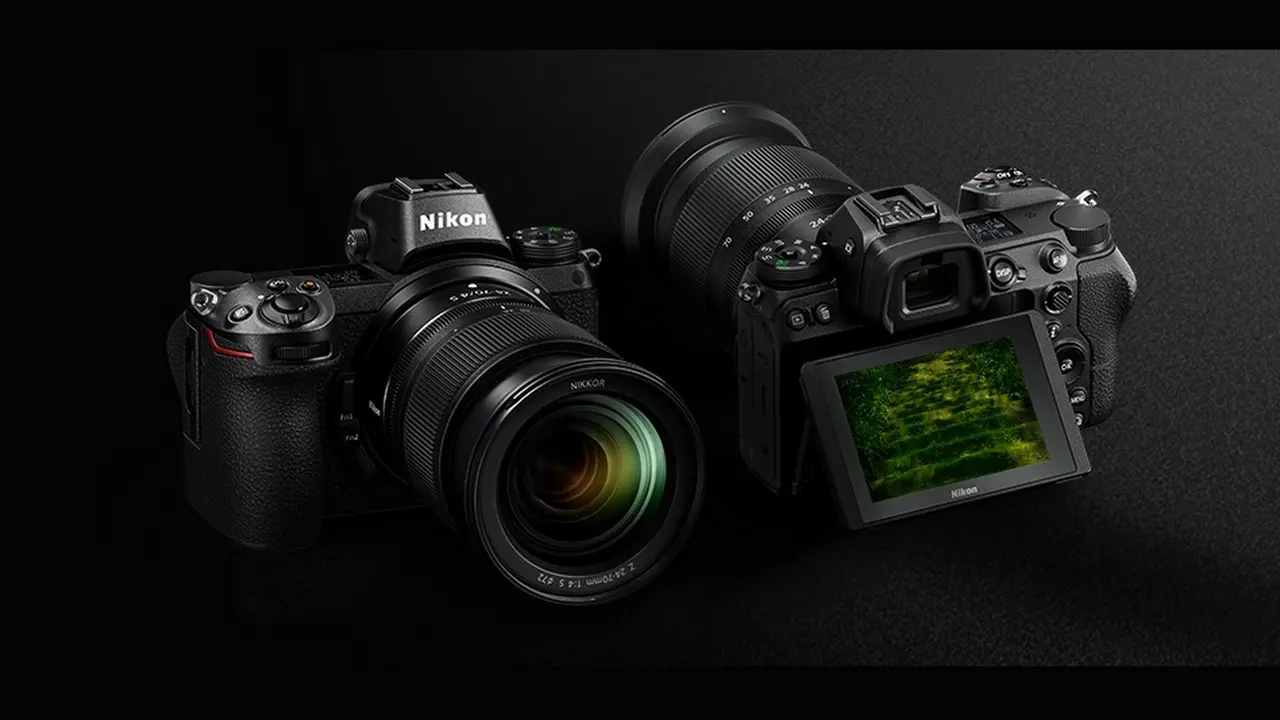
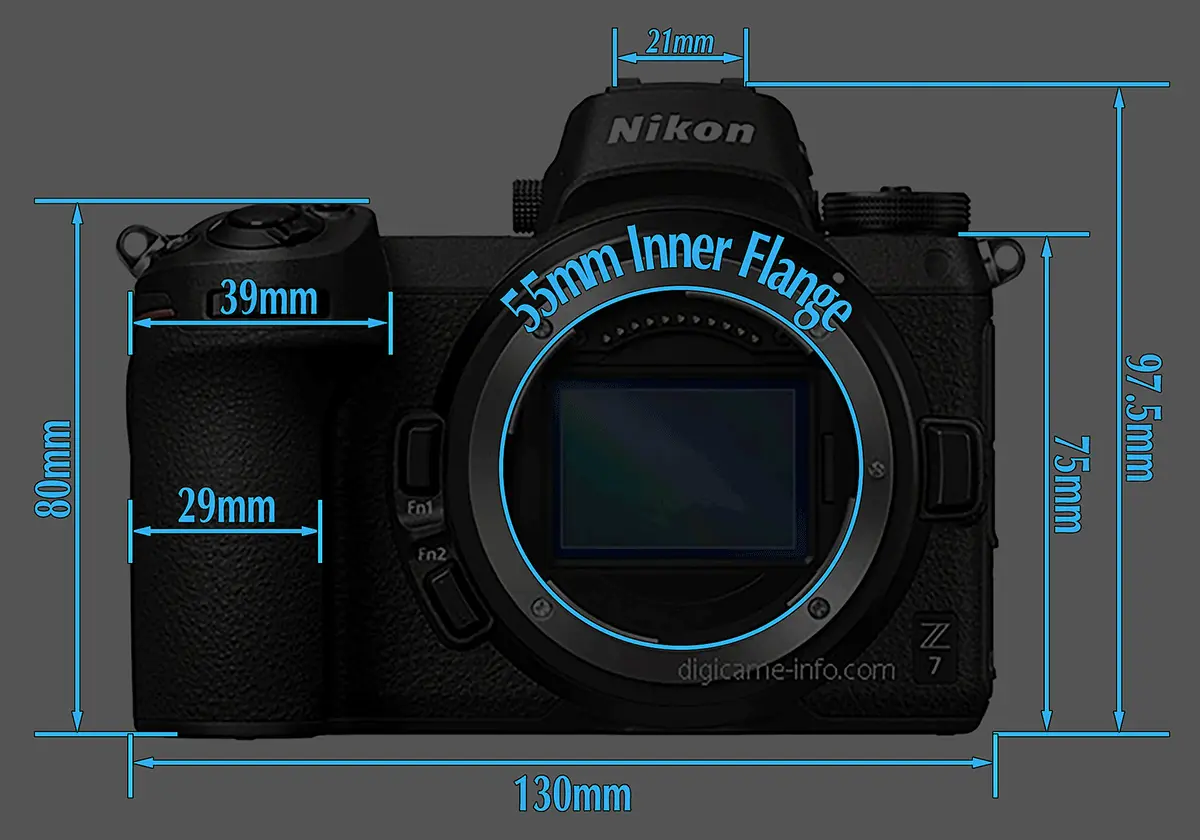
The Nikon Z6 and Z7 feature the same external dimensions and the same arrangement of dials and buttons. Both camera bodies are extremely ergonomic, a fundamental element for a good grip.
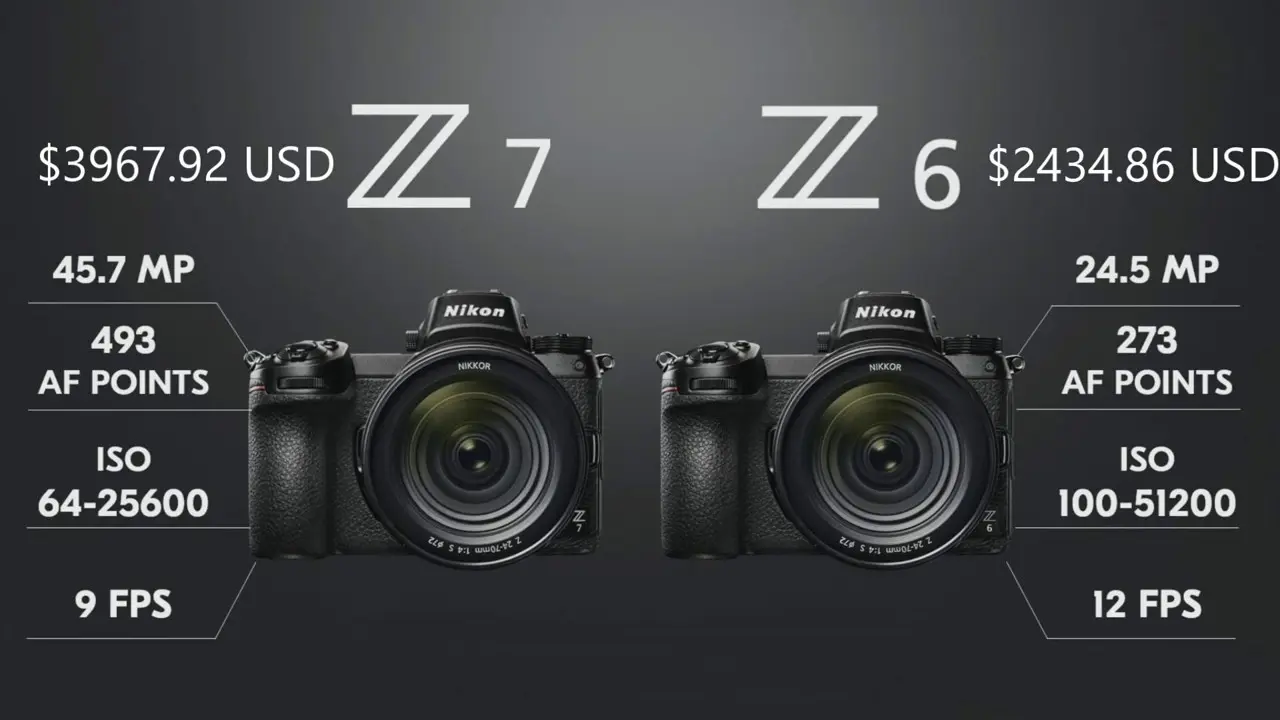
The Nikon Z6 houses a 24.5-megapixel CMOS sensor paired with the brand-new EXPEED 6 image processor, has an ISO range from 100 to 51,200 and features as many as 273 phase-detection autofocus points. on-sensor phase-detection autofocus points. The burst shooting speed reaches 12fps.
Meanwhile, the Nikon Z7 is designed for those who need higher image resolution and features a 45.7-megapixel CMOS sensor. The autofocus points are even 493 more numerous, and the ISO range goes from 64 to 25,600. The burst speed, however, reaches 9 fps.
Both cameras also feature an 5-axis stabilizationin-body image stabilization system capable of up to 5 stops of correction. The Nikon Z6 and Z7 share the same electronic viewfinder with a 3,690,000-dot OLED panel and 0.8x magnification. The rear LCD screen measures 3.2 inches and is tiltable.
Great news from the video perspective. Nikon Z6 and Z8 can record 4K UHD 30p video. In the case of the Z6, with full sensor readout and no cropping. For the Z7, full pixel readout recording occurs in DX format. It is also possible to create timelapse and interval shooting in 8K format.
The new Nikon full-frame mirrorless cameras are equipped with a single memory card slot compatible with XQD cards. Nikon has also introduced a battery grip for extended battery life and has worked to ensure compatibility with existing accessories for its DSLRs, such as flashes, remote controls, and much more.
And now we come to the sore point: the price. The first camera to hit the market will be the Nikon Z7, in September 2018, and it will have a launch price around 3400 dollars. The Nikon Z6 will arrive shortly after and will have a price around 2000 dollars.
These prices seem really absurd to me given that Nikon has one of the best DSLR cameras in the world on the market: the Nikon D850, at about 3000 euros! The nearly 500 euro difference between the D850 DSLR and the Nikon Z7 mirrorless cannot be explained in any way!!!
New Z-mount mount
"We have been perfecting our optical technologies for over 100 years," Nikon stated at its global launch event. The Z series features a brand new lens mount designed to "redefine possibilities" and elevate optical performance for Nikon in the coming decades.
It is a big novelty for Nikon, which had not updated its mount F-Mount since 1959.
The new Z-mount system features a 16mm flange and a 55mm diameter, measurements that allow great flexibility in the construction of future lenses. Such a large mount indeed allows the design of lenses with apertures up to f/0.95.
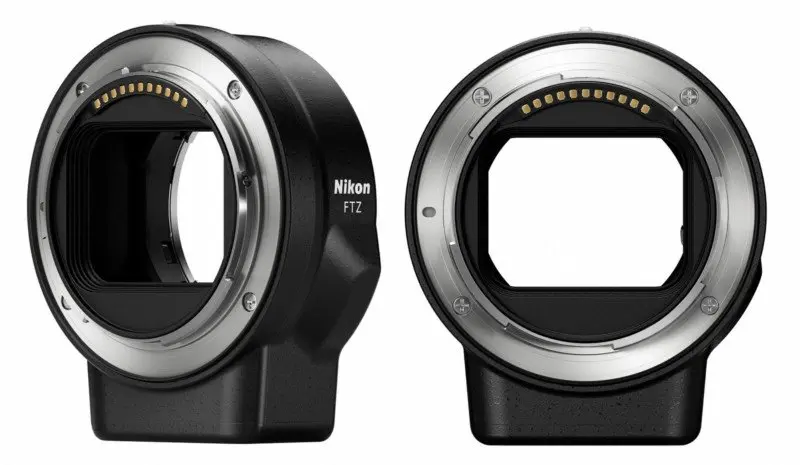
Obviously, an adapter for those who own "old" lenses with an "F" mount could not be missing. The FTZ adapter will allow anyone to mount over 300 "F" series lenses on the new "Z" series mirrorless cameras.
New "Z" lenses
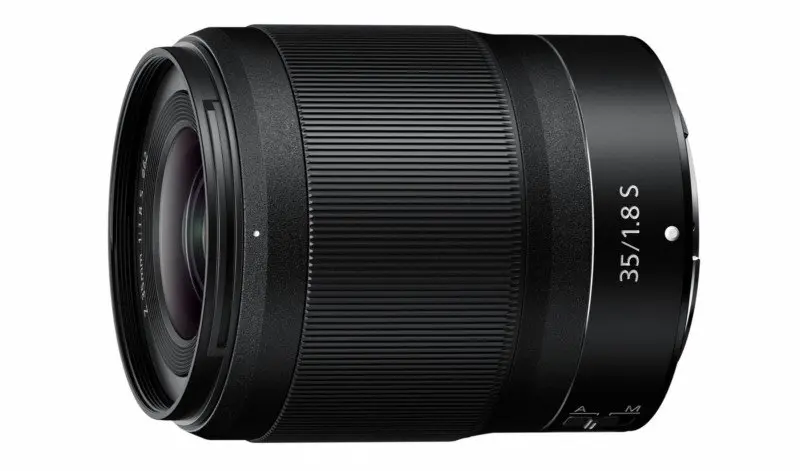
The Japanese company could not leave the full-frame mirrorless cameras without new lenses, which is why, in addition to the Nikon Z6 and Z7 cameras, the Japanese company presented the first 3 "Z" series lenses: Nikkor Z 24-70 f4 s, Nikkor Z 35mm f1.8 s and Nikkor Z 50mm f1.8 s.
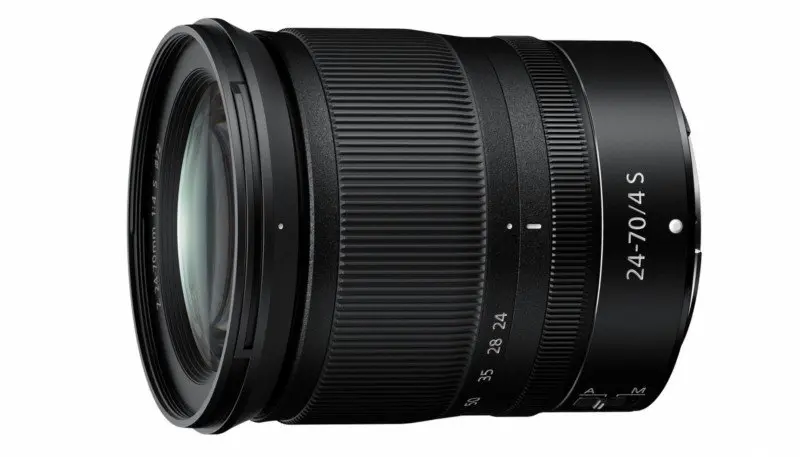
Nikkor Z 24-70 f4 s It is a standard zoom that is suitable for every occasion, while the other 2 are prime lenses. All 3 lenses are part of the "S-LINE" product range, capable of offering incredible sharpness and excellent control of chromatic aberrations. All the lenses are obviously resistant to dust and water droplets.
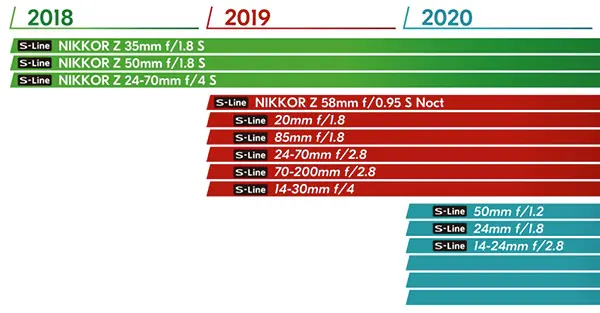
At this launch phase, only 3 lenses have been presented, but Nikon has a clear vision and has already unveiled the plan for launching new lenses over the next 3 years, which you can see below.
Both the Nikkor Z 24-70 f4s and the 35mm f1.8s will be available at the end of September, while the 50mm f1.8 will arrive at the end of October, with prices approximately 1000 dollars (or 600 dollars if sold in a kit with one of the two cameras), 850 dollars and 500 dollars.



