
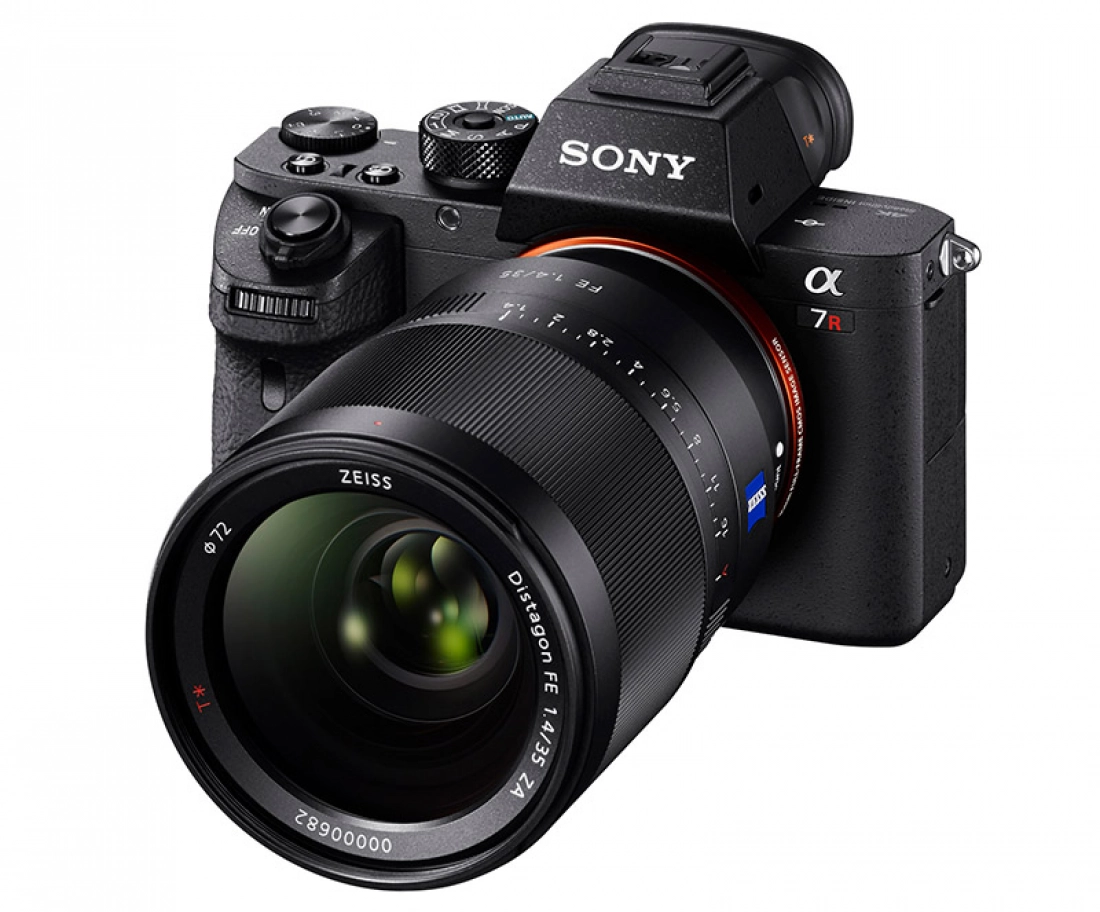
Many photography enthusiasts look for equipment that is as lightweight as possible and that takes up less and less space, but at the same time demand high performance.
Today this is possible thanks to advances in photographic technology, and to help you understand what I mean, I want to talk to you about the Sony a7 RII mirrorless camera, a miniature powerhouse that left me speechless and after months of testing, I find it hard to find anything that made me evaluate this camera negatively.
I had wanted to get my hands on this Full Frame for a while, and when it arrived I felt on cloud nine, but let's take a closer look.
The first thing I observe as soon as a camera arrives is to evaluate the ergonomics of the grip, I have found myself “uncomfortable” with some cameras; it may seem trivial but it is not an element to underestimate, because you have to think that this will be the object you carry in your hand during long trips or for your work, so having a camera body that does not suit your needs will prevent you from fully loving your purchase.
The Sony a7 RII it is made of an alloy of magnesium, the same material used to build DSLRs that immediately gives a sense of robustness and solidity; the body is weather-sealed, so dust and water splashes won’t affect your camera, and along the grip, there is a non-slip coating that greatly improves handling.
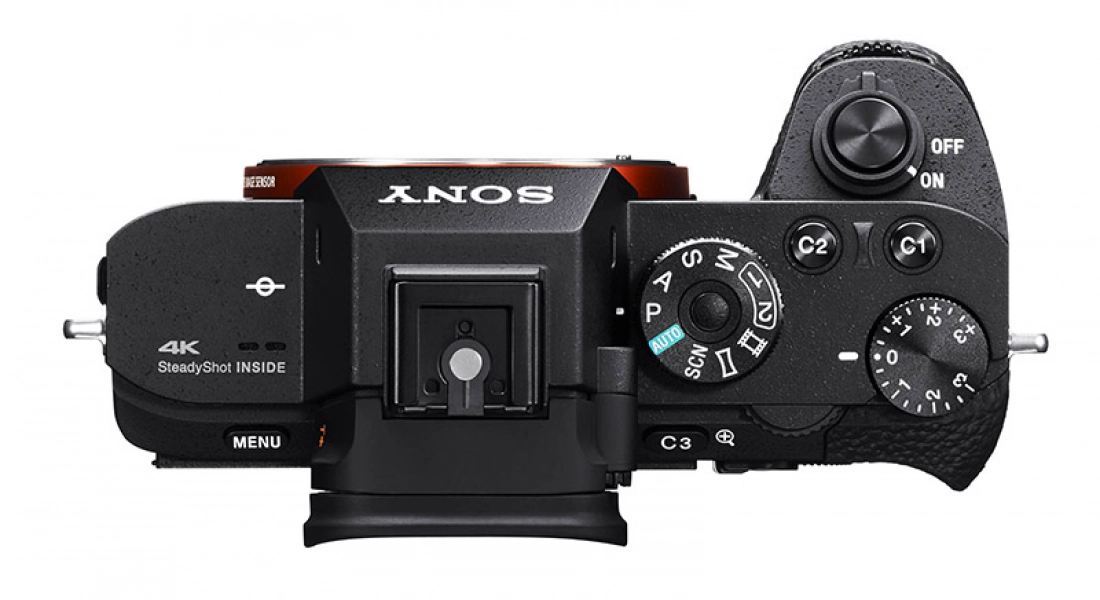
On the Sony a7 RII we find 4 dials, one placed in front of the grip that controls the aperture, two others on top that adjust exposure compensation and shooting mode (M, S, A, P, Auto, SCN, Pano, Video, 1, 2), while the fourth dial is on the back and controls shutter speed.
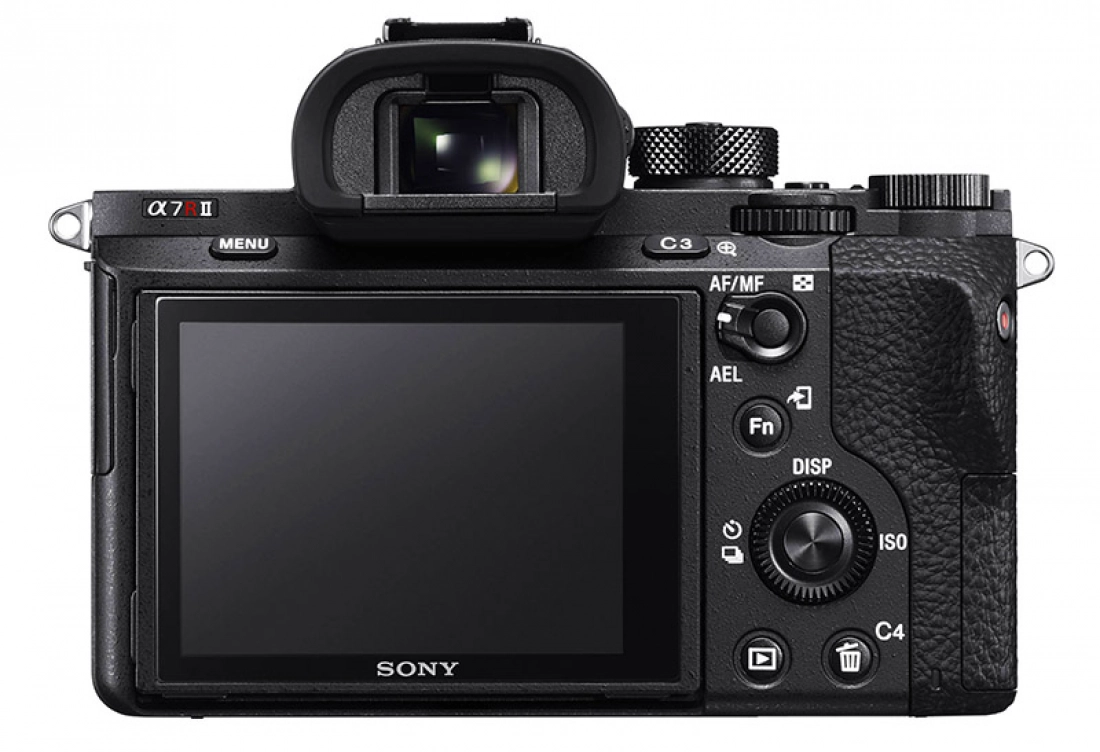
Let's move on to the buttons on the back of the Sony a7 RII: we find the menu, classic Sony style, with a lot of options that at first can disorient those not used to it, but actually contains everything we need in a proper camera; the C3 button (customizable) allows selecting the focus mode (399 focus points) (AF-single/AF-auto/AF-continuous/DMF/MF), a small lever to quickly switch from autofocus to manual focus, an Fn button that shows all functions like single shot, fast continuous shooting (HI), self-timer, flash mode (no built-in flash but has a hot shoe for external flash), flash compensation, focus mode, focus areas, exposure compensation, ISO, metering mode, and white balance.

With the selection wheel we can not only scroll through images and the menu, but clicking up lets us choose what to display, right adjusts ISO, left changes shooting mode (single, continuous, etc.); just below is the media button to view our shots and the trash button to quickly delete a photo.
On the top of the Sony a7 RII there are the C2 and C1 buttons (customizable) which by default control the focus area and white balance. In short, many buttons that speed up function selection.

On the left side of the Sony a7 RII two compartments hide the microphone input and headphone output, while opening the second reveals the mini HDMI port (up to 4K) and the Multi port for USB charging; The SD card slot and Rec button are on the right side of the camera body; Meanwhile, on the back we find the 3″ tiltable TFT LCD display, tilting up and down, NOT a touchscreen.

EVF? Yes! “EVF” stands for “Electronic View Finder” or simply “electronic viewfinder”; basically, you can see in the viewfinder how your photo will look even before shooting; in fact, every time you adjust a setting, you will see the change in real time, ISO, focus, and everything else. From the menu, you can choose whether to turn the viewfinder on or off every time you bring your eye close to it. Having an electronic viewfinder like this is one of the things you won’t find in a DSLR.

Inside it, Sony it features a 42.4-megapixel full-frame Exmor R CMOS sensor (yes, 42.4 megapixels!) accompanied by a phenomenal BIONZ X image processor that will amaze you, allowing for a sensitivity ISO up to 102400 and exceptional autofocus. The tracking mode remains one of the fastest on the market even today, the very first developed by Sony and the same that will be used in upcoming models.

Let's reveal more features of this great little camera: it offers a shutter speed up to 1/8000, ISO can go as low as 50 and up to 102,400 (I wouldn’t push beyond 10,000 ISO due to noise, but up to 20,000 is quite recoverable in post), with just these two features, photographing moving and fast subjects will no longer be a problem.
As it has done for some time now, Sony caters to video enthusiasts by introducing 5-axis image stabilization, which compensates for camera shake while shooting photos or recording videos. This feature solves, for example, the problem of shooting with telephoto lenses lacking internal stabilization, allowing us to avoid putting the camera on a tripod every time.
On Sony a7 RII It also includes 4K video recording, which elevates the product to professional levels, in AVCHD, H.264, and XAVC S formats.
For experts, there is the possibility to use the S-Log2 color profile to better manage every single aspect of recording, especially in post-production.
The Sony a7 RII It has Wi-Fi and NFC connectivity; in fact, through a quick setup between my smartphone and the camera, I can have all my shots directly in the phone’s gallery, ready to be edited and shared (if you’re a social media addict like me!). The app is available on all digital stores, both iOS and Android.

Through the Wi-Fi connection, you can also access remote control functions, and with the apps, you can perform Time Lapse, Stop Motion, HDR, etc.
I don’t like to use special effects in my shots, but it’s fair to tell you that Sony provides them, and I list them here for you:
Autumn Leaves, Clear, Deep, HDR Painting, High Contrast Monochrome, Illustration, Landscape, Light, Miniature, Neutral, Night Scene, Pop Color, Portrait, Posterization, Retro, Rich-tone Monochrome, Sepia, Soft Focus, Soft High-key, Sunset, Toy Camera, Vivid, Watercolor, Partial Color.

Do you love Slow Motion?
You can reach up to 120 fps only at 1280x720 while the maximum for Full HD (1920x1080) is 60 fps.
The battery life is estimated by Sony itself at 290 shots and 95 minutes of continuous video recording continuous, but for example, since I use it for video, I bought spare batteries and alternatively I always carry my trusted power bank with me, which we can connect to recharge our battery. The Sony a7Rii uses an NP-FW50 type battery.

Final thoughts?
One of the best mirrorless cameras I have tested so far, in every aspect. I'm really trying hard to find a flaw, but there's nothing to do and you will notice it too when using this camera!
Ah, the only thing that might hold you back is the price, about €2300 for the body only, but I assure you that it's €2300 of pure and powerful technology!

Alessandro Baccoli
Instagram: @ale_baccoli
Facebook: https://www.facebook.com/O.Alex.B.DeeJay.O
Pinterest: https://www.pinterest.it/alessandrobaccoli/
Website: www.alessandrobaccoli.it



