
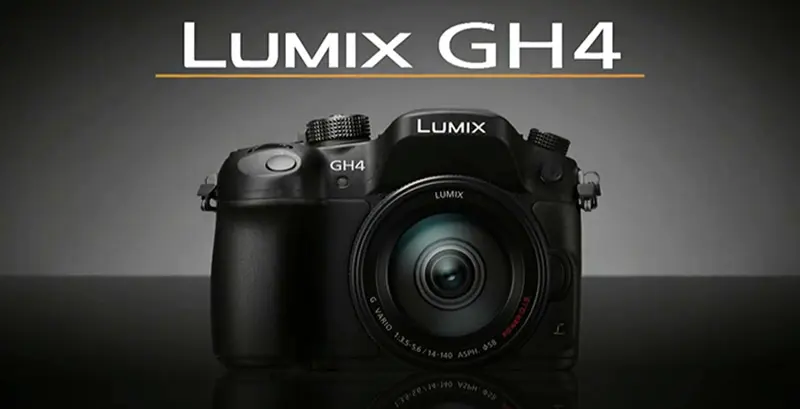
The collaboration between Photoblog and continues Alessandro Baccoli, director of RTL 102.5, photography enthusiast and videomaker. After trying and reviewing for the Photoblog the Sony RX10 III and the bridge camera Panasonic Lumix FZ2000, Alessandro tested a small and powerful mirrorless camera: the Lumix GH4.
Let's not waste any more time and hear what Alessandro has to tell us about the Lumix GH4.
Small and powerful, I'm talking about the evolution of the Panasonic Lumix GH3, the Mirrorless Lumix GH4. Produced since 2014, it still stands among the best mirrorless cameras with four-thirds sensor. I wanted to put it to the test both in photography and video aspects and it greatly exceeded my expectations.
Starting precisely from the 4/3 sensor, it is a Live MOS of 16 megapixels. As you probably already know from my articles, I shoot exclusively in RAW, except when I want to test other formats, and this processor left me speechless when I had to shoot moving subjects, obviously also thanks to the lightning-fast autofocus (AFS - Single - AFF - Flexible - AFC - Continuous - MF - Manual) that distinguishes the Lumix cameras.
The electronic viewfinder The OLED has 100% coverage which gives us significant help, giving us an idea of how our photograph will look before shooting.
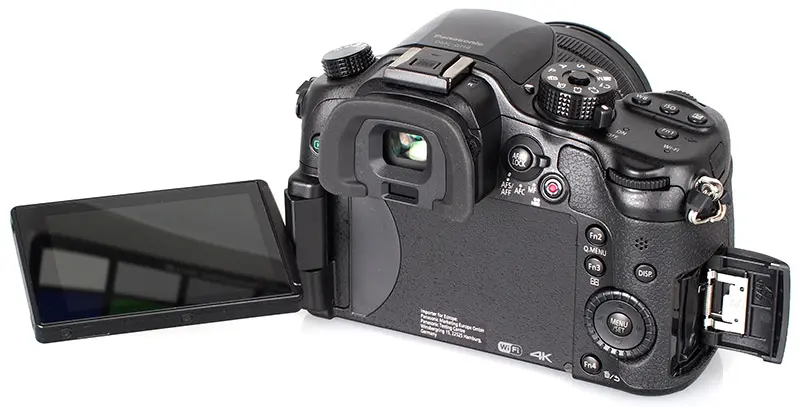
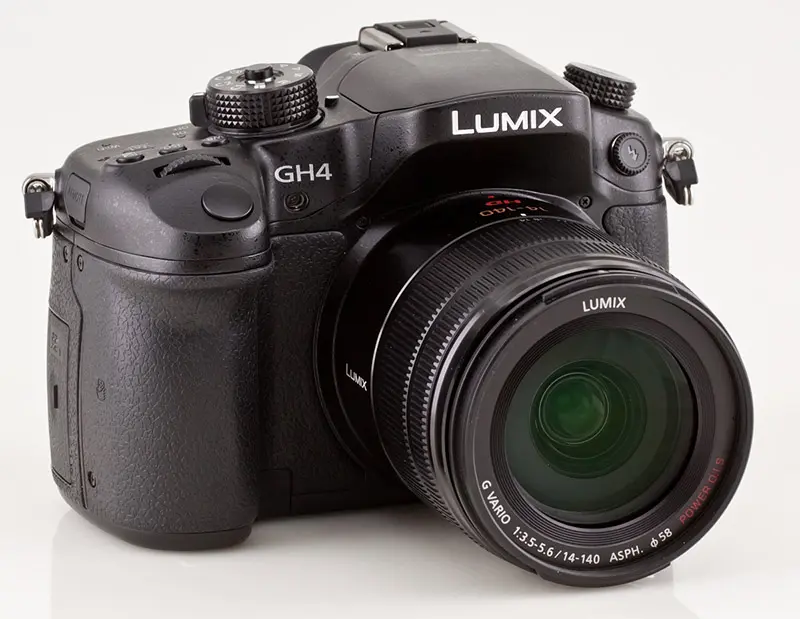
The watchword is robustness; I really like the camera body, it feels solid in the hand, not too light and not too heavy (480g), but it gives the sensation of holding a beautiful jewel, even though many prefer something more compact when it comes to mirrorless cameras;
Weather-sealed body, which means that dust, moisture, and external agents will not affect our camera, giving us the possibility to shoot even in situations where other photographers could not.
The ISO They can have a range between 100 and 25600; trying to push the ISO above 2000 the noise becomes visibly annoying but below that, with the help of development software like Lightroom or CameraRaw, everything is absolutely recoverable.
The display is a OLED from 10,360 points, touchscreen which allows interaction with the menu and functions directly from the display, speeding up, for example, focusing on a specific point in the scene.

As usual, Lumix provides us with various Fn buttons (Function), from Fn1 to Fn10, programmable as we wish, giving us the possibility to make our camera fast and customizable.
In the selector near the shutter button, there is a function for “creatives.” I don’t usually like to use special effects, but I must say these are well done, designed for those who want to give a “creative” touch to their shots while photographing; here they are listed: Expressive / Retro / Old Days / High Key / Low Key / Sepia / Monochrome / Dynamic Monochrome / Rough Monochrome / Silky Monochrome / Impressive Art / High Dynamic / Cross Process / Toy Effect / Toy Pop / Bleach Bypass / Miniature Effect / Soft Focus / Fantasy / Star Filter / One Point Color / Sunshine

From the Videomaker’s point of view, the Lumix GH4 is reminiscent of its sister GH3, but the differences are clearly visible:
the introduction of 4K and the 4K photo mode, ISO sensitivity has been improved greatly reducing video noise, the autofocus goes up to 49 points, whereas before it was 23, so now it is more precise and faster.
4K files can be recorded with MOV or MP4 extension at a bitrate of 100 Mbps 30p/25p/24p, while recording Full HD 1080p can be set up to 200 Mbps or 100 Mbps 60p/50p/24p.

For Pro users, the V-log color profile has been implemented, but it remains a paid feature priced at €99.99.
HDMI, audio-video output, remote control input, microphone input, headphone output, NFC, WiFi. Time Lapse, it must be acknowledged that Panasonic and Lumix have designed and created a product also for the pro videomaker, considering the price and especially the potential, you can really do great work, perhaps creating a rig composed of an external monitor, Panasonic DMW-YAGHE interface unit, an external microphone like the Panasonic shotgun, and an external power supply or a battery grip to extend battery life; a few adjustments and you can have your perfect setup.
In the gallery, I leave you some photographs taken with the Lumix GH4 and the Lumix 100-400mm lens.










Did you like the Lumix GH4?
So all that's left is for me to tell you about the GH5s in the next article, an evolution that really made a difference, especially in the world of videomaking.
Alessandro Baccoli
Instagram: @ale_baccoli
Facebook: https://www.facebook.com/O.Alex.B.DeeJay.O
Pinterest: https://www.pinterest.it/alessandrobaccoli/
Website: www.alessandrobaccoli.it



