
She stopped by pure chance at the pea pickers' camp in Nipomo, which housed more than two thousand farm laborers, now on the brink of subsistence.
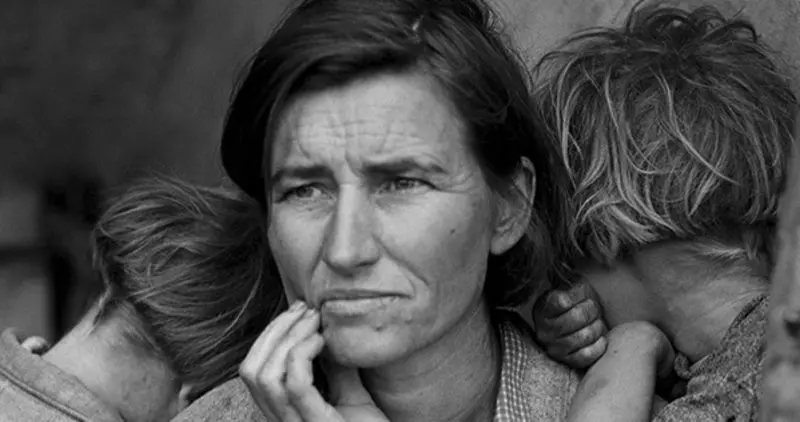
Walking around the camp, she met the “Migrant Mother”, with her seven children, under a makeshift tent.
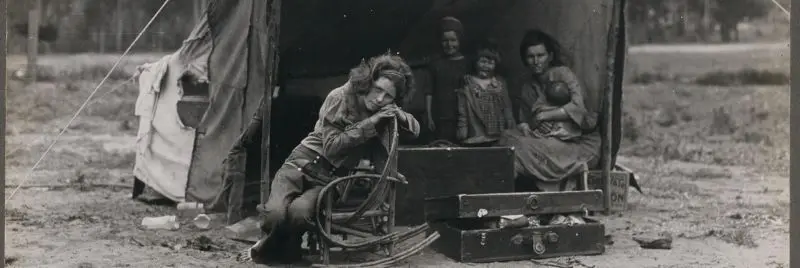
Having obtained permission, she took a series of photos, the most famous of which became a formidable and highly effective political tool.
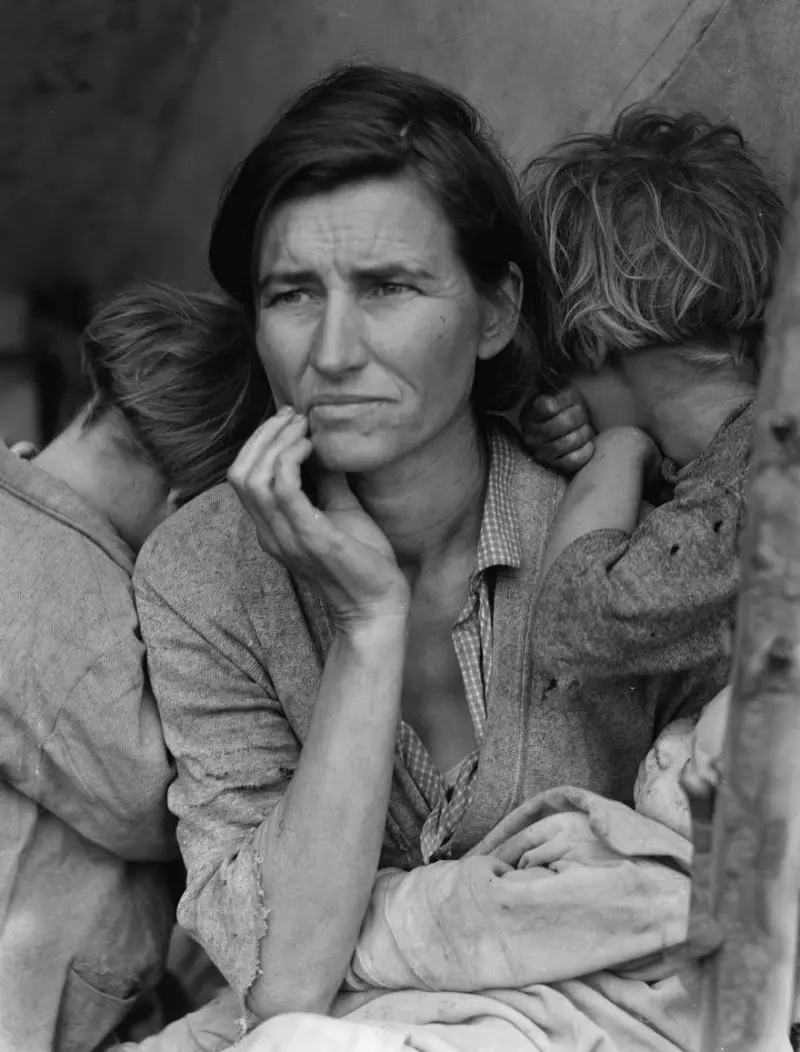
It is the image that more than any other humanized the cost of the Great Depression. The mother's eyes, worn down by worry and resignation, look beyond the camera toward a future that seems uncertain. The photograph represents the mood of an entire bent and suffering nation.
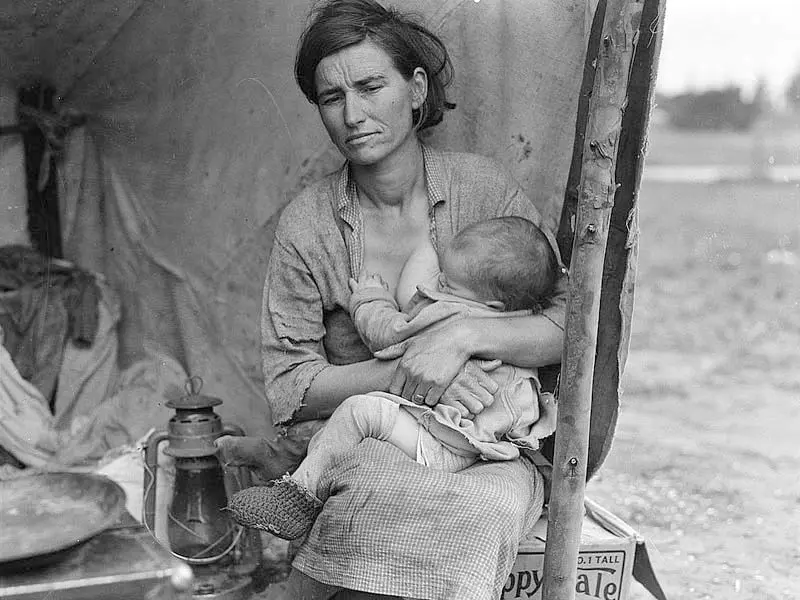
Just days after its publication, the impact on public awareness of the Migrant Mother began to be felt, and essential supplies started arriving at the migrant camp: food, clothing, doctors, and medicine.
In the following years, the image became one of the most reproduced: on FSA billboards (the new federal agency that replaced the RRA), in newspapers and magazines, and on a postage stamp.
The ordeal of people like the Migrant Mother was sublimely portrayed in John Steinbeck's novel The Grapes of Wrath.
Until the 1970s, the true identity of the Migrant Mother remained a mystery; it was finally revealed by a journalist: Florence Leona Christine Thompson.
Florence always lived far from the fame granted to her image. Only shortly before her death did she benefit somewhat: her family managed through a public subscription to quickly raise over $25,000 to pay for the medical treatments she needed.



