
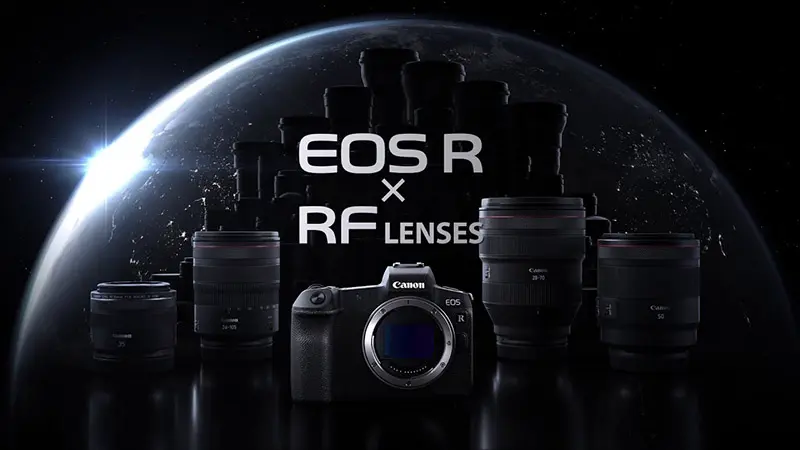
"When we launched the new system with EOS EF lenses in 1987, we showed the future to the photography world. Today, however, a new chapter of our history begins."
These are the first words of Yuichi Ishizuka, president and CEO of Canon who today in London presented the new mirrorless full-frame Canon EOS R, a high-end camera suitable for professionals or enthusiasts who spare no expense, considering that the EOS R body alone will cost 2629 euros.
After Sony, leader in the mirrorless segment, and after the launch of the Nikon Z system, Canon could not stand by and has entered this market which is expected to be the future of photography. Many indeed say that DSLRs are destined to die and that in the future we will only see mirrorless cameras.
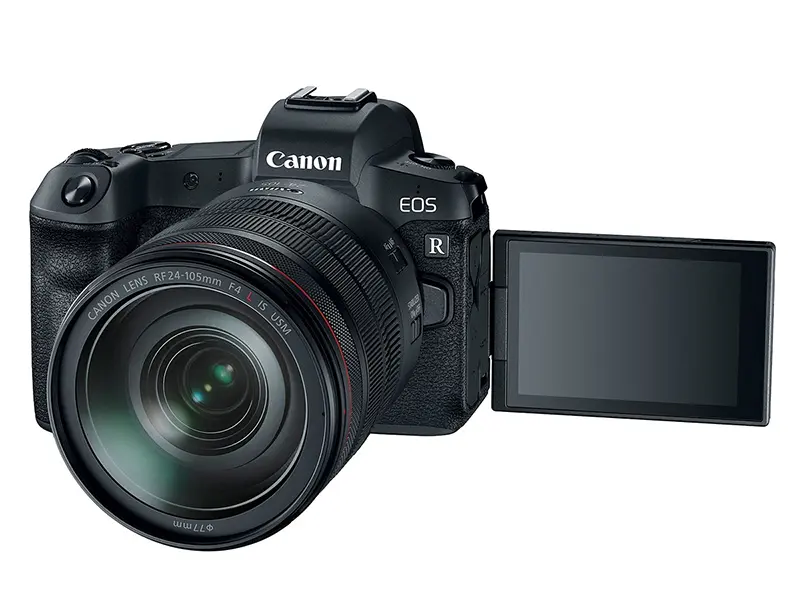
The design of the new mirrorless Canon EOS R is not very different from the traditional style used by the Japanese brand. However, it is clear to the naked eye that the camera body is definitely smaller compared to a DSLR like the EOS 5D MK4. Also pleasing to the eye, the EOS R integrates elegantly with the new RF series lenses.
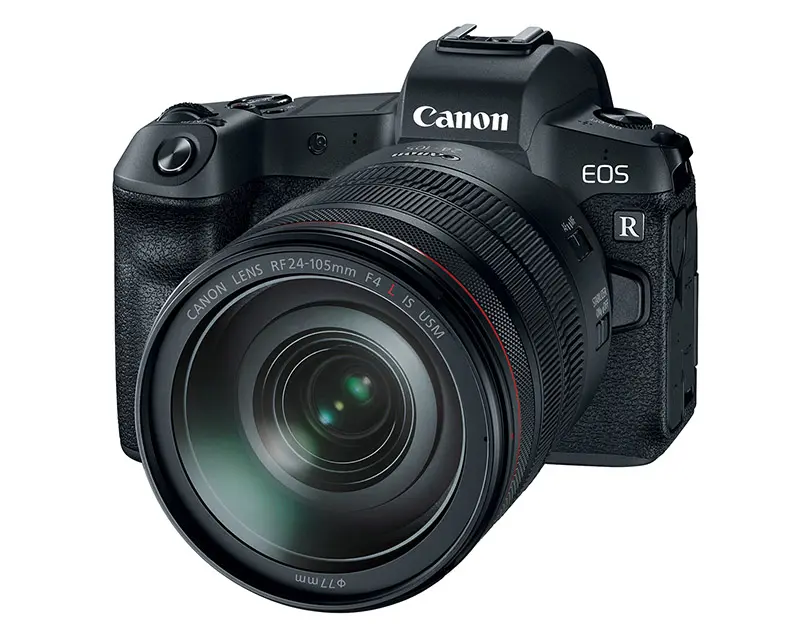
The body is made of magnesium alloy and is equipped with seals to protect the camera from weather elements. The weight is only 480 grams, 2-300 grams lighter than a DSLR... almost half!
Also interesting is the introduction of an automatic shutter closing when changing the lens to prevent dust from entering the camera body.
RF Lenses and Mount
The new RF lenses required a complete redesign of the camera mount. The new RF mount features characteristics quite different from current mounts such as, for example, a 12-PIN system to exchange data from the camera to the lens that is 40 TIMES larger than what happens today on professional DSLRs!
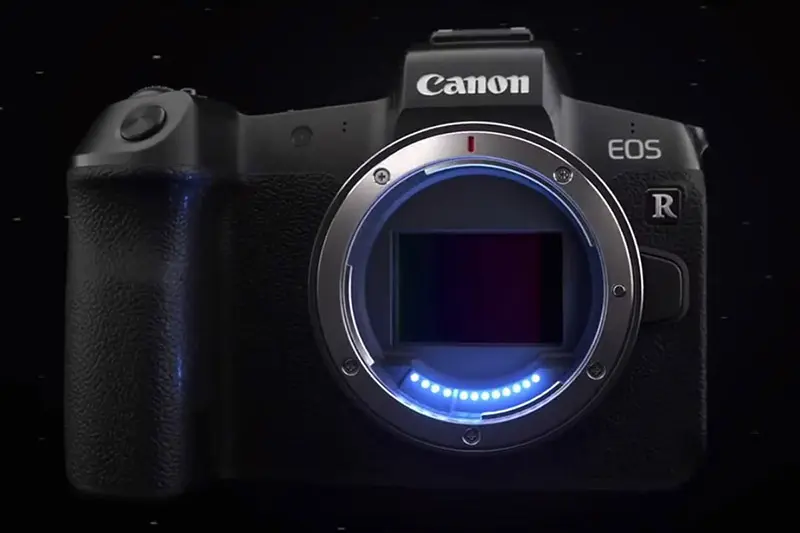
The RF mount fitted on the new full-frame mirrorless EOS R features a diameter of 45mm and is also compatible with current EF and EF-S lenses, provided a specific adapter is mounted.
"This project was born from the need to develop a new system capable of improving the already excellent EF and to prepare us for the future," says Yuichi Ishizuka. "When we started thinking about this possibility seven years ago, we weren't asking ourselves whether we would develop a new DSLR or a mirrorless camera. What we needed most was a new paradigm to prepare us for the future. And the future, in our opinion, is mirrorless."
30 Megapixels and ultra-fast autofocus
Inside the new Canon EOS R we find a 30-megapixel full-frame CMOS sensor with an ISO sensitivity range from 100 to 40,000, paired with a Digic 8 processor which allows the camera to shoot bursts up to 8 frames per second.
Also present is the "Digital Lens Optimizer", a technology capable of correcting lens chromatic aberration by leveraging the RF lenses' ability to send correction data stored in the lens to the camera body. This minimizes the impact on continuous shooting speed.
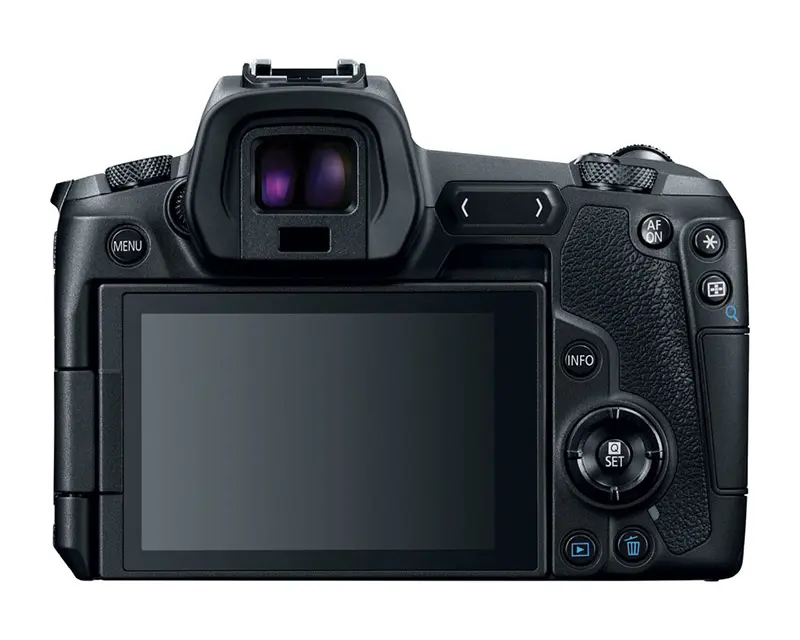
Even the autofocus system on the new Canon EOS R is impressive. There are as many as 5655 autofocus points on the display (which is also a touchscreen) and with only 0.05 seconds autofocus time, this system is the fastest in the world... period!
"It is the fastest autofocus system for full-frame mirrorless cameras on the market and works in low light conditions down to EV-6," explains Alessandro Stanzani, Executive Vice President Consumer Imaging at Canon Europe. "The EOS R's shutter is extremely quiet, almost imperceptible. It will be greatly appreciated by photojournalists and those who love street photography."
Video Recording
There could not be a lack of great news from the video recording perspective as well. Just like on the 5D Mark4 DSLR, it is also possible to record on the new Canon EOS R 4K video with full audio control and 10-bit output via HDMI.
Among the features available on the EOS R is also the Focus Guide for manual focusing (introduced on Cinema EOS cameras) and the very useful Focus Peaking.
EOS R: Prices and Availability
The new Canon EOS R will be available starting from October 9, 2018 along with the first 4 lenses of the RF series and adapters for the EOS EF mount. The body alone will cost 2629 euros, high but in line with competitors on the market
The lenses to be released will be a 35mm f/1.8 IS Macro STM (€579), a 28-70mm f/2L (€3429), plus a 50mm f/1.2 (€2679) and the 24-105mm f/4L IS USM (€1259).



