
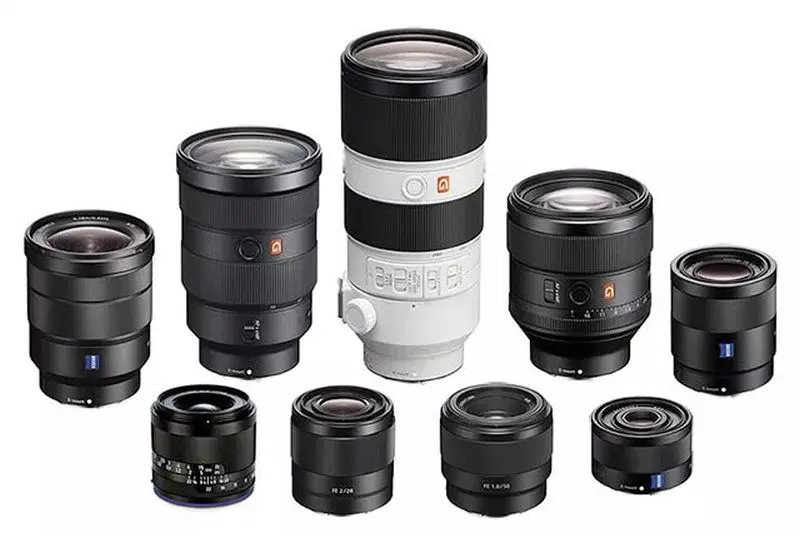
 We have bought our new camera and now we need to choose a new lens. Doing research online or in specialized stores we face a varied offer, with even more different prices.
If we are experienced photographers there are no problems, we know exactly which lens we want. But if we are a bit more beginners, here are 7 factors to consider on how to choose a new lens.
Keep in mind that each characteristic can have a significant effect on the quality of your photographs, but also on the purchase cost of your new lens.
#1. Lens speed = lens aperture
Without going too much into detail, the aperture indicates how wide the lens opens when the shutter button is pressed and is indicated by the letter f followed by a number (f/4; f/8, …). The lower the number is small (f/1.4; f/2; …), the larger the lens aperture is; the more large is the number, smaller is the lens aperture (f/16; f/32; …).
The larger the aperture, the greater the amount of light that can enter through the lens. This can bring several benefits:
- a lens with a large aperture (for example f/1.4) allows much more light to pass through compared to a lens with a smaller aperture (for example f/4 or f/5.6) and therefore you will be able to shoot correctly in much darker places without the risk of blur or without having to raise the ISO with a consequent increase in noise;
- since they can work with very short shutter speeds, it becomes easy to freeze fast movements, such as important moments in a sporting event;
- a lens with a large aperture allows you to have a depth of field very shallow. This means that when you focus on a subject, the foreground and background will be more blurred.
- However, this can make focusing more complicated because the depth of field is very shallow. To increase your depth of field, of course, you can close down the aperture more;
- lenses with a large aperture are generally more expensive lenses with smaller apertures;
- lenses with larger apertures will also help you in flash photography, as they capture more ambient light.
\t
\t
\t
\t
\t
\t
Generally, we can consider a lens with an aperture f/4 useful for general shooting in good lighting. Lenses with an aperture f/5.6 require good lighting or image stabilization, so they are suitable for daytime photography or use with a tripod.
If you are shooting indoors without flash, we recommend buying a lens with at least f/2.8 and if you want to photograph indoor sports events you will need to use a very fast lens (f/2.0, but in this case be prepared to pay quite a lot).
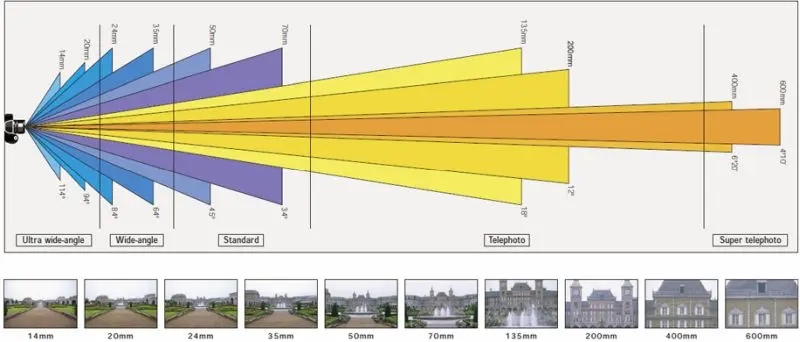
#2. Focal Length
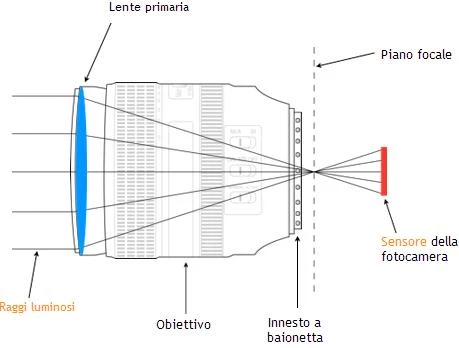
Focal length refers to the length of the lens (these are the measurements indicated in "mm" associated with a lens). This measurement is the distance between the optical center of the lens and the focal point on the camera sensor.
Again, we won't go into details, but the focal length of a lens tells you how much you can magnify the subject when you photograph it.
It also indicates the type of field of view you will get (for example, a wide-angle showing a large scene, or a more zoomed-in and tightly cropped view).
Ultimately, the focal length you will need will be determined by the type of photography and subject you have in mind.
#3. Focusing distance
This is the measurement between the end of the lens and the closest point it can focus on. It is particularly useful to know if you are thinking of doing some macro photography since in these photographs you need to get very close to the subject.
#4. Image stabilization
More and more DSLR lenses come with some form of image stabilization (often referred to as IS). This helps to counteract involuntary camera movement.
Camera shake is the involuntary movement that occurs when the shutter is open. It has a greater impact when shooting at low speeds, when not using a tripod, and when using a lens with a longer focal length.
What are the causes of these involuntary movements? Shaking of the hands or arms holding the camera, movement induced by pressing the shutter button, ...
You also need to consider that the longer the lens focal length, the greater the effect of these micro vibrations and therefore the photo will be more blurred. Have you noticed that all photographers at sporting events, where powerful telephoto lenses are used, use very sturdy tripods to eliminate such vibrations?
There are different types of IS in different types of cameras and lenses, but most DSLR lenses are equipped with small gyroscopic sensors that correct any camera movement.
Also, it is worth noting that IS helps stop camera shake, which is very useful in low-light situations, and does not freeze moving subjects.
Basically allows you to shoot with longer shutter speeds, which means the camera is open longer, but if the subject moves it will be more blurred.
IS adds cost to your lenses, so you’ll need to consider whether you’ll be taking shots that will benefit from it or not – for example, shooting in low-light situations at longer focal lengths without a tripod?
#5. Build and quality
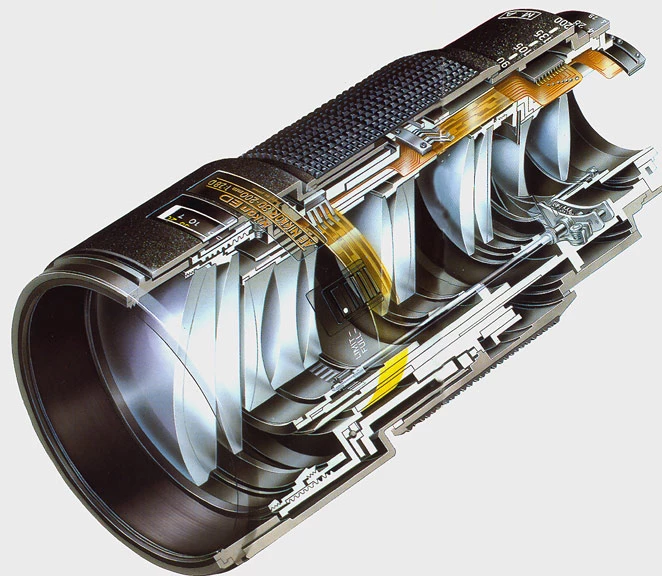
Lenses vary greatly in terms of build quality. You’ll often notice the difference simply by lifting two lenses at the same time and feeling their weight.
For example, between two 50mm lenses (an f/1.4 and an f/1.8) there is a significant difference in weight and materials used. The f/1.8 obviously contains much more plastic compared to the f/1.4.
Most lens manufacturers have a range of lenses of different quality to satisfy different market needs. “premium” lenses are designated as professional lenses and use higher quality glass and optical elements.
They are generally heavy (as they are made with many metal parts and little plastic), durable (often they have seals to prevent dust and moisture ingress), with a large shutter opening and allow for wonderful shots.
#6. Budget
Lenses cover a incredibly wide range in terms of cost. Despite this, keep in mind that it is useless to try to improve the quality of shots by buying a better quality camera body if the lens is of low quality, while a good lens on a lower quality body allows for a significant improvement in photo quality.
Be careful with "kit lenses" provided with camera bodies. In some cases they are good, but it might be in your interest to buy a camera body alone and get a better lens than the one included in the kit.
#7. Brand
Stick to lenses made by the camera manufacturer or use lenses from third-party manufacturers (such as Sigma, Tamron, etc.) and still get good results?
The the quality of third-party lenses has increased tremendously in recent years, so if you don’t find the lens you’re looking for in your manufacturer’s catalog, you can confidently turn to a different manufacturer.



