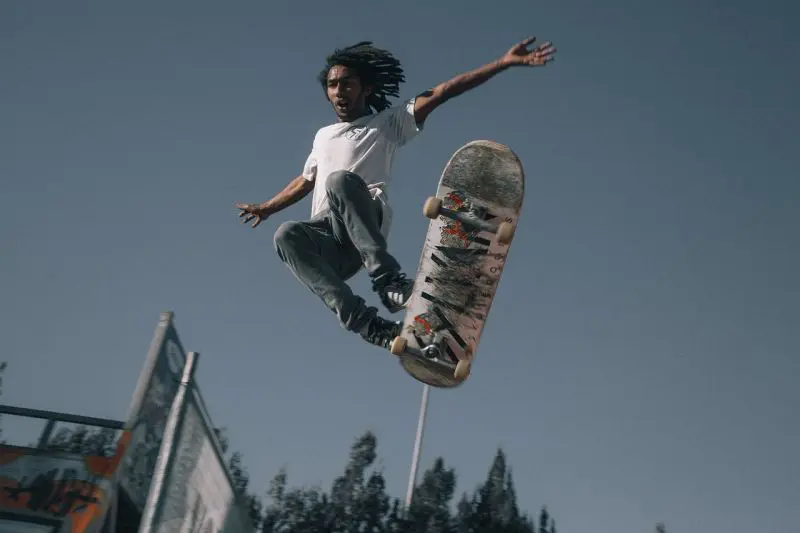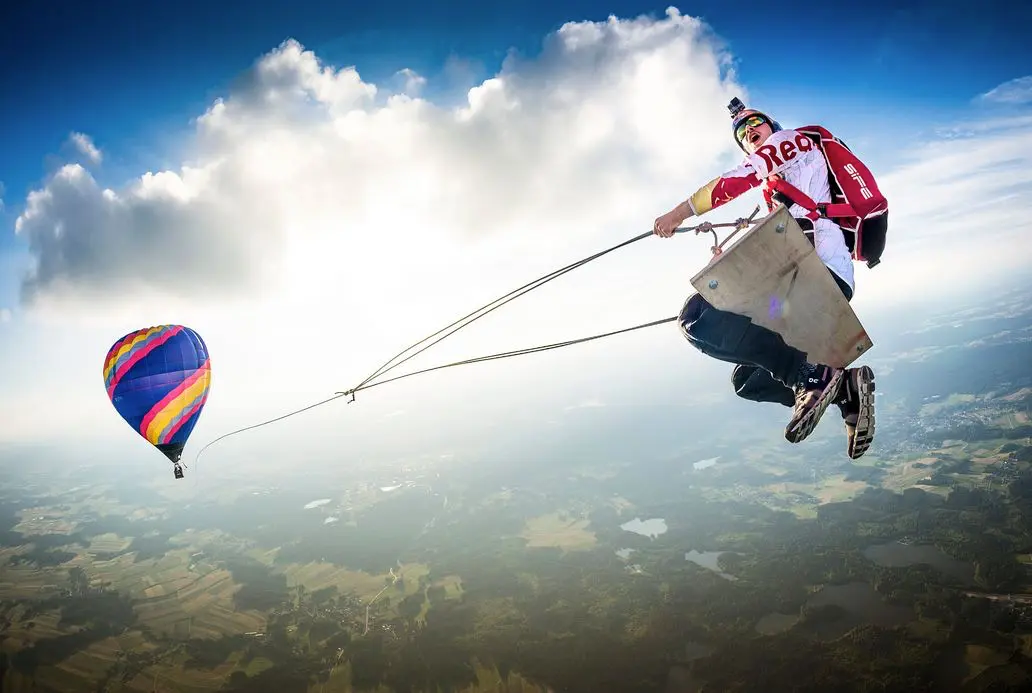
To photograph extreme sports it is not necessary to go to high mountains or do parachute jumps, but it is enough to go to a city skate park or a BMX track to witness exciting jumps and tricks.
If, from this point of view, it can be easy to find the opportunity to photograph extreme sports, this type of photography is actually very difficult, much more so than classic sports photography, because it is extremely unpredictable.
So if we have friends or children who engage in these sports activities and ask us to photograph them or we want to expand our portfolio, let's look at some tips on how to get the best from our images.
Knowing the extreme sport
The first secret to getting good images is to know the extreme sport we want to shoot and calso know the athlete's behavior we are filming.
Usually everything moves quite fast: jumps, tricks, and speed itself are fundamental components of extreme sports. Without these elements, combined with a certain amount of risk (more or less calculated), extreme sports wouldn't be what they are. Since everything is in motion, you have to anticipate the position of your subject and position yourself in the right position.
So look at images and videos related to the sport you want to photograph. Try to understand from which position the shots were taken and how the camera was set up. Try to previsualize the movements and act accordingly. As always, be careful with what you do: if you are filming a rally race, some positions can be very dangerous and therefore watch out for your safety!
Camera settings for photographing extreme sports
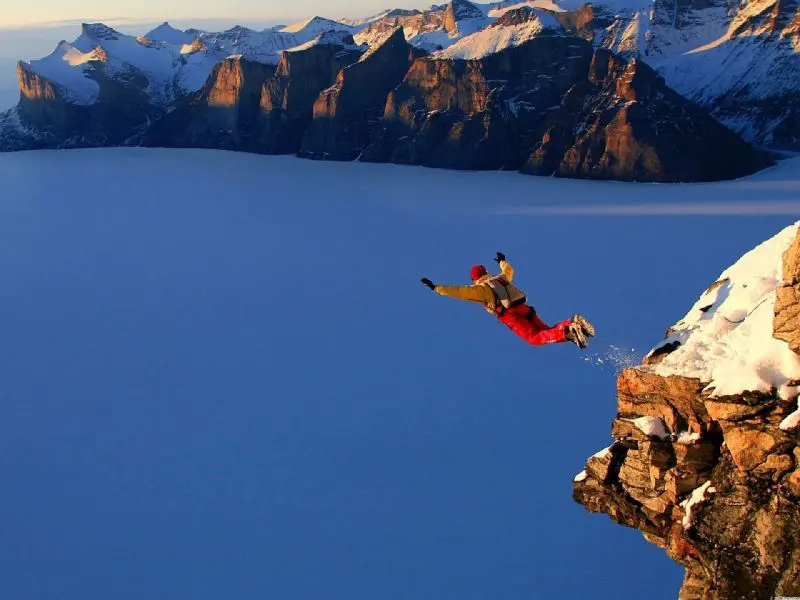
As mentioned, extreme sports are fast. The interesting action lasts a moment!
To freeze such rapid movements you can use very fast shutter speedsor a burst of flash with a very short duration. Certainly, when using flash, you must consider several factors such as the distance from the subject, so it might definitely be easier, at least at the beginning, to use very fast shutter speeds. However, this option could be difficult if the lighting is not adequate, so you should adopt a mixed technique: fast flashes and quick shutter speeds.
For this reason you might have to increase the ISO, up to the level where the noise remains still negligible. You might also need to open the shutter to let more light into the camera.
Then select the shooting mode to “Shutter Priority” and adjust the other settings to avoid blurry photos (in this regard, it is always better to have a bit of noise in the image rather than a blurred picture).
At this point, it goes without saying that to get good photos in any lighting condition, a high-performance camera is definitely necessary. If it is also relatively lightweight, all the better, since we might have a long photo session bent into uncomfortable positions!
As a mode of autofocus, you should use AI Servo mode (or AF Continuous if you use NIKON) to have a better chance of keeping your subject in focus while it is moving. Another alternative is pre-focus manually and then lock the focus on the point where your subject will pass.
Use continuous shooting mode: you will have more chances to capture the right image.
Study your camera well, try various techniques and adapt what best suits your characteristics.
Anticipate the action
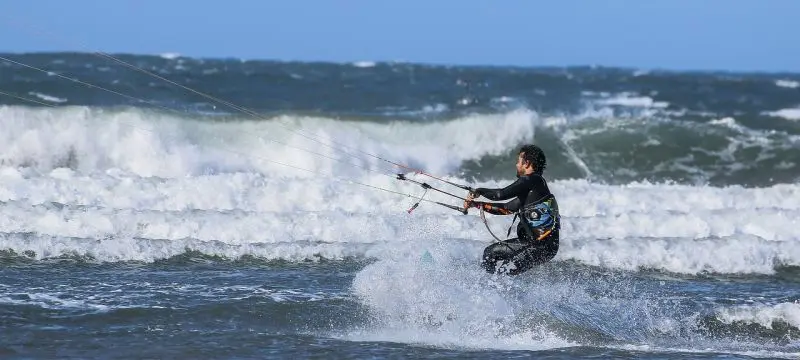
Everything moves quickly in an action sport. If you wait to see the climax in the viewfinder, by then it is too late. You have to learn to act on instinct: anticipate what is about to happen and shoot just before the highlight!
With practice (and knowledge of the sport you are photographing) you will learn to understand what will happen next and when to shoot.
Angles
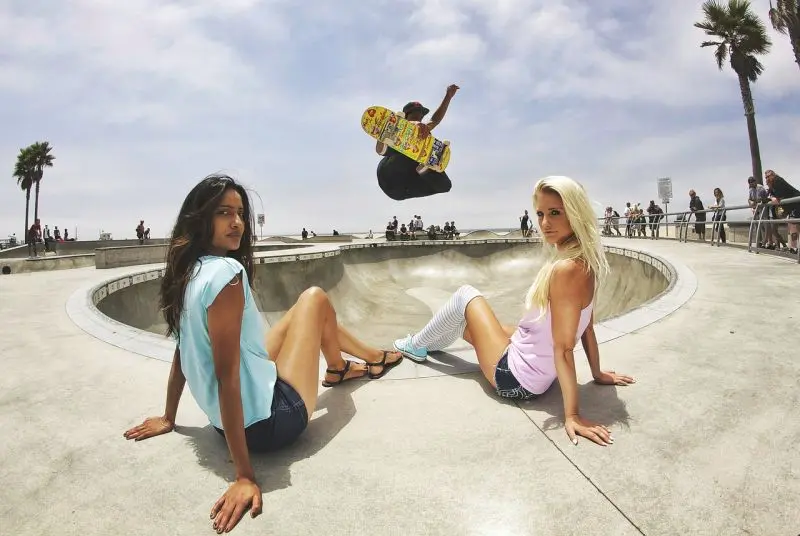
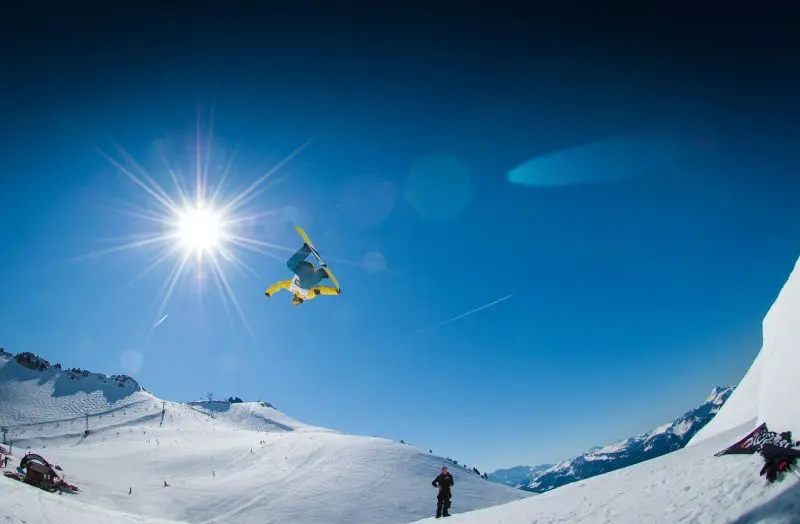
The best angle for the shot tends to be low. This adds dramatic tension, energy, and movement to your subject. When you reach your position, try shooting from different angles until you find the best one.
In terms of composition, to allow the photo to make sense to the viewer, 3 key things are necessary: where the movement started, where the subject is, and where the action will be completed. Context is key to getting a great image, otherwise, what you will get is just a subject jumping.
The third and final tip for composition is to be able to see the athletes' eyes. When you find the angle for your shots, have the athlete come closer to your position and plan the shot accordingly. Backs and necks are not attractive to look at!
Which lens is best for extreme sports photography? It is the fisheye (preferably full frame).
The lens offers that wonderful distortion we associate with this type of photography. However, this means you are incredibly close to the action.
Be careful
You must be aware of your surroundings at all times, even if you are shooting with a long lens, there will undoubtedly be more than one person in the area where you are taking photos.
While it can be easy to feel safe looking through the viewfinder, it is necessary to remember that being a photographer can be as dangerous as being the athlete if something goes wrong. Keep your eyes open and remember that a photo is not worth getting hit in the head with a sports equipment (a skateboard, a motorcycle) when an athlete makes a mistake.