
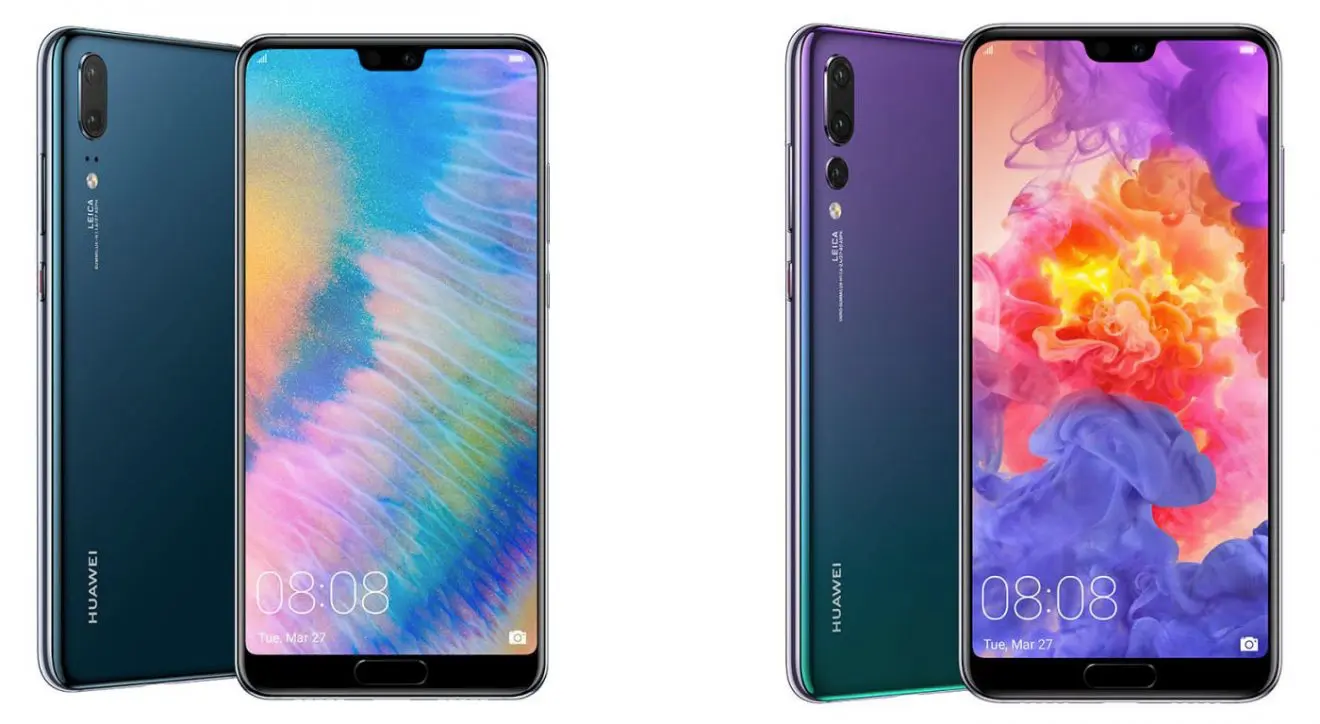
Just a few weeks after the release of the new Samsung S9 Huawei also presents its ace up its sleeve by showing the whole world its brand new Huawei P20 in 2 different versions: classic and PRO.
Thanks to a collaboration with an exclusive partner like Leica, the Huawei P20 PRO is about to become the best photographic smartphone in the world (or at least it will try) introducing as many as 3 different cameras each with a very specific task. Let's see in detail.
Let's start by saying that, no matter how advanced a smartphone may be, it will NEVER be able to compete with a DSLR or with a traditional camera.
This is simply because behind the cameras of the Huawei P20 PRO there are sensors that are 40-50 times smaller compared to a full-frame sensor, consequently the light that enters is much lower. The same goes for lenses and stabilization; again, we cannot compete with lenses and stabilization mounted on DSLRs, which are definitely larger and of higher quality.
One thing is certain though. To overcome these "limits" on smartphones, manufacturers for quite some time now, Huawei including Huawei, have focused on improvement of electronic processing and artificial intelligence.
Thanks to these new technologies, it is indeed possible to digitally process the information captured by the sensor in order to optimize and enhance it to the point of making it "similar" to that obtained with a professional DSLR.
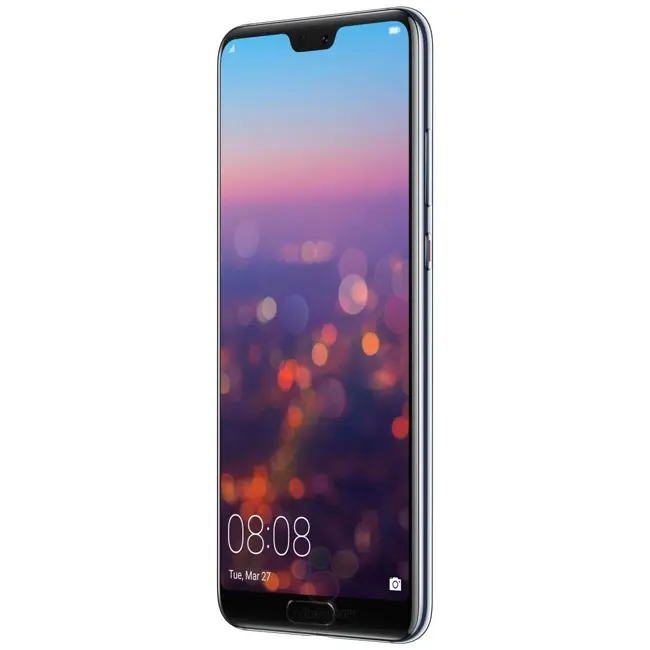
But let's get back to Huawei P20 PRO and see in detail how the 3 different cameras work.
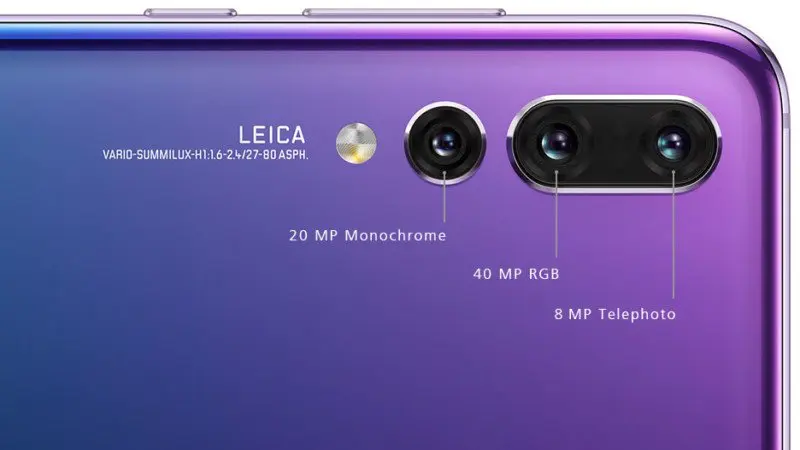
- The first has a sensor of 40 megapixels and it is the main one, responsible for shooting at the maximum resolution.
- The second has a monochrome sensor of 20 megapixels and it lacks the low-pass filter. It also has a wide aperture (F/1.6) maximizing the captured details.
- The third and last camera of the Huawei P20 PRO has a resolution of 8 megapixels but it has a zoom 3 times greater than the main camera.
\t
\t
\t
The final shot obtained with a Huawei P20 PRO is the result of the work of 3 different cameras that combine their shots to achieve a practically perfect photo in terms of color, brightness, and detail.
It is the image processor inside the Huawei P20 PRO that decides how to combine the 3 cameras depending on the shooting context.
I remain of the opinion that a nice DSLR, although definitely bulkier, will never be taken out of my hands and that the smartphone is only good for making calls. That said, thanks to all these new technologies, even happy phone owners will be able to take photographs of very high quality.



