
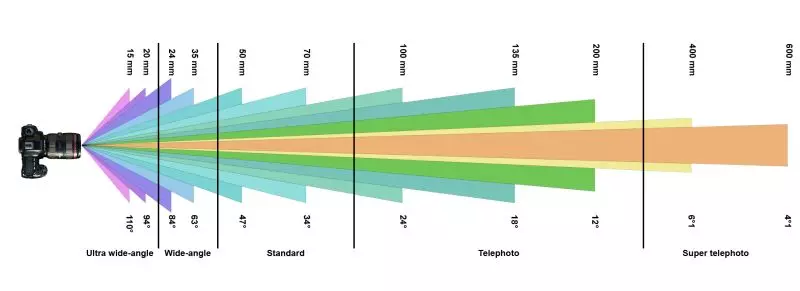
When we go out for a photo session, the type of lens we bring with us will affect the shots and the composition we can create. This is particularly important in travel photography when, due to the need to carry a fairly light load, we will be forced to leave some of our lenses at home.
Just as our eyes allow us to look at the world, in the same way the camera's lens determines how the subject is seen by the camera.
Before reading this article, look at the article on crop factor and keep the included table handy. Let's see the four fundamental things to know and understand about lenses and on composition.
#1. Focal length is different from field of view
The field of view of a lens is determined by:
• focal length,
• sensor size digital or the film used.
The field of view indicates the part of the scene that the lens sees. However, this is information that is often not easy to obtain immediately, as lens manufacturers usually provide focal length data and only by carefully reading the technical specifications is it sometimes possible to find information related to the field of view.
Just as the size of the sensor affects the effective focal length of the lens, similarly it affects its effective field of view.
Here are some practical examples.

Example No. 1 – 50mm lens
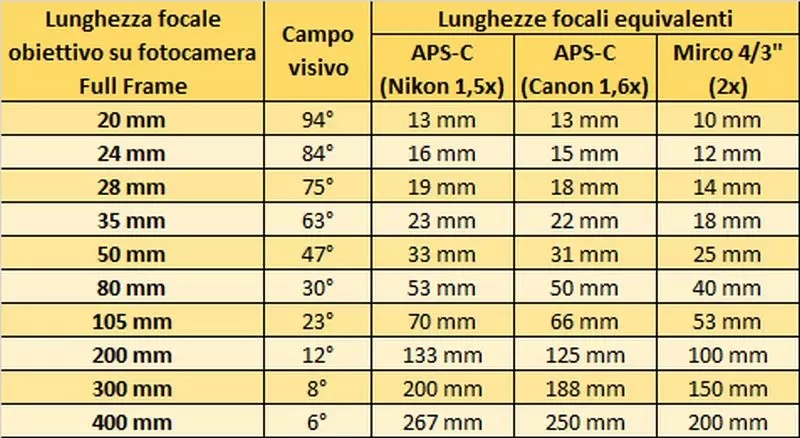
A 50mm lens has a field of view close to that of the human eye, about 47 degrees on a full-frame camera. But what happens when you put the 50mm lens on an APS-C camera (for example with a 1.6 crop factor)?
My 50mm lens becomes an 80mm lens and now has a field of view of about 30 degrees, making it a short telephoto. This change in the field of view means you have to move away from the subject to fit it into the frame, and therefore the perspective also changes.
If you want the equivalent of a 50mm lens on an APS-C camera, you need to use a focal length of about 31mm, as it has the same field of view (47 degrees).
Since there is no lens with that focal length, you can choose between the two closest values (a 28mm or a 35mm depending on whether you want a slightly wider or narrower field of view), or you can set that focal length if you have a zoom.
Example #2 - 20mm lens
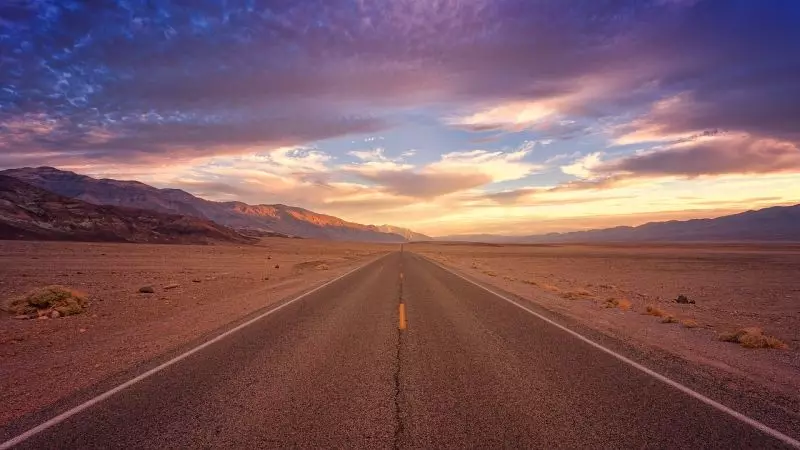
The same applies to wide-angle lenses. A 20mm lens has a field of view of about 94 degrees. It is a nice field of view ideal for landscape photography or creating images with a dramatic perspective.
But used on an APS-C camera the equivalent focal length becomes 32mm and the field of view narrows at about 65 degrees. It is still a wide-angle, but the effect is much more moderate.
It now has almost the same field of view as a 35mm lens on a full-frame camera. To get the same field of view as a 21mm lens (on an APS-C camera with a 1.6 crop factor), you would need to use a 14mm lens.
Example #3 - 16mm Lens
It is even possible to have two lenses with the same focal length but different fields of view (on the same camera). A wide-angle lens 16mm has a field of view of 107 degrees, but a fisheye 16mm has a field of view of 180 degrees.
They have the same focal length, but each is designed for a different purpose. The 16mm wide-angle is designed to keep straight lines straight. The fisheye does not try to do this, and as a result has a much wider field of view.
#2. Wide-angle lenses are inclusion lenses
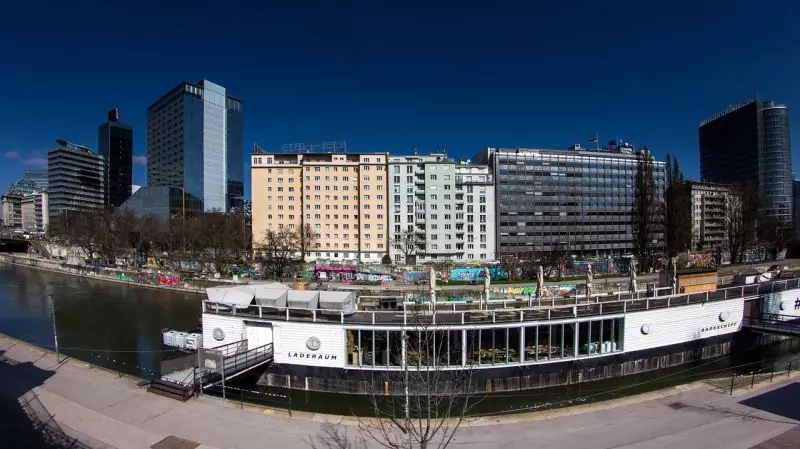
You can think of any lens with a field of view wider than about 63 degrees as a wide-angle. It is a 35mm or shorter on a full-frame camera, a 20mm on APS-C, and about an 18mm on Micro Four Thirds. Wide-angle lenses have two characteristics that affect composition.
The wide field of view allows you to move close to the subject to fill the frame. But, at the same time, wide-angle lenses also include some background.
The shorter the focal length, the closer you need to get and the more background is included. You can always fit more into the frame of your image with a wide-angle lens, no matter how close you get to the subject. The background is also more likely to appear sharper compared to longer focal lengths.
Getting close creates the dramatic perspective that some photographers love. It emphasizes lines and creates a sense of depth, which can be missing in images taken with longer focal lengths.
The slightest change in your viewpoint makes a dramatic difference in the photo's composition. The shorter the focal length, the stronger this effect becomes. Because wide-angle lenses include so much background, it can be difficult to simplify the composition and remove all distractions. There is no way around it, it is just a feature you have to live with.
#3. Telephoto lenses are exclusion lenses
A telephoto lens is a lens that has a field of view of about 30 degrees or less. It's about an 85mm or more on a full-frame camera, a 50mm on an APS-C camera, and a 40mm on micro four thirds. Telephoto lenses are exclusion lenses.
They have a narrow field of view. Fill the frame with the subject, and you won't get much else in the space. Also, it's easy to get a blurred background using a wide aperture and making sure there is enough distance between the subject and the background.

#4. Normal lenses occupy the middle ground
Normal lenses, those with a field of view of about 55 degrees, occupy the middle ground between wide-angle and telephoto. They don't create images with the dramatic perspective you can get with a wide-angle, nor do they exclude the background to the same extent as a telephoto.
If you have a normal prime lens you can open the aperture to blur the background, sometimes quite dramatically if you get close enough to the subject. But you can also focus the entire image.



