

After seeing the rule of thirds, the golden section and the use of guidelines, we conclude the section on composition by discussing another technique that is probably the most likely to succeed. In this lesson, we will talk about the use of frames within the frame.
As with any other compositional criterion, there is a risk of overusing it and turning it into a cliché, but the risk itself only confirms the effectiveness of the method. It only requires a bit of attention and imagination to put it into practice, but you will immediately realize that the use of frames will make your images much more interesting.
What are frames used for in composition?
We are used to associating the word “frame” with a frame that surrounds a painting, a photograph, or a mirror highlighting them. Obviously, in this lesson we will not talk about this. Instead, speaking of technique in photographic composition, when you hear about “frames” it means everything that is inside the frame that, more or less clearly, surrounds your main subject making it even more important.
The charm of internal frames is not only due to their compositional value, but also to the influence they exert on our perception. Such frames can be used for the following purposes:
- To add depth to the image giving it more three-dimensionality leading the viewer to think they can “enter the frame”.
- To to guide the viewer’s eye, through the frame, directly to our main subject.
- To add curiosity to the shot. Sometimes the frame can hide part of the scene, creating a sort of mystery for the viewer
- To to add context showing elements that surround the main subject
Internal frames can also have a organizational function. By drawing a border around the main image, they impose a certain control on the scene, establishing its limits by creating a sense of stability or even rigidity. Humans feel a certain satisfaction in seeing the different elements of the scene organized according to a precise criterion through the use of frames.
All around us are plenty of “frames” that can be included in the composition; let's look at some examples of different frames and their use in photography.
Frames formed by architectural elements
When we talk about frames formed by architectural elements doors, windows, arches or porticoes immediately come to mind. You have surely photographed a landscape through a window or a person beyond a door or under some porticoes in your city. Frames formed by these architectural elements are the easiest to find; let's see some examples:
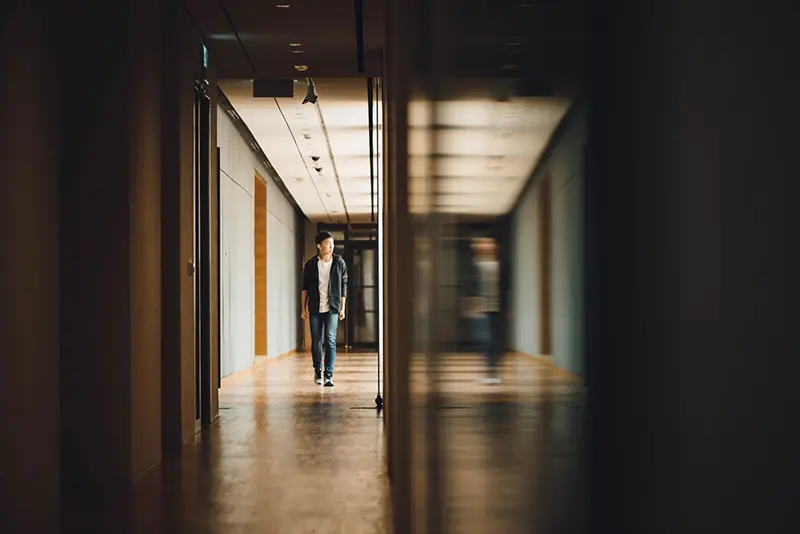
A simple corridor with one or more doors is perfect for creating a frame around our subject; the viewer's gaze will follow the corridor and will arrive directly at the center of the image. In this example, moreover, the shiny right wall created this “mirror” effect, effectively doubling the frames present in the image and further emphasizing the intended effect.
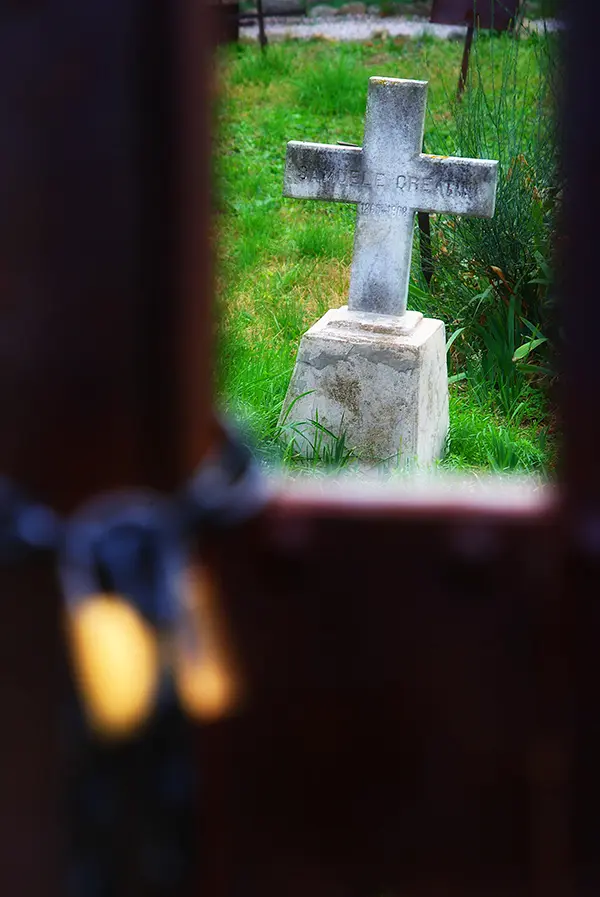
In this other image, I created a frame with a hole in the gate of an old cemetery. The use of a wide aperture also helped me create the blurred effect in the foreground, giving the image an effect of three-dimensionality dividing it into two distinct levels.
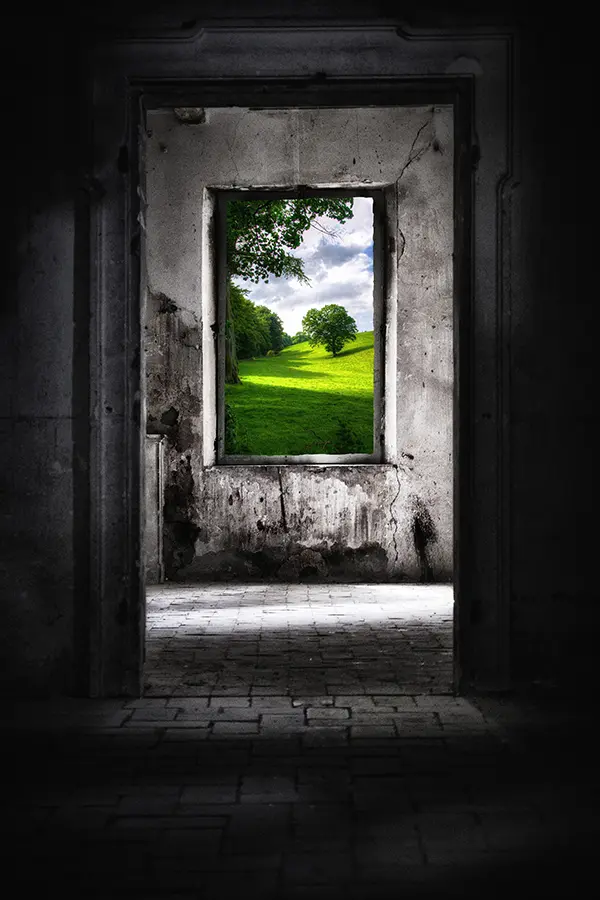
This image, made for a project on depression, is titled “life beyond the walls.” In this case, I used the various frames present (a door and a window) to guide the viewer's gaze directly to the green garden of this house. I chose not to blur the image, as in the previous example, to show all the details of the cracks in the wall and to maximize the contrast between the darkness of the house and the colors of the lawn. This is a perfect example of the use of frames.
Frames formed by natural elements
If you are in the middle of the forest, it’s obvious you won’t find frames made of architectural elements! However, you will be surrounded by even simpler frames: branches, leaves, plants or any natural element that can wrap around your subject will work perfectly. It is not mandatory for the frame to be complete, it can also only partially surround your subject and it will still work. Let’s look at some examples:
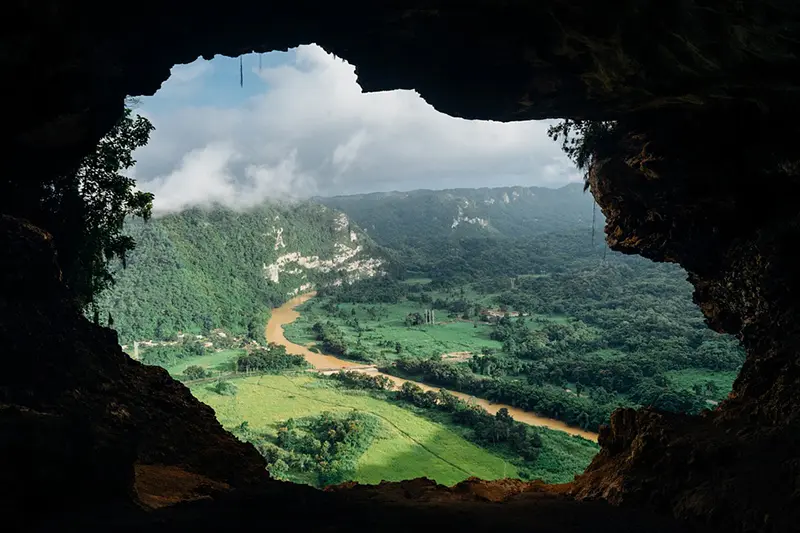
In this image, taken from inside a cave, the frame formed by the rocks gave much more dynamism to the image, making it more pleasing to the eye. Try to imagine this landscape without the outer frame in the composition; it would certainly still be beautiful, but the photo would definitely be flatter and more banal.
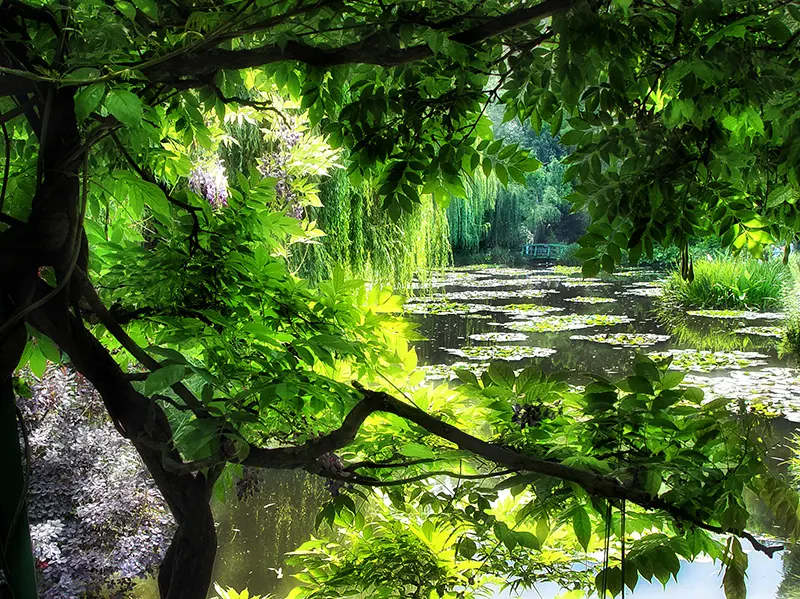
I took this photograph at the famous Monet gardens in France. There isn’t a well-defined frame, but the branches of this tree will surely direct your gaze beyond it and make it linger on the lake full of water lilies.
Frames formed by light and shadows
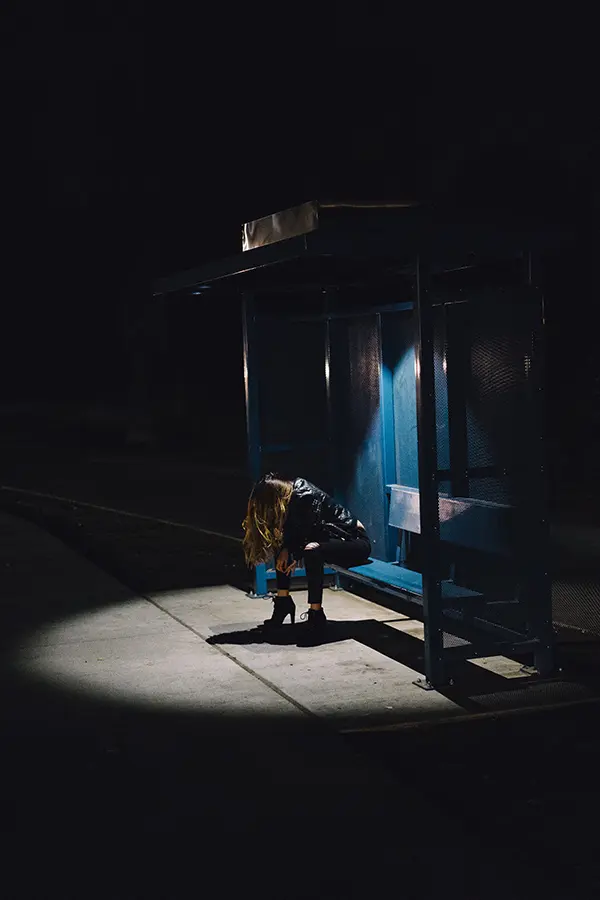
Photography is light and the opposite of light is shadow. Play with light and shadows to create frames to use for framing your subjects. Of all the possible frames you can find around these are the most difficult but, precisely for this reason, they are often the ones that deliver the most. In the example below, the light of a streetlamp was used which, in strong contrast with the surrounding darkness, created this circular frame with our main subject at the center.
Other types of frames
If you lack any kind of frame around you let your creativity work, anything can serve as a frame. Imagination will become your only limit. Let's see a few more examples just to show you how frames can be found everywhere, sometimes even absurd ones!
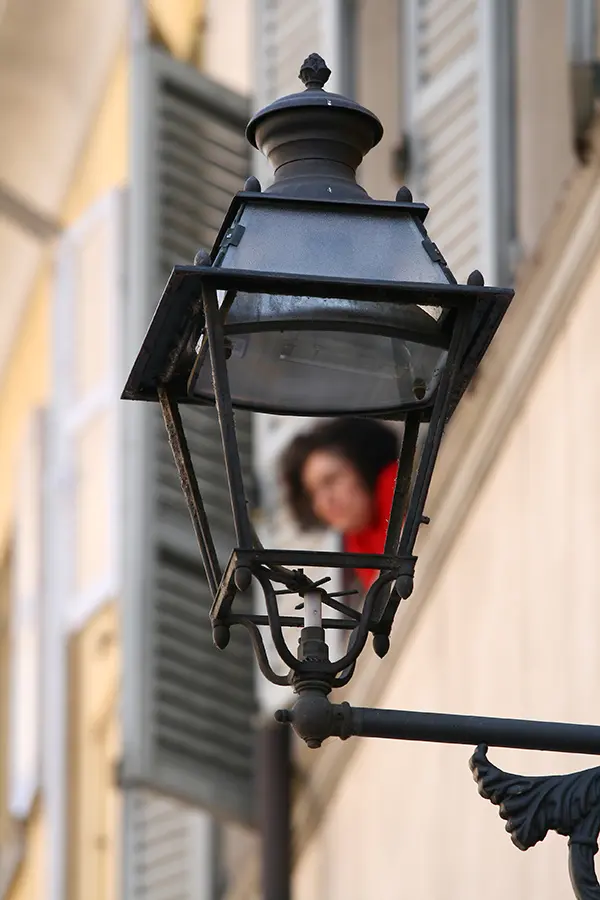
I recently took part in a photo marathon around the city of Parma, and one of the subjects to photograph was precisely “framed”. Short on time (there were many subjects), I noticed this streetlamp without glass and aligned the lady in the background, effectively trapping her inside the lamp itself.
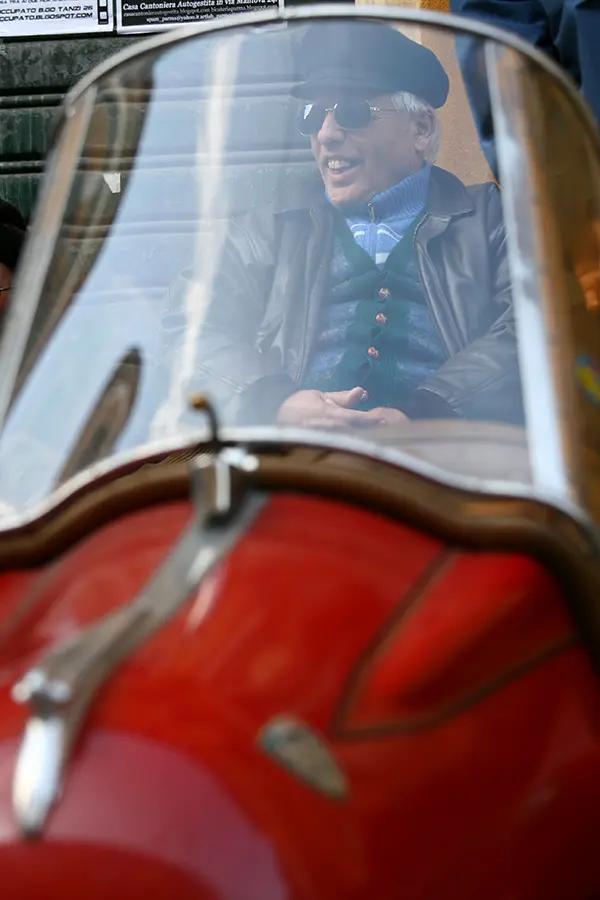
At a vintage motorcycle gathering, this gentleman was comfortably sitting on a bench chatting with friends. I positioned myself in front of a sidecar and used the frame formed by the glass to include the gentleman in the background. It looks like he is sitting on the sidecar, but in reality, he is several meters away from the motorcycle!
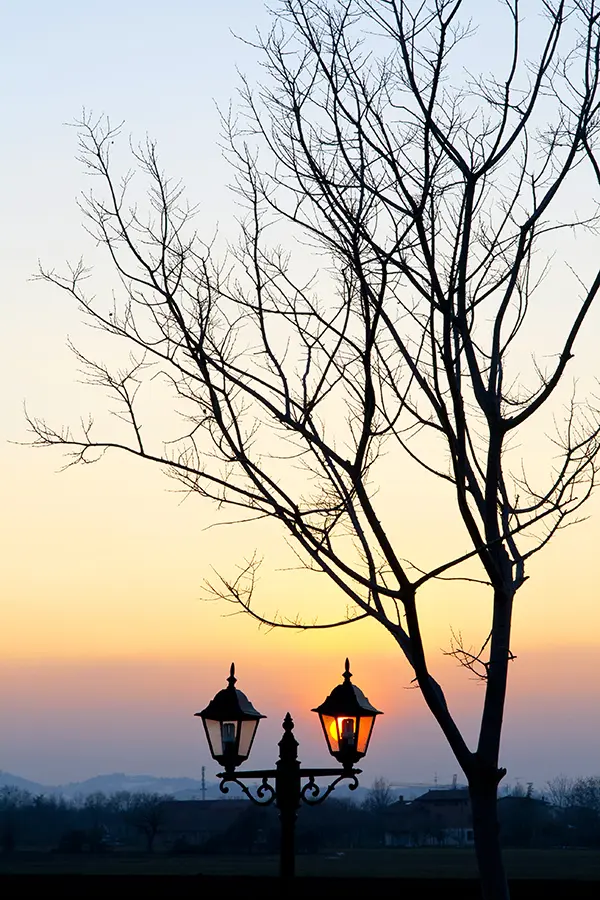
Another little game I enjoyed doing during a countryside walk at sunset. These unlit streetlamps aligned exactly with the sun were too tempting not to photograph. Here’s another frame invented on the spot.
Conclusions
I already know how this will end! Starting tomorrow you will go around and look around searching for frames everywhere. Well done!
Frames in photographic composition are a great tool to channel the viewer’s gaze directly towards your main subject. They will also make your image more pleasant and three-dimensional your image, inducing in some cases, curiosity in the eyes of the viewer.
With this lesson, the section related to photographic composition. In the next lesson, we will try to resolve a dilemma that often troubles photographers about the final shot: black and white or color? If you missed the previous lessons of the photography course, you can always consult them at this link.



