A square seen from a window, a street-level encounter, a line of testimony on the page. The August 1968 invasion of Czechoslovakia survives in records made for different reasons and from radically different positions. Josef Koudelka’s Invasion Prague 68 brings some of those differences into focus. Aperture’s November 2026 hardcover gives readers a reason to return to the book and notice what its sequence can do that even a memorable single image cannot.
The first hardcover of a book published in 2008
Aperture dates the original edition to 2008 and lists 4 November 2026 for the hardcover. The new format runs to 296 pages and contains 250 images selected by Koudelka. Period broadcasts and eyewitness accounts interrupt and inform the photographic sequence. The publisher credits Aleš Najbrt, whose work on Koudelka’s books includes the 2008 edition. The hardcover is a new format for an established project, assembled decades after the events it records.
That distinction gives the reader two histories to follow. The first takes place in August 1968, when Soviet-led forces entered Czechoslovakia and ended the Prague Spring. The second concerns the circulation of the photographs and their eventual arrangement as a book. The distance between those histories makes selection and design visible. Turning the page means entering an argument assembled in hindsight from pictures made amid events whose outcome the photographer could not yet know.
How pictures circulated before their author could sign them
Before the invasion Koudelka had photographed theatre. His work in Prague’s streets circulated under the initials P.P., for Prague Photographer, after the pictures were taken out of Czechoslovakia. Magnum distributed them and the Overseas Press Club awarded the series its Robert Capa Gold Medal in 1969 while their author was still unnamed. Aperture reports that sixteen years passed before Koudelka could publicly claim them.
Read that history beside the photographs and the credit line becomes part of the story. It records how a picture could circulate while the person who made it remained exposed to consequences at home. It also changes how we understand later editions with Koudelka’s name on the cover. The credit restores a connection between work and author that the original distribution had good reason to conceal. It does not retroactively make the conditions of taking or publishing the pictures safe.
Read in groups rather than hunting for an icon
A useful first reading is to turn several pages without stopping to rank the images. Note when your attention shifts from an individual to a group, or from a human gesture to the space in which it occurs. Then go back and ask what caused the shift. Sometimes a wider view makes visible a relationship that the tighter frame could only imply. Elsewhere a smaller gesture clarifies what a picture of a crowd can leave indistinct. The point is to look for changes in the information you have, rather than for a hierarchy of dramatic scenes.
In Aperture’s published conversation with Melissa Harris, Koudelka discusses the pictures as evidence. The book’s length lets the reader consider what that word demands. A compelling frame can establish that a person stood in a place or that a vehicle occupied a street. It usually takes other records to establish what happened immediately before or after. Looking at one image, the next and the text between them makes those differences practical rather than abstract.
What the broadcasts and testimonies add
The written material comes from the period and operates at a different register from the pictures. A broadcast gives access to how events were announced. An eyewitness account tells us what someone could see or understood from a particular position. In a reading of the book, it is worth tracking whether the writing supplies a time, a contested interpretation or a detail outside the frame. Those are different contributions and do not carry identical authority.
As an exercise, pause at a passage where a text affects how you read a picture. Write a sentence about what you could see before reading it, and another about what you learned afterwards. The distance between those sentences is where the book is doing work that a gallery of isolated news photographs would handle differently. It also reminds photographers to be precise about what their own captions actually establish.
A second vantage point from the same city
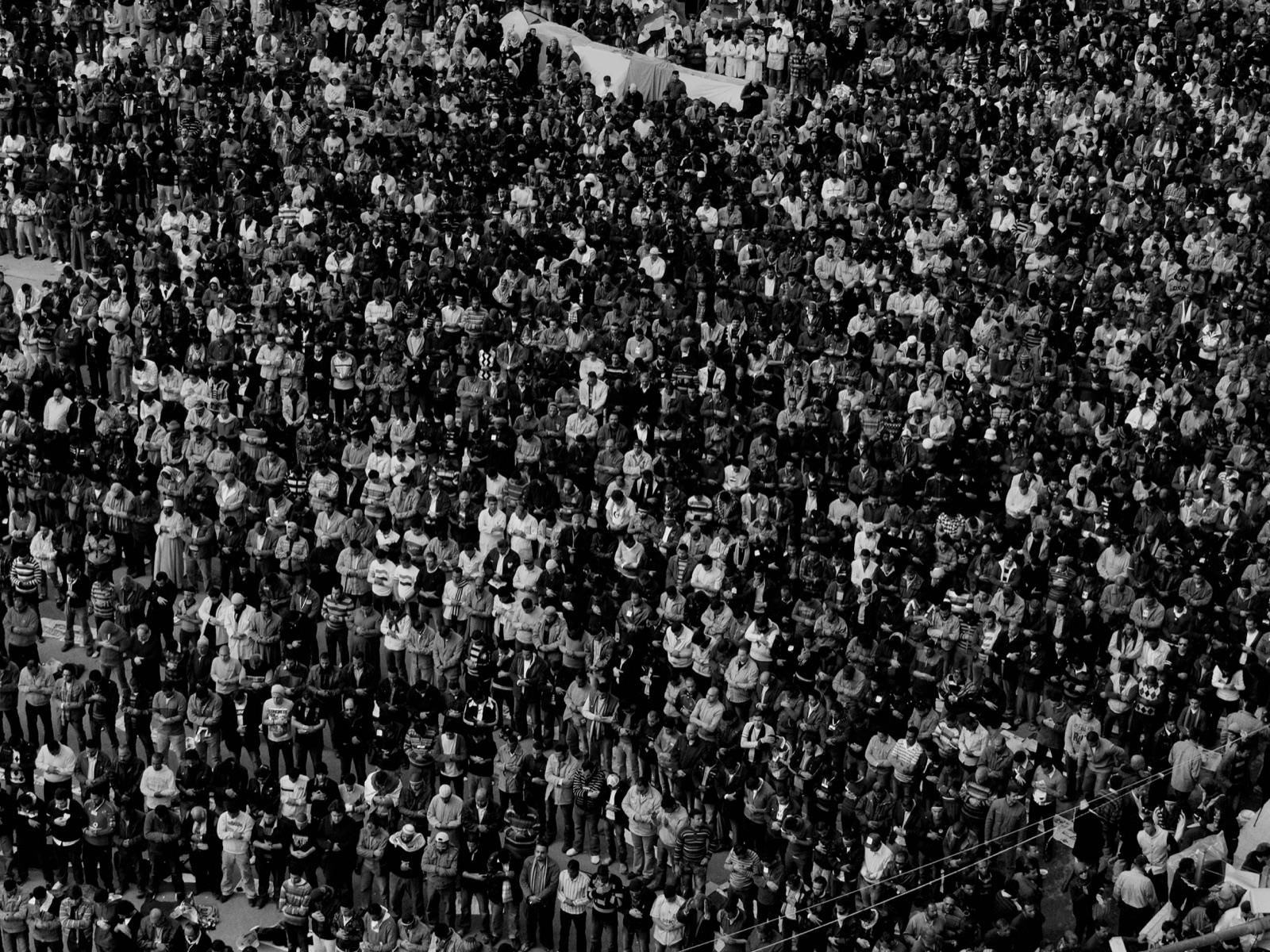
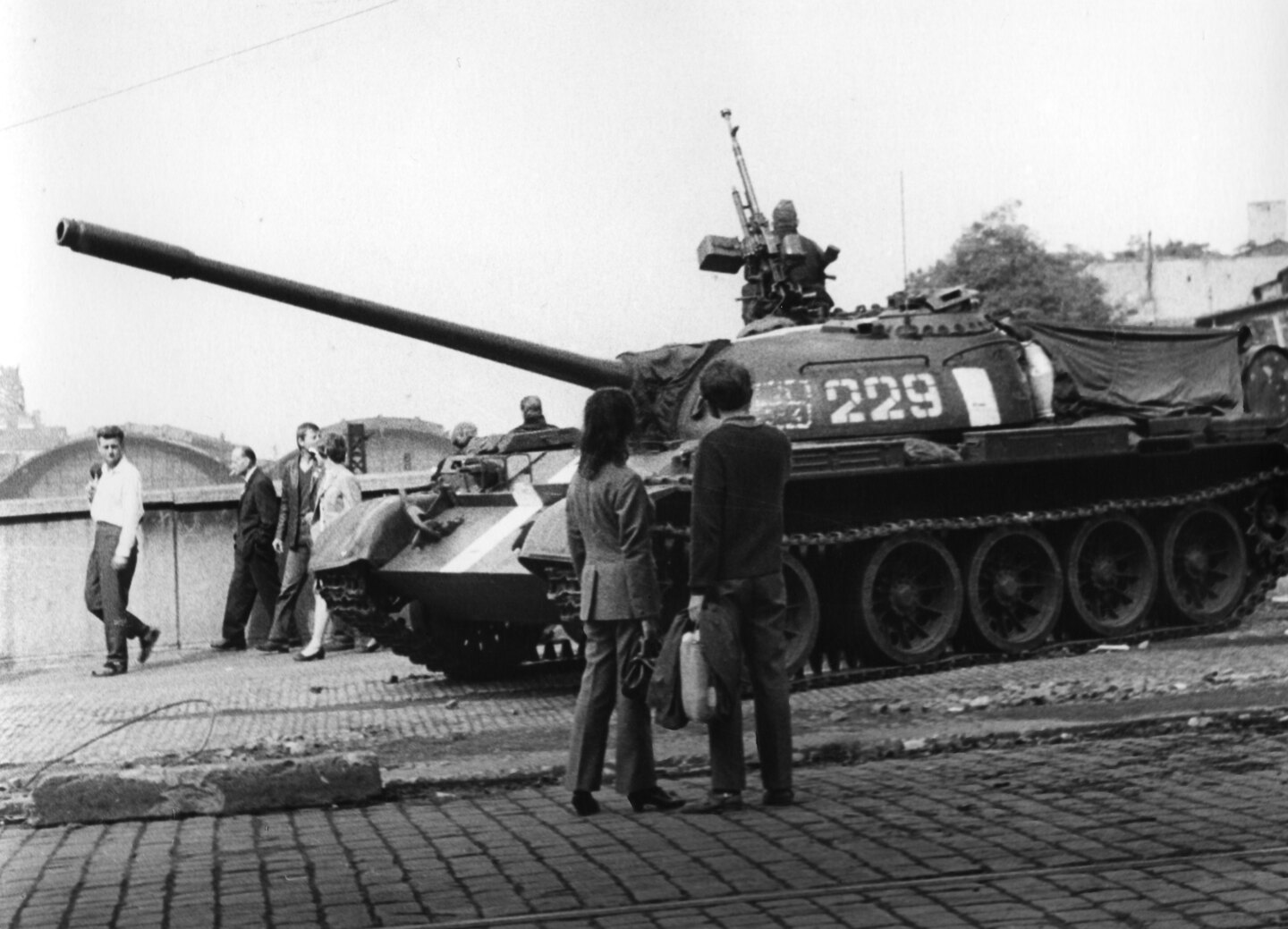
The archival photograph from Hradčany Square below reached the Swiss embassy on 21 August 1968. Its elevated view marks a particular position in the city. The diplomatic archive records how the image reached the official record. František Dostál’s image above belongs to a different photographic record of that day. Both are reproduced here as historical context separate from Koudelka’s work.
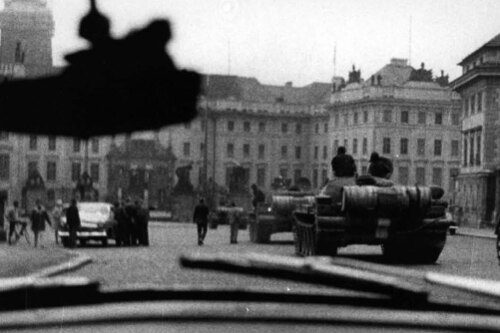
Keeping those credits visible is part of reading responsibly. Images made on the same day are easily merged by memory, especially when their subject is widely illustrated in black and white. Different vantage points can be compared without assuming that the photographers witnessed the same incident. For Aperture’s own presentation of Koudelka’s photographs and the book, follow the publisher’s links below.
Who should read the hardcover
For documentary photographers the volume offers a case study in returning to an archive and letting quieter frames carry information between intense ones. For readers of visual history it makes the relationship between what was seen and what was reported a recurring problem to think through. Its physical scale encourages leaving a spread open long enough to compare its parts, then turning back when a later page changes what you thought you saw.
Try a second reading with three notes: one about a frame, one about an adjacent picture and one about a line of text. Look for a place where each changes the role of the other two. That is a more useful test of a photobook than whether you can remember its strongest image, and a practical reason to revisit this particular edition.
Book details
| Entry | Details |
|---|---|
| Title | Josef Koudelka: Invasion Prague 68 |
| Photographs | Josef Koudelka |
| Publisher | Aperture |
| Format | Hardcover, 296 pages and 250 images |
| Dimensions | 9.6 × 12.6 in |
| Publisher’s publication date | 4 November 2026 |
| ISBN | 9781597116053 |
| Source and verification | Aperture, 27 November 2026 |