
In fact, the only risk we run if we take too long to set up the image is that the lighting conditions we had chosen change. Although it lacks dynamism and action, architectural photography is certainly not boring and allows us to create very interesting images.
Let's see then how we can identify the key factors to achieve interesting images.
Let's choose a subject
Even though we are always talking about man-made constructions, architectural photography is very varied: modern or ancient buildings, interior or exterior images, civil-use constructions or structures such as bridges, gasometers, …
The nice thing is that you can find them all together in the same place, close to each other, at most a few public transport stops apart. The first thing to define in architectural photography is the subject that you want to photograph and such as do you want to capture it: the entire structure or just its details?
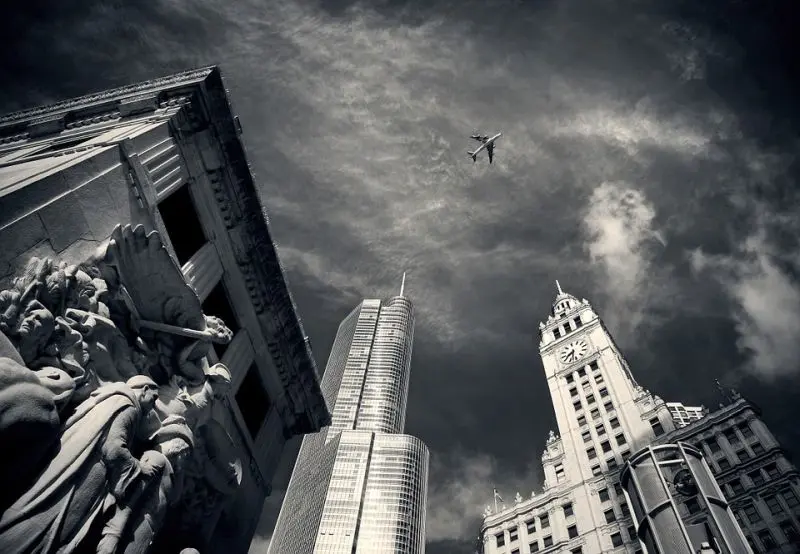
Which choice is best also depends on your equipment (if you only have a wide-angle lens, it will be hard to capture details), but also on the subject: a statue “works well” even if taken as a whole, a church facade contains many details that are not highlighted in the overall view and so it is better to photograph them in detail.
Camera Settings
The your camera settings (ISO, aperture and shutter speed) depend on what you want to achieve with your images.
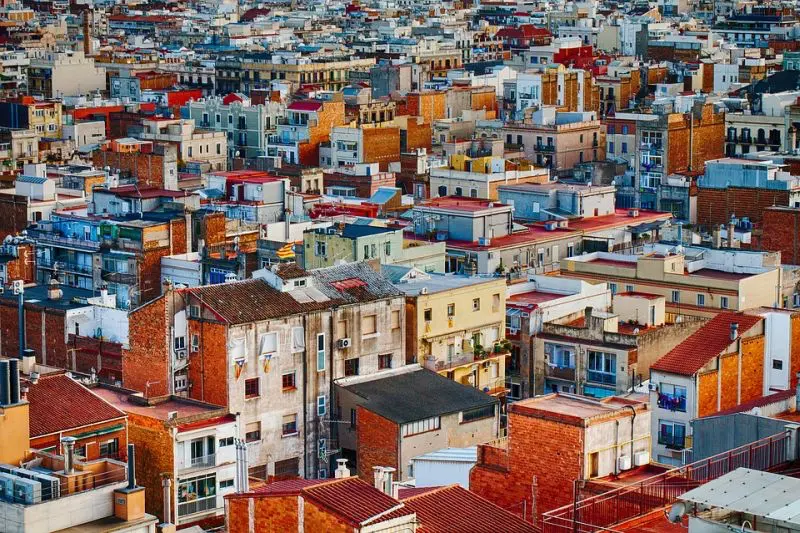
If you want to isolate a detail from the background, you will need a shallow depth of field. You will therefore need to use a wide aperture (that is, a small f-number, < f/5.6). If instead you are photographing a statue, a shallow depth of field might make it difficult to keep it all properly in focus. For this reason, it might be appropriate to use an aperture around f/8 – f/12. Using even smaller apertures allows for even more depth of field, but it could introduce distortions depending on the quality of the lenses used. So if you want to get an image of an urban panorama where everything is in focus, obviously you need to stop down the aperture as much as possible, compatible with the quality of your lenses.
As for ISO ISO, a value from 100 to 400 will allow you to get images with little or no noise. At this point, all that remains is to set the shutter speed, which depends on the overall look and atmosphere you want to achieve. Very short times will allow you to freeze the movement of cars and pedestrians, longer times will allow you to introduce motion into your image by blurring moving elements.
Composition
An important element of architectural photography is composition, that is how you arrange the elements within the frame of your image. If you want to photograph a very well-known subject, first search online to see how it has already been shot. Some subjects are always photographed in the same way (more or less), so try new compositions.
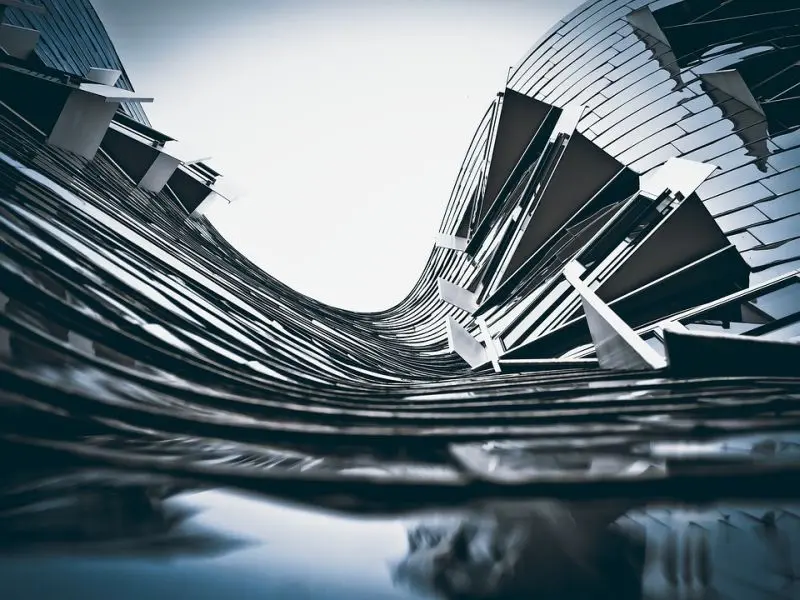
Make sure your photograph stands out from those already made!
Interior architecture photography
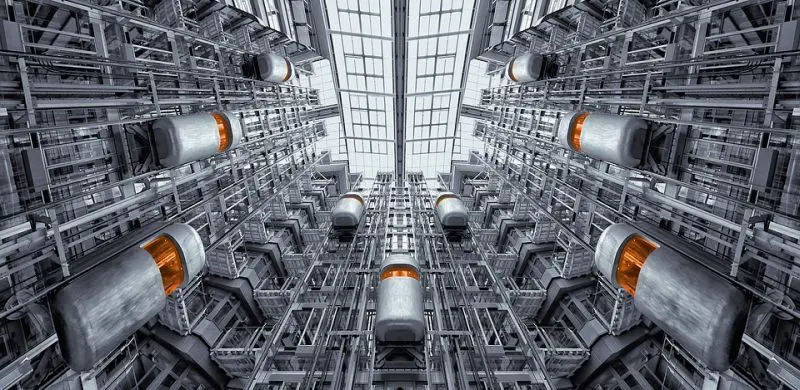
In the case of interior photography, it is very likely that the light available to you is much less than what you have in outdoor photography. In such conditions, using a tripod is a good option. Additionally, you will need to manage different types of lighting: natural light from windows and skylights, artificial lights from LEDs, spotlights, and various lamps. It will therefore be necessary to be able to balance the various types of lighting as best as possible.
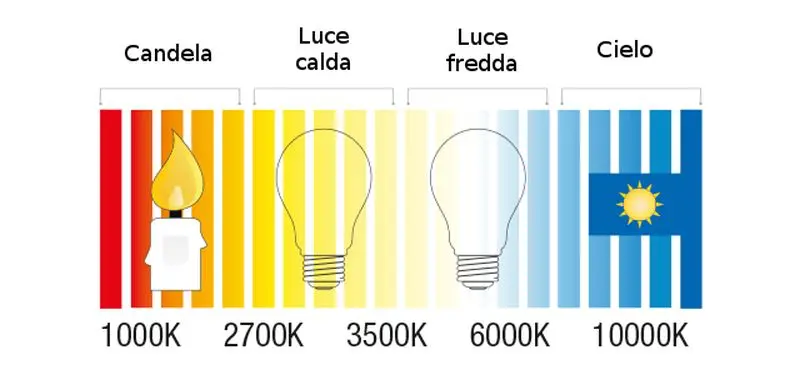
Even regarding composition, you might encounter restrictions compared to outdoor photography: limited spaces, internal structures like columns and pillars can limit your compositional choices. As a solution, you might need to use a wide-angle lens (for example a 16-35mm) or, conversely, a lens like a 24-70mm to isolate the interesting part of your subject and eliminate distractions.
Shooting Exterior Architecture
Shooting outdoors is one of the most popular and enjoyable subjects in architectural photography. Moreover, importantly, it generally does not require special permits (be careful, of course, with sensitive buildings such as military facilities, police offices, government buildings, which in some countries may be prohibited from being photographed without specific authorizations).
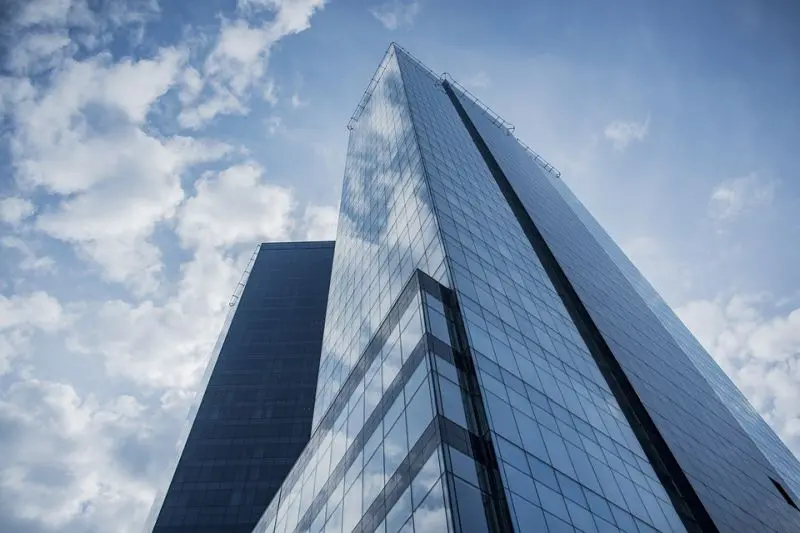
If you choose to photograph exteriors, you can decide to focus on the entire structure, the roof, or on a particular aspect of the exterior building that is interesting. Photographing exteriors can be a challenge, especially with changing light and high contrast conditions, but it can lead to exceptional images.
Conclusion
In conclusion, remember these important steps when shooting architecture, including choosing a subject, selecting camera settings, choosing the composition, and deciding whether to photograph interior or exterior architecture.



