
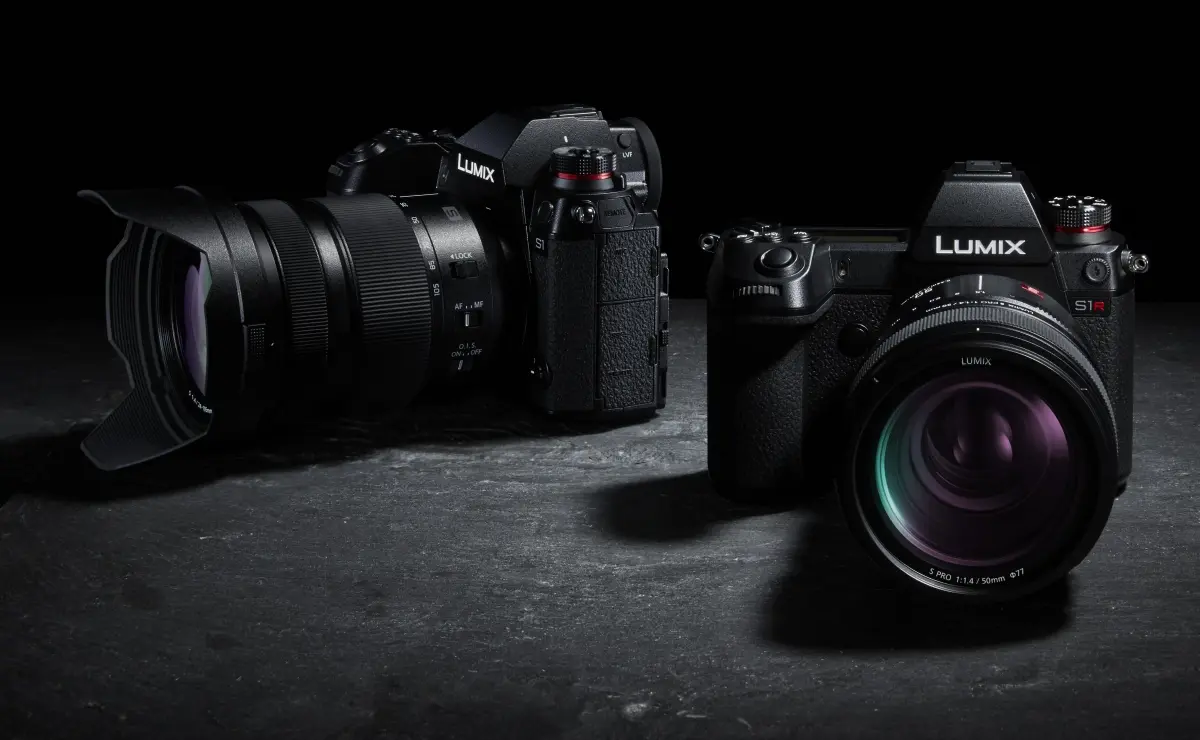
 The collaboration between Camera Nation and continues Alessandro Baccoli, director of RTL 102.5, photography enthusiast and videomaker.
After trying and reviewing several cameras for Camera Nation including the Lumix Gh5, Sony RX10 III and the Lumix GH4, Alessandro tested Panasonic's top-of-the-line full-frame mirrorless: the Lumix S1R.
We won't spoil anything and will let Alessandro speak; let's hear what he has to say about this beast of a camera.
I had heard a lot about it well before its release and finally had the opportunity to test it to its fullest potential;
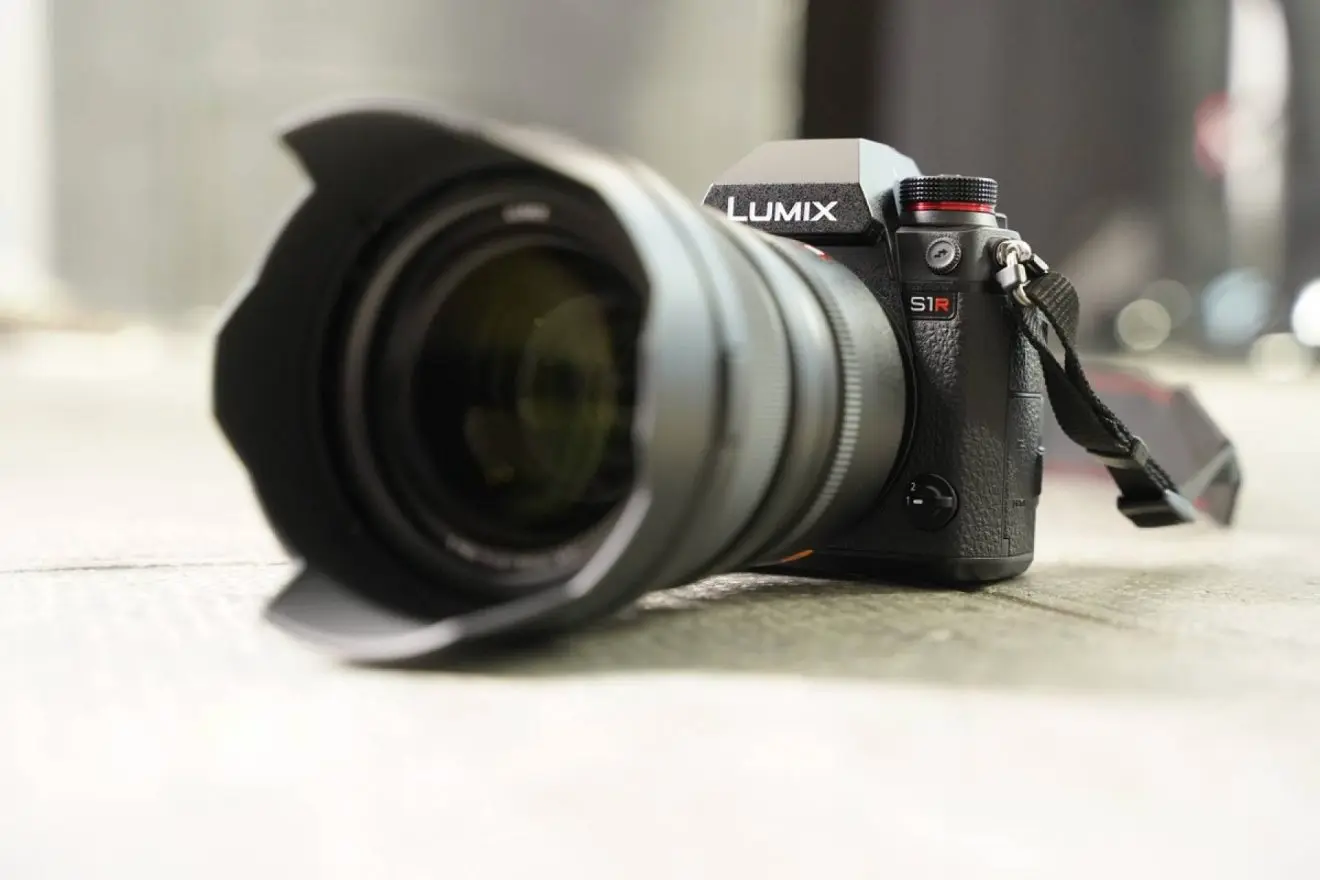
Lumix S1R, Panasonic's first full-frame mirrorless; what can I say? A concentrate of pure power! But let's talk about it in a bit more detail.
Starting with the packaging, you can already tell you have a Pro-level product in your hands; contained in a Lumix-branded box, inside we find the camera body, charger and power adapter to recharge the 3050 mAh battery, the strap, various instruction manuals, and in my case (I have the Kit version), the Lumix S 24-105 f4 Macro O.I.S. lens.
A lens produced in 2019, stabilized, with a 77mm filter ring, weather-sealed, substantial weight (680g), and priced at €1400.
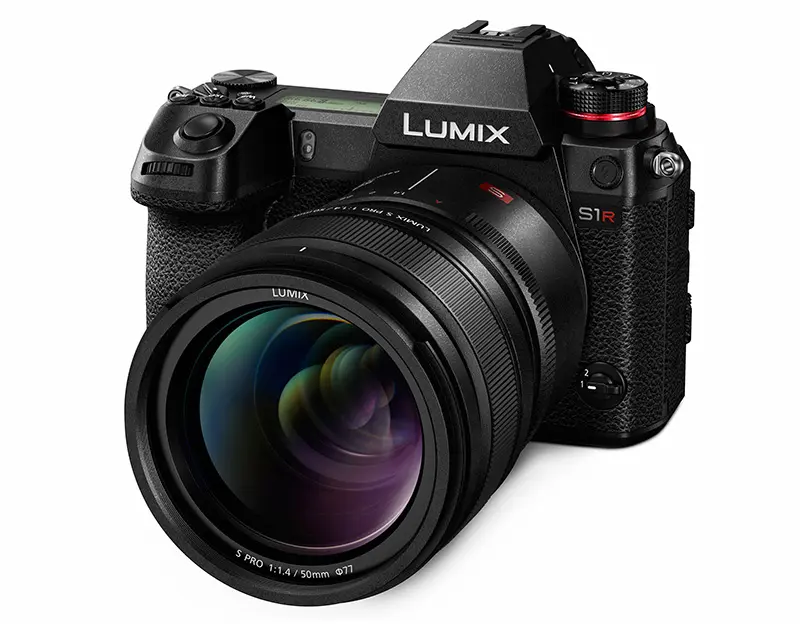
Now let's move on to the Lumix S1R;
I love cameras with substantial size and weight; they give me a sense of robustness and reliability, and this was the feeling I had right away, thanks to its 1.02 kg weight which is immediately easy to support thanks to the best ergonomic grip I've ever experienced.
Placing your fingers on the grip, you can easily reach any button or dial on the camera, both with your thumb and index finger; even the two Fn buttons located beside the lens are perfectly positioned to be pressed effortlessly without ever removing your hand from the grip.
Let's stay on the top part;
The essentials, everything we need during manual shooting: exposure, ISO (which, if pressed repeatedly during shooting, increases by one stop without using the dial, thus speeding up the operation), white balance, the shutter button, the dial to adjust the aperture, the ON/OFF switch, a small button with a light bulb icon used to illuminate the info screen next to it, and the dial that controls the shutter speed.
On the other side, instead, we find a large dial equipped with a safety lock that prevents accidental clicks and changing shooting settings.
On this program dial we find Manual shooting (M), Program (P) which lets the camera manage the aperture and shutter, Aperture Priority (A) which is the semi-automatic exposure mode, Shutter Priority (S) where the photographer chooses the shutter speed and lets the camera adjust the aperture.
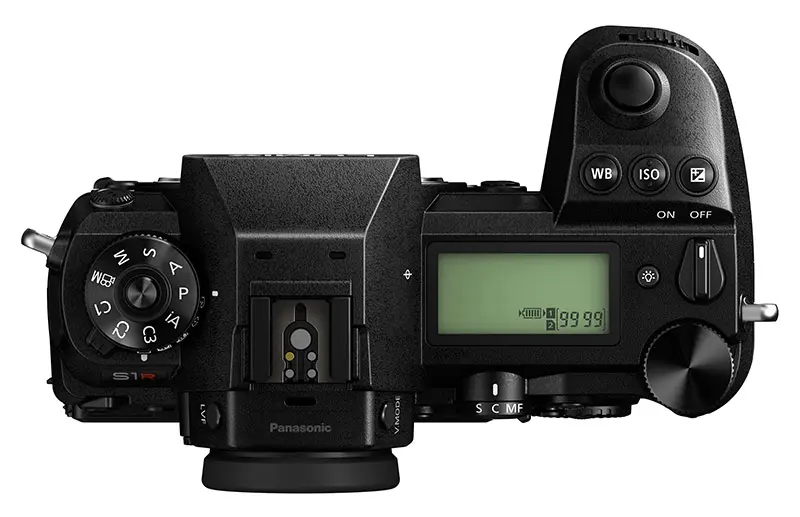
Besides the PASM programs, we find the video mode, the one with M and the camera icon, the custom programs C1, C2, and C3, and finally iA, the fully automatic program.
Below this dial there are symbols indicating single shot, continuous shooting, 6k shooting (6K/4K Burst allows ultra-fast sequential shots simply by holding down the shutter button), time lapse, and timed or self-timer shooting.
The Lumix S1R is equipped with an OLED electronic viewfinder with a resolution of 5.7 million dots which will give you a perfect perception of your exposure and framing. On its sides are the V.Mode, an interesting function because it narrows or widens the view in the viewfinder (it does NOT zoom but moves the entire scene closer or farther), and the classic LVF which toggles the viewfinder on/off.
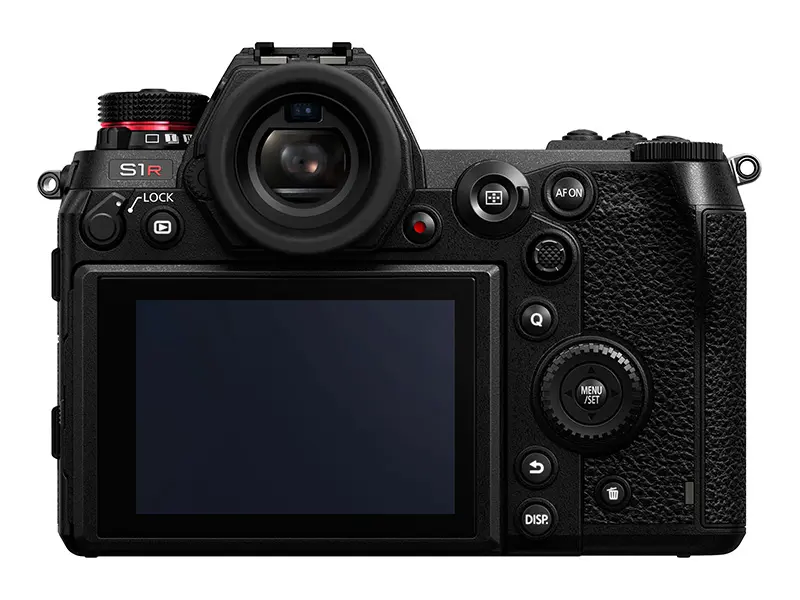
On the front side facing us, we have a 3.2-inch touch display, not rotatable 360° but tiltable 90° upwards and 45° vertically downwards, useful, but I would have preferred it to rotate 360° for practical viewing convenience.
The other buttons are:
- - LOCK (locks the camera buttons)
- - Media (to view the shot gallery)
- - REC button
- - Focus mode switch (Single, Continuous, Manual)
- - AF On
- - the joystick to navigate through photos and for other movement functions in the scene
- - the Q button (opens a dropdown menu)
- - the navigation dial, and the Menu/set button
- - the “back” button, DISP. (which changes the display view), and the trash bin.
\t
\t
\t
\t
\t
\t
\t
\t
\t
On the right are the card slots, where you can insert an SD/XCII card and an XQD card; on the opposite side are the inputs and outputs, such as the microphone jack and headphone output, the input for remote controls like the remote, standard HDMI, USB Type-C which also serves as a power input, and the Flash Sync.
[caption id="attachment_19498" align="alignnone" width="800"] @Copyright Alessandro Baccoli[/caption]
Lumix S1R - TECHNICAL SPECIFICATIONS:
As I said at the beginning, on the Panasonic Lumix S1R we find a 47.3 Megapixel sensor, with 5.5-stop stabilization (plus Dual Image Stabilization, meaning stabilization also provided by the lens, if present), a sensor capable of reaching 1/8000 shutter speed and a burst rate of 9 fps with single autofocus and 6 fps with continuous autofocus.
Speaking of battery life, I really put it to the test during a shoot in a natural park and keeping it always on I noticed the consumption is very fast, while with the second battery I shot all day but kept turning the camera off continuously; in the first case I didn’t exceed 400 shots before reaching 0%, while in the second I exceeded 800 and at the end of the day I still had 20% battery left.
[caption id="attachment_19496" align="alignnone" width="800"] @Copyright Alessandro Baccoli[/caption]
Panasonic also sells a battery grip for the Lumix S1R, although the weight and bulk increase even more, but if you need to shoot for a long time it’s the best solution.
The ISO range varies from 100 to 25,600 (noise is present and annoying from 6400), expandable up to 51,200 if needed...
Lumix S1R can record video in 4K at 50/60fps, with a 1.5x crop, while at 24, 25, and 30 fps the entire sensor surface is used. Of course, slow-motion at 180 fps in FHD is included, impressive but with manual focus only.
\n
Speaking of video, I’d say it’s not bad at all but you can tell from some details that it’s a camera focused on photography, like the lack of a 4:2:2 10bit codec or the 15-minute recording limit, but it still records 4K, in my opinion of high quality, I might attach some examples.
[caption id="attachment_19500" align="alignnone" width="800"] @Copyright Alessandro Baccoli[/caption]
The RAW file reaches a significant size of 69.9 MB per shot but I assure you the details contained within are amazing, giving us the possibility to crop without loss of quality, thus achieving shots and results unattainable by other lower-tier cameras.
To conclude, this first Full Frame from Lumix has given and will give a hard time to many other competitors, a mirrorless with significant weight but equally high performance. I found many PROs, and very few cons; if I have to be picky, I don’t like the position of the REC button, a bit far to reach with the thumb, and the screen not being rotatable 360°, but really I have nothing else to add.
SHOOT, SHOOT AND SHOOT!
Alessandro Baccoli
Instagram: @ale_baccoli
Facebook: https://www.facebook.com/O.Alex.B.DeeJay.O
Pinterest: https://www.pinterest.it/alessandrobaccoli/
Website: www.alessandrobaccoli.it
[caption id="attachment_19494" align="alignnone" width="800"] @Copyright Alessandro Baccoli[/caption]
[caption id="attachment_19492" align="alignnone" width="800"] @Copyright Alessandro Baccoli[/caption]
[caption id="attachment_19504" align="alignnone" width="800"] @Copyright Alessandro Baccoli[/caption]
[caption id="attachment_19502" align="alignnone" width="800"] @Copyright Alessandro Baccoli[/caption]



